HP CM Office: 2 MW Solar Plant With Battery Storage Live in Spiti
Synopsis
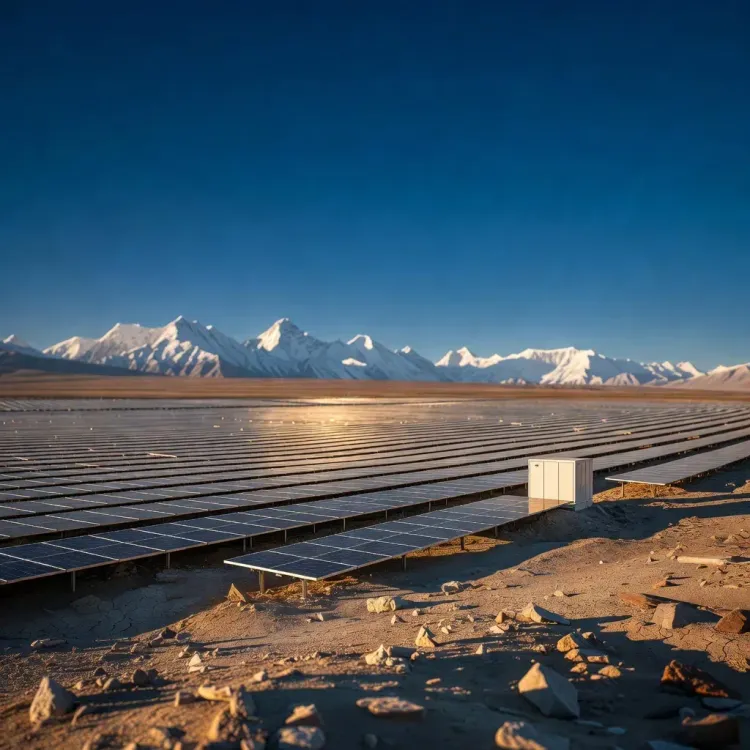
The Himachal Pradesh government has commissioned a 2 MW solar plant with a 1 MWh battery storage system at Rongtong in Spiti Valley for Rs 4.42 crore — the state's first generation-plus-storage solar facility, designed to deliver reliable power to one of India's most remote high-altitude communities.
Key Takeaways
2 MW solar power plant commissioned at Rongtong, Spiti Valley , Himachal Pradesh.
Total project cost: Rs 4.42 crore .
Equipped with a 1 megawatt-hour Battery Energy Storage System (BESS) — the first such installation in the state.
Battery storage enables post-sunset power supply in a high-altitude region where grid extension is prohibitively expensive.
Project aligns with India's national goal of 500 GW non-fossil fuel capacity by 2030 .
Serves as a replicable pilot model for other remote Himalayan areas in Lahaul-Spiti, Kinnaur, and Pangi .
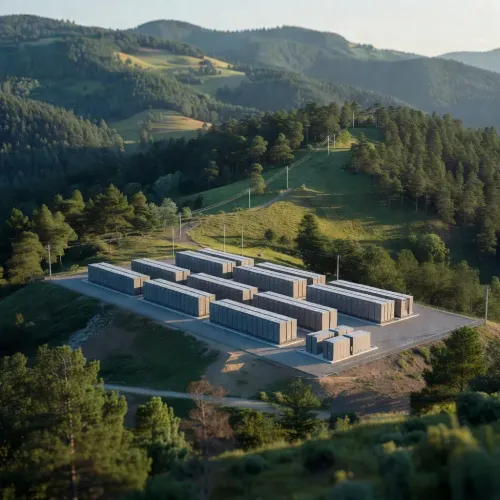
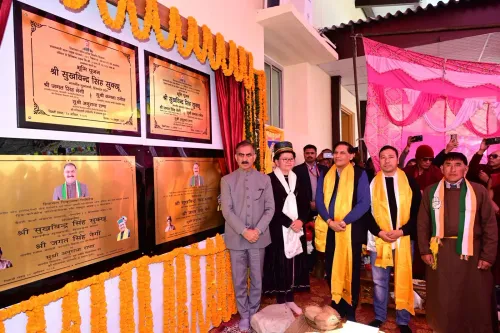
At 4.42 crore rupees and perched in one of India's most forbidding landscapes, a new 2 megawatt solar power plant at Rongtong in Spiti Valley is doing something no Himachal Pradesh installation has managed before — storing the sun it captures. The Chief Minister's Office of Himachal Pradesh announced on Thursday, 15 October 2026 that the plant is the state's first to be equipped with a Battery Energy Storage System (BESS), carrying a 1 megawatt-hour battery bank.
The post states: 'हमारी सरकार ने हिमाचल प्रदेश की स्पीति घाटी के रोंगटोंग में 4.42 करोड़ रुपये की लागत से 2 मेगावाट क्षमता का सौर ऊर्जा संयंत्र स्थापित किया है।' — 'Our government has established a 2 MW capacity solar energy plant at Rongtong in Spiti Valley of Himachal Pradesh at a cost of Rs 4.42 crore.'Why Rongtong — and why storage matters here
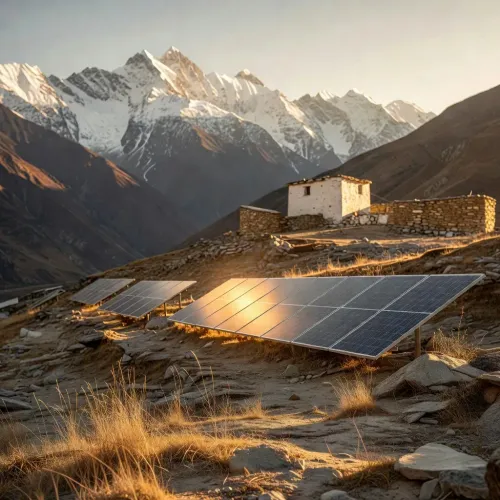
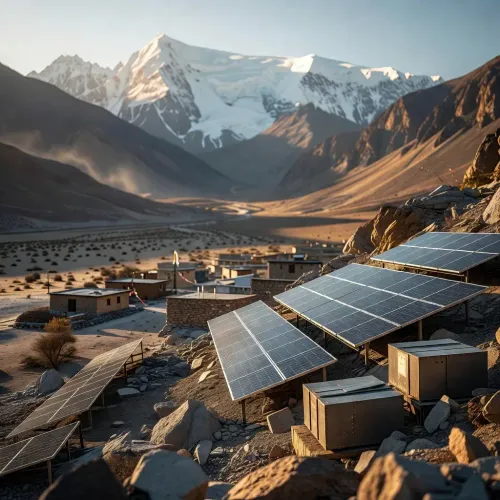
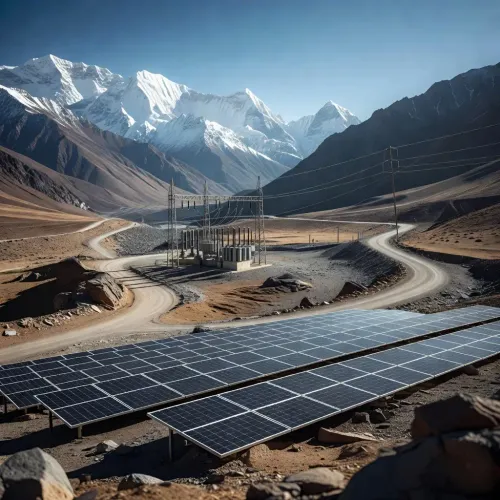
Spiti Valley is a high-altitude cold desert sitting at roughly 3,800 metres above sea level, where extreme temperatures, sparse population, and treacherous terrain make extending the conventional grid prohibitively expensive. Solar irradiance is abundant — clear-sky days are frequent at altitude — but output drops sharply after sunset and during winter nights when demand for heating peaks. That is the classic renewable-energy paradox, and it is exactly what the 1 MWh battery bank is designed to break. By storing surplus daytime generation, the plant can dispatch power after dark, turning an intermittent resource into something closer to baseload supply for the valley's isolated communities.
Himachal's pivot from hydro to solar-plus-storage
Himachal Pradesh built its energy identity on hydropower — fast rivers, steep gradients, ready turbines. But hydro is seasonal, vulnerable to silting, and reaches only where canals and transmission lines follow. Solar, especially in high-altitude districts like Lahaul and Spiti, fills the geographic gaps that rivers cannot. The state government has been expanding its renewable portfolio in line with India's national target of 500 GW non-fossil fuel capacity by 2030, a goal that explicitly requires storage-backed pilots to prove the technology at scale before wider rollout.
The Rongtong project is precisely such a proof-of-concept. If it demonstrates reliable round-the-clock supply through a full Himalayan winter, it provides a replicable template for dozens of similarly isolated pockets across Kinnaur, Pangi, and Bharmour.
What the ₹4.42 crore buys — and what comes next
At Rs 4.42 crore for 2 MW of generation plus 1 MWh of storage, the project reflects the sharply falling cost curve of both solar panels and lithium-based battery systems over the past decade — costs that once made storage-coupled plants economically unviable in remote India. The real test now is operational: how the battery performs through sub-zero winters, whether maintenance logistics work across mountain roads, and whether this pilot unlocks state-level financing for further solar-plus-storage clusters.
The announcement signals that Himachal Pradesh is moving from announcing renewable ambitions to commissioning hardware in its hardest-to-reach corners. For the communities of Spiti, the lights staying on after dark may soon be the most straightforward proof of policy.
Point of View
Climate-challenged terrain across India. Himachal Pradesh's traditional reliance on hydropower made its pivot to solar politically and technically cautious; commissioning a BESS-integrated facility in Spiti signals a willingness to move beyond pilot announcements into capital-intensive execution. If the battery system survives a full Himalayan winter operationally, the state will have a blueprint that other hill states — Uttarakhand, Sikkim, Arunachal Pradesh — will watch closely. The Rs 4.42 crore price point also tests whether falling storage costs have finally made off-grid solar commercially viable for India's most isolated constituencies.
NationPress
15 Oct 2026
Frequently Asked Questions
Where is the new Himachal Pradesh solar plant located?
The plant is located at Rongtong in Spiti Valley , a high-altitude cold desert region in northern Himachal Pradesh.
What is the capacity of the Rongtong solar power plant?
The plant has a generation capacity of 2 megawatts (MW) and is paired with a 1 megawatt-hour (MWh) Battery Energy Storage System.
How much did the Spiti Valley solar plant cost?
The project was built at a cost of Rs 4.42 crore , funded by the Himachal Pradesh state government.
Why is battery storage important for the Spiti Valley solar plant?
Spiti Valley has extreme cold and long nights where solar generation drops to zero. The battery stores surplus daytime energy and dispatches it after sunset, ensuring round-the-clock power for remote communities where grid extension is too expensive.
Is this Himachal Pradesh's first solar plant with battery storage?
Yes. According to the Chief Minister's Office, the Rongtong facility is Himachal Pradesh's first solar power plant equipped with a Battery Energy Storage System (BESS).