CM Himanta Links Nijut Moina and Nijut Babu as Twin Engines of Assam's Youth Welfare
Synopsis
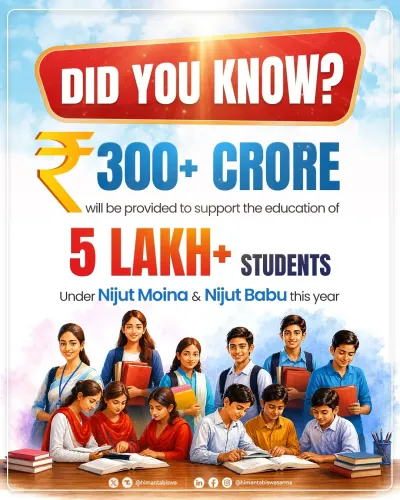
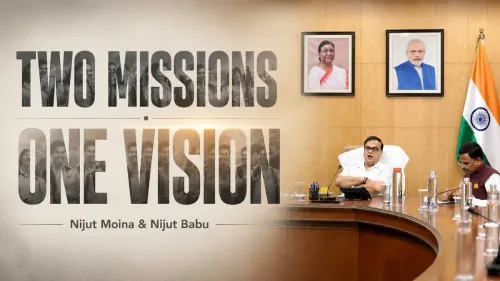
Assam CM Himanta Biswa Sarma on October 15, 2026 linked Nijut Moina and Nijut Babu as twin welfare schemes — one targeting girls' education and child marriage reduction, the other supporting boys from poor and middle-class families — calling them a combined force to empower the next generation.
Key Takeaways
Nijut Moina is the Assam government scheme aimed at improving girls' school enrolment and reducing child marriage incidents.
Nijut Babu is designed to support education and aspirations of boys from poor and middle-class families in Assam.
CM Himanta Biswa Sarma described the two schemes together as a 'potent tool' for generational empowerment.
The programmes reflect Assam's broader policy approach of using financial incentives to change social behaviour linked to education and early marriage.
Independent verification of enrolment and child marriage data from Assam districts will be key to assessing the schemes' real-world impact.
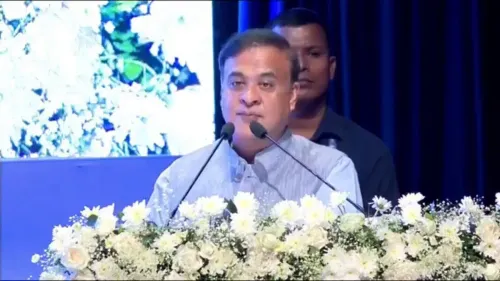
Two schemes, one ambition: Assam Chief Minister Himanta Biswa Sarma on Thursday, October 15, 2026, framed the state's flagship welfare programmes — Nijut Moina for girls and Nijut Babu for boys — as a unified toolkit to lift an entire generation out of poverty and towards education.
Nijut Moina's track record on girls' education and child marriage
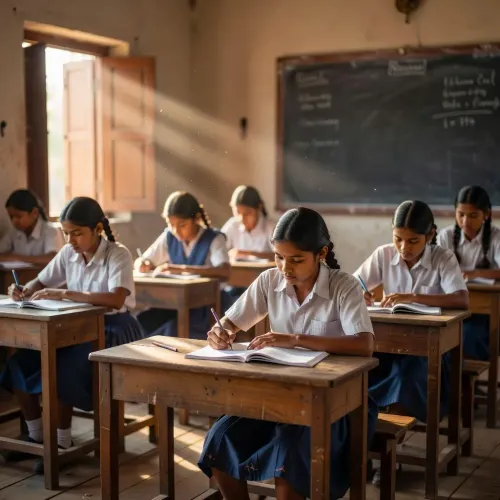
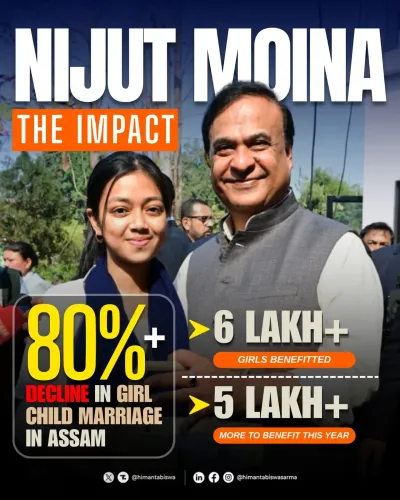
Nijut Moina, the Assam government's scheme targeting girls from economically weaker sections, was designed with a dual purpose from its inception: drive up school enrolment and drive down child marriage. CM Sarma has cited higher enrolment figures and a decline in child marriage incidents as evidence that the programme has become a 'gamechanger' — his word — for girls across the state. The scheme works by giving families a financial stake in keeping their daughters in school rather than marrying them off early.
Child marriage has historically been one of Assam's most stubborn social challenges, particularly in rural and tea-garden districts. A scheme that ties support to educational continuity directly attacks the economic logic that has long underpinned the practice.
Nijut Babu steps in for boys from poor and middle-class homes
The newer sibling programme, Nijut Babu, turns the same logic towards boys from poor and middle-class families — a constituency that often slips through the cracks of welfare design, which more commonly centres girls or women. CM Sarma described the scheme as helping realise the dreams of boys who would otherwise find higher education or vocational aspirations out of reach.
Together, he argued, the two programmes form a 'potent tool' — his phrasing — for empowering what he called 'Gen Next.' The framing is deliberate: rather than presenting them as separate welfare handouts, the Chief Minister is positioning them as a gender-balanced, generational investment strategy.
Assam's pattern of targeted, gender-aware welfare design
The BJP-led Assam government under CM Sarma has built a visible portfolio of education-linked welfare schemes since taking office. The pairing of Nijut Moina and Nijut Babu reflects a broader pattern: address a social ill — child marriage, school dropout — not through prohibition alone, but through financial incentives that make the better outcome the rational family choice.
The real test will come from independent district-level data on enrolment trends and child marriage registrations. State government reports tracking these numbers will determine whether the 'gamechanger' label holds up under scrutiny — or demands a policy rethink.
Point of View
Education-centred social architecture — politically useful ahead of any state cycle, but substantively important if the enrolment and child marriage data hold. By covering both girls and boys from economically weaker sections, the Assam government insulates itself against the criticism that its welfare agenda is exclusively women-focused, broadening its appeal across communities. The real political dividend, however, depends entirely on verifiable outcomes: if district-level data confirms the trends Sarma cites, these schemes become a replicable model for other BJP-governed states in the North-East. If the numbers disappoint, the 'gamechanger' rhetoric risks becoming a liability.
NationPress
15 Oct 2026
Frequently Asked Questions
What is the Nijut Moina scheme in Assam?
Nijut Moina is an Assam government initiative designed to promote girls' education and reduce child marriage by providing financial support that incentivises families to keep daughters in school.
What is the Nijut Babu scheme in Assam?
Nijut Babu is an Assam government programme aimed at supporting the educational aspirations of boys from poor and middle-class families who might otherwise struggle to access higher education or vocational training.
Has child marriage decreased in Assam because of Nijut Moina?
CM Himanta Biswa Sarma has claimed a decline in child marriage incidents and higher school enrolment as outcomes of Nijut Moina. Independent district-level data would be needed to verify these figures.
Who is eligible for the Nijut Moina and Nijut Babu schemes?
Nijut Moina targets girls from economically weaker sections of Assam, while Nijut Babu is aimed at boys from poor and middle-class families. Specific eligibility criteria are set by the Assam state government.
Why did CM Himanta Sarma announce Nijut Moina and Nijut Babu together?
CM Sarma framed both schemes as complementary, calling them a combined 'potent tool' to empower Assam's next generation by addressing educational access and social challenges for both girls and boys.