CM Himanta Credits NijutMoina for 80% Drop in Child Marriage
Synopsis
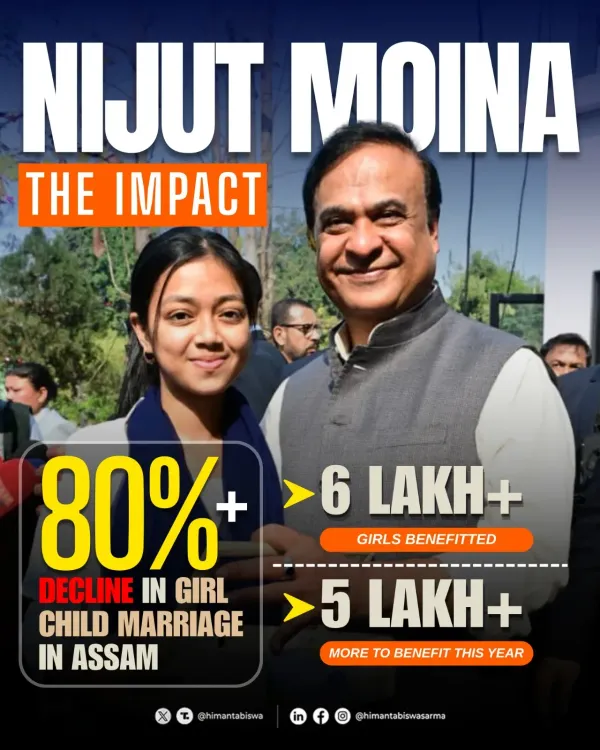
Assam Chief Minister Himanta Biswa Sarma says the state's NijutMoina education support scheme has driven girl child marriage rates down by over 80%, calling it a testament to targeted welfare and the reason lakhs of girls across Assam celebrate the programme.
Key Takeaways
Assam CM Himanta Biswa Sarma claims the NijutMoina scheme has reduced girl child marriage rates by over 80% in Assam.
NijutMoina is a state government scheme providing targeted education support to adolescent girls to keep them in school and delay marriage.
The Chief Minister described the scheme's celebration by 'lakhs of girls across Assam' as proof of its on-ground impact.
Assam has historically had elevated child marriage rates, particularly in rural districts; the state has pursued both enforcement and incentive-based approaches under the current government.
The 80%-plus reduction figure has not been independently verified through publicly available district data as of this report.
Updated district-level child marriage data and upcoming state budget announcements on scheme coverage will be key indicators to watch.
Behind every celebration, there is a number that explains it. Assam Chief Minister Himanta Biswa Sarma on Thursday, August 6, 2026, pointed to that number: a claimed over 80% reduction in girl child marriage rates across the state, which he attributes directly to the government's targeted education support scheme, #NijutMoina.
What NijutMoina Does — and Who It Reaches
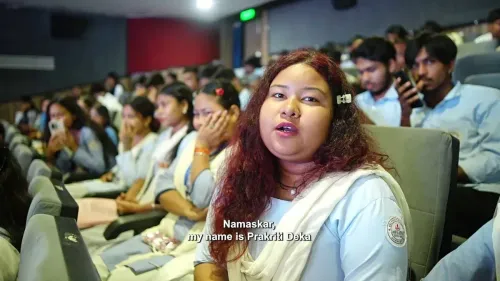
NijutMoina is an Assam government scheme designed to keep adolescent girls in school by providing targeted financial and educational support. The underlying logic is straightforward: a girl in a classroom is a girl not in an early marriage. The Chief Minister's post frames the scheme's widespread celebration among girls across the state not as a political win, but as proof of concept — the 'motivation you don't' see behind the visible cheering.
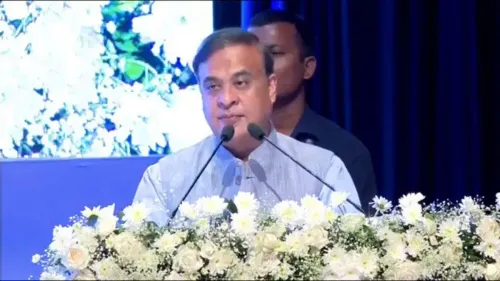
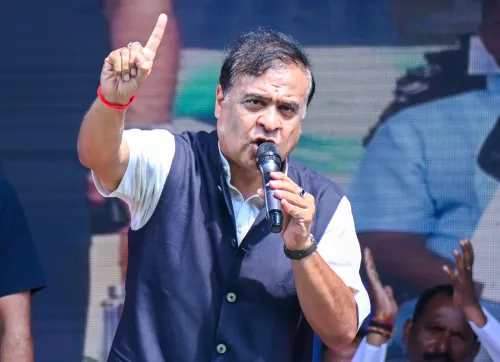
Sarma wrote: 'Due to our targeted education support scheme #NijutMoina, girl child marriage rates have come down by over 80%. This is a testament to the success of the scheme and the reason why it's celebrated by lakhs of girls across Assam.' The framing is deliberate — he is not just announcing a statistic, he is offering a causal story.
Assam's Longer Fight Against Child Marriage
Assam has historically grappled with elevated child marriage rates, particularly in rural and riverine districts. Under the current BJP-led state government, tackling this has involved a combination of law-enforcement drives and welfare incentives — NijutMoina representing the incentive side of that equation. The approach mirrors a broader pattern across Indian states: conditional support mechanisms that tie financial benefits to school enrolment and retention, supplementing national programmes on girls' education.
The scale of impact Sarma cites — if borne out by independent data — would represent one of the sharpest single-state declines in child marriage recorded anywhere in India. That makes the claim significant. It also makes independent verification important: the 80%-plus figure has not been confirmed through publicly available district-level data or official statistical releases as of this report.
The Number That Will Be Watched
What comes next is the data. Updated child marriage prevalence figures from Assam's districts — through state health surveys, NFHS follow-ups, or budget disclosures — will either anchor or complicate the Chief Minister's claim. Any announcement on scheme coverage expansion or budget enhancement in the upcoming state budget cycle will also signal how seriously the government intends to scale what it is already calling a success.
For now, the post lands as both a policy statement and a political signal: that welfare delivered through education is the Assam government's preferred instrument for social change — and that it believes the results are in.
The girls celebrating, Sarma suggests, already know the answer. The rest of us are waiting for the data to confirm it.
Point of View
If verified, would be a landmark outcome that strengthens the BJP's welfare narrative in the Northeast ahead of future electoral cycles. Sarma has consistently positioned Assam as a laboratory for decisive social-sector governance, and this post fits that arc. However, the absence of independently audited data means the figure currently functions more as a political assertion than a confirmed policy outcome — the gap between the claim and the evidence is where the real story will eventually land.
NationPress
21 Sept 2026
Frequently Asked Questions
What is the NijutMoina scheme in Assam?
NijutMoina is an Assam government scheme that provides targeted education support to adolescent girls, aimed at keeping them in school and reducing early or child marriage in the state.
How much has child marriage reduced in Assam due to NijutMoina?
Assam Chief Minister Himanta Biswa Sarma has claimed that girl child marriage rates have come down by over 80% in Assam due to the NijutMoina scheme, though this figure has not been independently verified through public data as of August 2026.
Who launched the NijutMoina scheme?
NijutMoina is a scheme launched by the Assam state government under Chief Minister Himanta Biswa Sarma's BJP-led administration, focused on female education and reducing child marriage.
Why is child marriage a concern in Assam?
Assam has historically recorded elevated child marriage rates, particularly in rural and riverine districts, making it a persistent social challenge that the state government has addressed through both enforcement drives and welfare incentive schemes like NijutMoina.
What does NijutMoina mean and who benefits from it?
NijutMoina is an Assam government education support scheme targeting adolescent girls and their families, providing financial and educational incentives to encourage school retention and delay marriage among young girls across the state.