India hands over 9th-century Nalanda Copper Plate replica to Jakarta institute
Synopsis
A 9th-century copper plate that once recorded a Pala king's grant to a Srivijayan monastery has found new diplomatic life — India's replica handover to Jakarta's Nalanda Institute is a pointed reminder that the India-Indonesia relationship is rooted in over a millennium of Buddhist scholarship and maritime exchange, not just modern geopolitics.
Key Takeaways
India handed over a replica of the 9th-century Nalanda Copper Plate to the Nalanda Institute, Jakarta on 15 October 2026 .
Ambassador Sandeep Chakravorty presented the replica; a Bodhi plant was also planted on the institute's campus.
The copper plate documents ancient maritime and cultural ties between India and the Srivijaya Empire .
The handover is part of the 'Tagore-Dewantara Year of Cultural and Educational Diplomacy' , running from July 2026 to September 2027 .
The commemorative year was announced during Prime Minister Narendra Modi's visit to Indonesia and marks 100 years since Rabindranath Tagore's 1927 journey through Java and Bali.
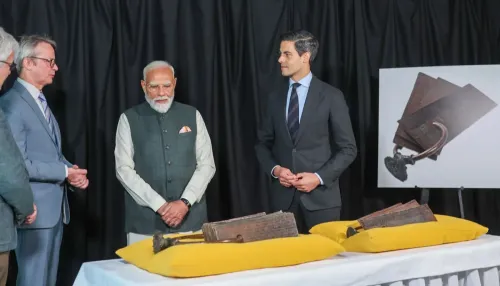
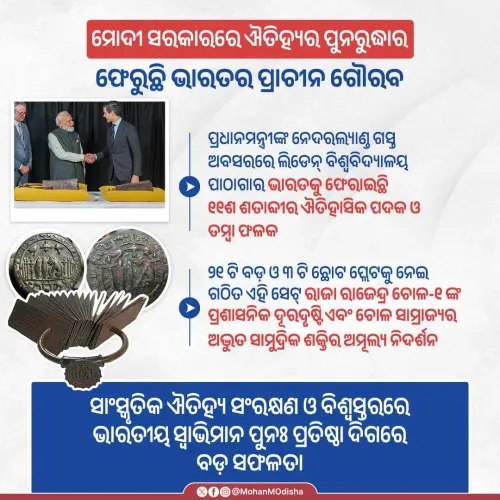
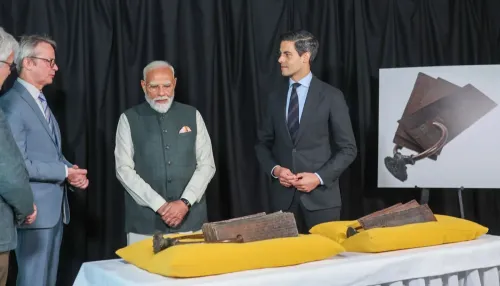
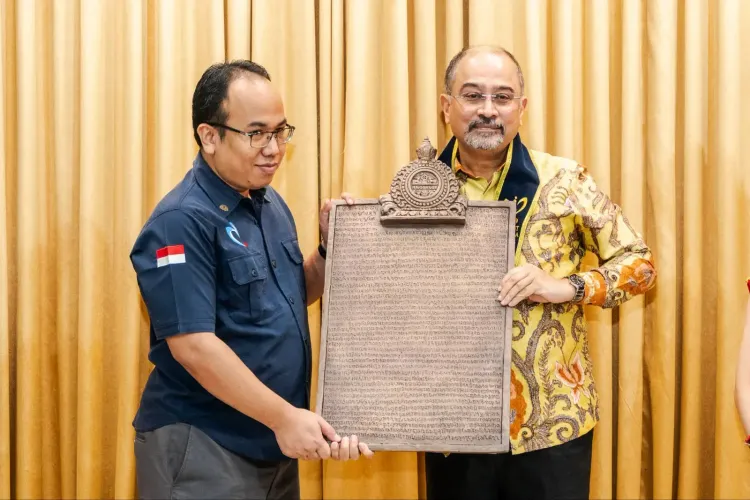
India on Thursday, 15 October 2026 handed over a replica of the 9th-century Nalanda Copper Plate — an ancient inscription documenting maritime and cultural links between India and the Srivijaya Empire — to the Nalanda Institute in Jakarta. The Indian Embassy in Indonesia confirmed the handover, describing it as a reaffirmation of civilisational ties that predate modern diplomacy by over a millennium.
The Handover Ceremony
India's Ambassador to Indonesia, Sandeep Chakravorty, formally presented the replica to the Nalanda Institute. In a gesture layered with symbolic weight, a Bodhi plant was also planted on the institute's campus to represent the enduring bilateral relationship between the two nations.
'This historic inscription stands as timeless proof of ancient maritime diplomacy, cultural ties, and shared heritage between India and the Srivijaya Empire,' the Indian Embassy said in a statement. 'A Bodhi plant was also planted on campus to symbolise enduring bilateral ties,' it added.
What the Nalanda Copper Plate Represents
The original 9th-century Nalanda Copper Plate is one of the most significant epigraphic records of ancient India-Southeast Asia exchange. It documents a land grant by the Pala king to a monastery founded by a Srivijayan ruler — evidence that Buddhist scholarship and maritime commerce connected the Indian subcontinent to the archipelagos of Southeast Asia centuries before European contact. The Srivijaya Empire, centred in present-day Sumatra, was a major Buddhist maritime power that maintained close cultural and trade ties with Nalanda, the celebrated ancient university in Bihar.
Tagore-Dewantara Year of Cultural and Educational Diplomacy
The handover falls within the broader framework of the 'Tagore-Dewantara Year of Cultural and Educational Diplomacy', a 15-month bilateral celebration running from July 2026 to September 2027. The commemorative year was announced during Prime Minister Narendra Modi's visit to Indonesia and was jointly declared by both countries.
The initiative is named after Rabindranath Tagore — Asia's first Nobel laureate — and Ki Hadjar Dewantara, the father of Indonesian national education. In 1927, Tagore travelled through Java and Bali, encountering a society he found awakening through art, learning, and self-belief. The 2026-27 commemoration marks a century since that visit, with programming spanning festivals, films, fashion, textiles, literature, and scholarship exchanges across both nations.
Broader Diplomatic Context
India and Indonesia have deepened cultural and strategic engagement over recent years, with the Tagore-Dewantara Year adding a people-to-people dimension to what is otherwise a relationship increasingly defined by trade, defence, and Indo-Pacific alignment. This copper plate handover — a replica of a document that records royal patronage of cross-border Buddhist scholarship — underscores both countries' interest in anchoring their modern partnership in a shared ancient heritage. Notably, the choice of venue, the Nalanda Institute in Jakarta, directly echoes the original inscription's connection to the ancient Nalanda university in India.
Further cultural exchanges under the Tagore-Dewantara Year are expected through September 2027, with both embassies coordinating events across major Indonesian and Indian cities.
Point of View
Or remains a festival calendar. India has historically been stronger on cultural symbolism with Southeast Asian partners than on sustained institutional follow-through. With Indonesia emerging as a pivotal Indo-Pacific actor, the depth of this civilisational framing will matter only if it is matched by academic partnerships, student mobility, and research collaboration that outlast the September 2027 closing ceremony.
NationPress
15 Oct 2026
Frequently Asked Questions
What is the Nalanda Copper Plate and why is it significant?
The Nalanda Copper Plate is a 9th-century inscription documenting a land grant by a Pala king to a monastery established by a ruler of the Srivijaya Empire — evidence of deep Buddhist, maritime, and cultural ties between ancient India and Southeast Asia. It is considered one of the most important epigraphic records of India-Indonesia civilisational contact.
Why did India hand over a replica to Jakarta?
India handed over the replica to the Nalanda Institute in Jakarta as part of the 'Tagore-Dewantara Year of Cultural and Educational Diplomacy', a 15-month bilateral celebration running from July 2026 to September 2027. The gesture is intended to highlight shared ancient heritage and reinforce modern diplomatic ties between India and Indonesia.
What is the Tagore-Dewantara Year of Cultural and Educational Diplomacy?
It is a 15-month bilateral initiative between India and Indonesia, running from July 2026 to September 2027, announced during Prime Minister Narendra Modi's visit to Indonesia. Named after Rabindranath Tagore and Ki Hadjar Dewantara, it marks 100 years since Tagore's 1927 journey through Java and Bali, with programming covering festivals, films, literature, and scholarship exchanges.
Who represented India at the handover ceremony?
India's Ambassador to Indonesia, Sandeep Chakravorty, formally handed over the replica of the Nalanda Copper Plate at the Nalanda Institute in Jakarta. A Bodhi plant was also planted on campus during the ceremony.
What were the India-Srivijaya Empire ties referenced by the copper plate?
The Srivijaya Empire, centred in present-day Sumatra, was a powerful Buddhist maritime state that maintained close scholarly and trade ties with Nalanda — the ancient university in Bihar. The copper plate records royal patronage that crossed the Bay of Bengal, reflecting centuries of Buddhist cultural and commercial exchange between the Indian subcontinent and Southeast Asia.