CM Bhupendra Patel Spotlights Sabarkantha Woman's Farm Success
Synopsis
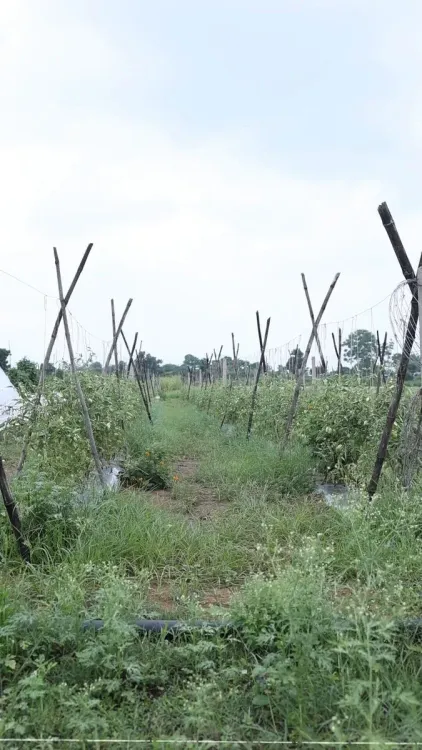
Gujarat CM Bhupendra Patel shared the story of Pratikshaben Prajapati from Sabarkantha, who received a Mission Mangalam startup fund through the Jay Bhavani Sakhi Mandal SHG and now earns a steady daily income growing tomatoes, chilies, bottle gourd and cowpea on her own farm.
Key Takeaways
Pratikshaben Prajapati of Sabarkantha district is a member of Jay Bhavani Sakhi Mandal self-help group.
She received a startup fund under Gujarat's Mission Mangalam scheme to begin vegetable cultivation.
Crops grown include tomatoes, chilies, bottle gourd and cowpea on her own farmland.
She now earns a daily income sustaining her family and supplies fresh vegetables to the local community.
The post was shared under #SevaSankapAbhiyan and #SevaKiKahani , a BJP campaign spotlighting individual scheme beneficiaries.
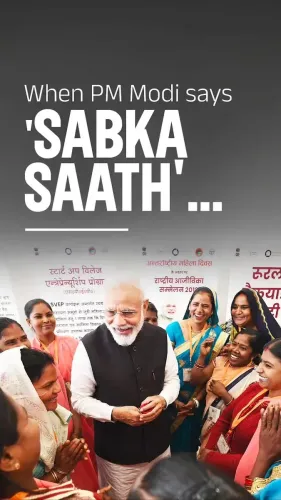
CM Patel credits PM Narendra Modi's 25 years of public service for driving the vision of women's self-reliance and rural economic strength.
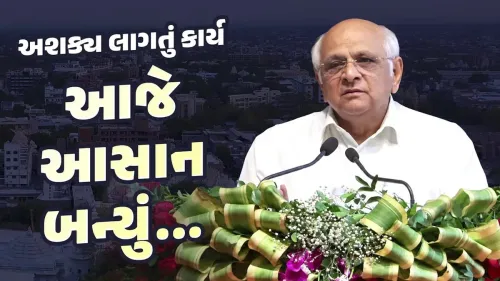
A vegetable patch in Sabarkantha district has become the latest emblem of Gujarat's rural women's empowerment push. Gujarat Chief Minister Bhupendra Patel on Thursday, October 15, 2026, shared the journey of Pratikshaben Prajapati — a member of the Jay Bhavani Sakhi Mandal self-help group — who used a startup fund under the state's Mission Mangalam scheme to grow tomatoes, chilies, bottle gourd and cowpea on her own land and build a steady daily income for her family.
Writing in Gujarati, the Chief Minister described how Pratikshaben's story captures both economic self-reliance and community benefit: she is not only supporting her household but also supplying 'શુદ્ધ શાકભાજી' (pure, fresh vegetables) to local buyers. The post credits Prime Minister Narendra Modi for setting the vision, calling women's self-reliance and a stronger rural economy the defining 'mantra' of Modi's 25 years of continuous public service — a reference that traces back to his tenure as Gujarat CM from 2001 onward.
How Mission Mangalam turns SHG membership into a micro-enterprise
Mission Mangalam is Gujarat's flagship scheme linking self-help group women to financial assistance for farm-based and micro-enterprise activity. The programme channels startup capital to SHG members, enabling them to invest in inputs — seeds, tools, irrigation — without collateral. Pratikshaben's case is a textbook example: membership in Jay Bhavani Sakhi Mandal gave her access to the fund; the fund gave her a field full of marketable vegetables.
The Sabarkantha district sits in northern Gujarat, a largely agrarian belt where vegetable cultivation can generate consistent cash flow if farmers can clear the capital barrier at the start of the season. For Pratikshaben, that barrier is now gone. Her daily income, the post says, sustains the family — a quiet but concrete measure of the scheme's reach.
Seva Sankalp Abhiyan and the politics of the beneficiary story
The post is tagged #SevaSankapAbhiyan and #SevaKiKahani, situating it within a broader BJP campaign that surfaces individual success stories to illustrate policy outcomes. Such narratives are a deliberate communication tool: a single named woman in a named district with a named crop makes an abstract scheme legible to a mass audience far more effectively than a disbursement statistic.
Gujarat has long used the SHG model as a rural development lever, and Mission Mangalam extends that lineage. The Seva Sankalp Abhiyan framing suggests a sustained effort to document and amplify these outcomes — expect more district-level stories from Gujarat's SHG network in the weeks ahead.
For a woman in Sabarkantha who once lacked start-up capital, a field of tomatoes and chilies is no small thing. It is, as the Chief Minister frames it, the ground-level proof of a 25-year wager on rural women.
Point of View
Blending genuine scheme outcomes with deliberate political messaging around Modi's public-service legacy. Mission Mangalam has a real track record of channelling capital to SHG women in Gujarat, and individual success stories like Pratikshaben's carry verifiable economic weight. The dual framing — state government scheme plus Prime Ministerial vision — is a standard BJP governance-communication technique that seeks to elevate local welfare wins to a national brand story. Ahead of the Seva Sankalp Abhiyan cycle, expect this template to multiply across Gujarat districts as the party builds its rural-women development narrative.
NationPress
15 Oct 2026
Frequently Asked Questions
What is Mission Mangalam in Gujarat?
Mission Mangalam is a Gujarat government scheme that provides startup funds and financial assistance to women self-help groups, enabling them to start micro-enterprises including farm-based activities like vegetable cultivation.
Who is Pratikshaben Prajapati?
Pratikshaben Prajapati is a woman from Sabarkantha district in northern Gujarat who is a member of the Jay Bhavani Sakhi Mandal self-help group and used a Mission Mangalam startup fund to begin growing vegetables on her farm.
What is Seva Sankalp Abhiyan?
Seva Sankalp Abhiyan is a BJP campaign that collects and shares individual beneficiary success stories from government schemes to highlight welfare outcomes at the grassroots level.
What crops did Pratikshaben grow with the Mission Mangalam fund?
She cultivated tomatoes, chilies, bottle gourd and cowpea on her own farmland in Sabarkantha district using the Mission Mangalam startup fund.
Why does Gujarat CM Bhupendra Patel thank PM Modi in this post?
CM Patel credits PM Modi's 25-year policy vision — dating to his tenure as Gujarat CM from 2001 — for championing women's self-reliance and strengthening the rural economy through schemes like Mission Mangalam.