CM Himanta rallies Tezpur against 'Dimagi Naxals' and regime change
Synopsis
Assam Chief Minister Himanta Biswa Sarma led a large, peaceful rally in Tezpur on October 15, 2026, warning that India will not bow to blackmail, 'Dimagi Naxals,' or regime-change attempts — sharpening BJP's combative political framing in the north-east.
Key Takeaways
Assam Chief Minister Himanta Biswa Sarma addressed a large, peaceful rally in Tezpur, Sonitpur district on October 15, 2026 .
Sarma declared India will not yield to blackmail, 'Dimagi Naxals,' or any attempt at regime change.
The term 'Dimagi Naxals' is a recurring BJP label for alleged intellectual supporters of anti-establishment movements.
BJP has governed Assam since 2016 ; Sarma also serves as convenor of the North-East Democratic Alliance (NEDA) .
The specific trigger for the rally — the incident or group prompting the blackmail and regime-change language — has not been independently verified.
Assam opposition parties had not issued a formal response to the rally at the time of reporting.
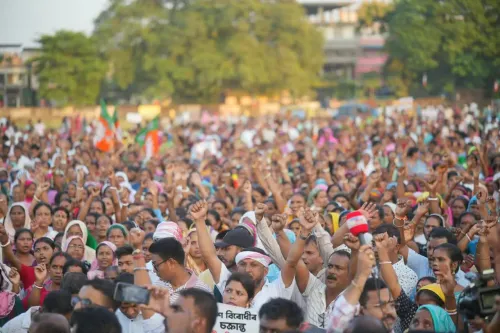
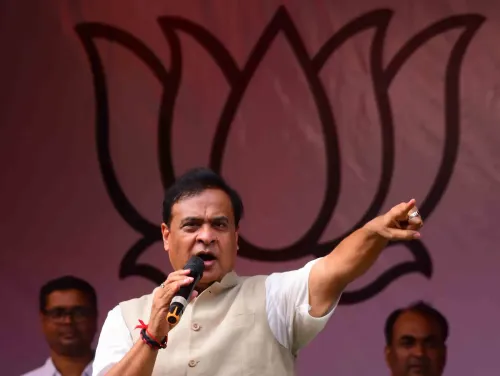
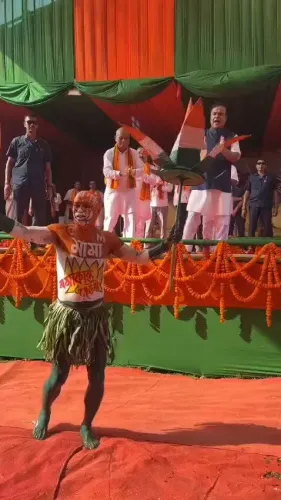
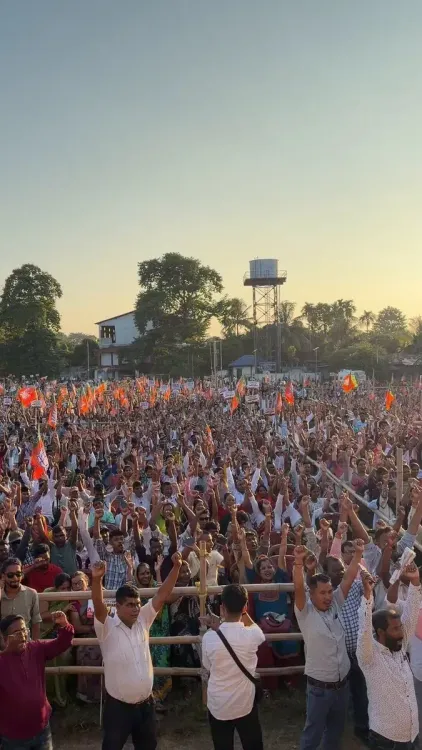
A large, peaceful crowd filled the streets of Tezpur, Assam on Thursday, October 15, 2026, as Assam Chief Minister Himanta Biswa Sarma declared that India — and his government — will not yield to what he called blackmail, 'Dimagi Naxals,' or any push for regime change.
Tezpur as a flashpoint: what the rally signals
Tezpur, the administrative and cultural nerve centre of Sonitpur district, is no stranger to political mobilisation. Sarma's decision to anchor this show of strength there — rather than in state capital Guwahati — underlines a deliberate message: BJP's organisational reach in Assam's hinterland is intact and activated. The turnout, described by the Chief Minister as 'massive' and 'peaceful,' was framed as a popular mandate against destabilising forces, not merely a party rally.
Unpacking 'Dimagi Naxals': a term with national currency
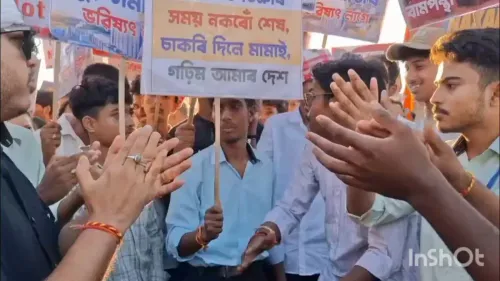
The phrase 'Dimagi Naxals' — roughly translating to 'intellectual Naxals' or 'cerebral Naxals' — has been a recurring marker in BJP political vocabulary nationally for several years. It draws a deliberate distinction between armed Maoist insurgents and those the party accuses of providing ideological cover or institutional legitimacy to anti-establishment movements. Sarma's use of the term at a public rally signals that the framing is being applied to whatever opposition pressure the Assam government is currently facing. What remains unverified is the precise trigger: the specific incident, group, or controversy that prompted Thursday's mobilisation has not been independently confirmed.
The 'regime change' charge and Assam's political context
Assam has been under BJP governance since 2016, a decade defined by aggressive counter-insurgency outcomes, the implementation of the National Register of Citizens (NRC), and recurring confrontations with opposition and civil-society groups over citizenship, land, and ethnic identity. Sarma, who also serves as convenor of the North-East Democratic Alliance (NEDA), has consistently positioned himself as the front-line defender of political stability across the region. The language of 'regime change' — typically applied to foreign interference in sovereign governments — deployed in a domestic context is a sharp escalation of that framing: it casts political opposition not as democratic contest but as a threat to constitutional order itself.
What the opposition and NEDA allies will be watching
Assam's opposition groups have not yet issued a formal public response to the Tezpur rally or to Sarma's characterisation of their activity. The combative framing, however, puts pressure on them to either rebut the 'Dimagi Naxal' label directly or risk the narrative hardening. Within NEDA, Thursday's display reinforces Sarma's standing as the dominant political voice of BJP's north-east project — a position that carries weight as the alliance manages fragile coalitions across several states.
The Tezpur crowd did not just cheer a Chief Minister — it sent a message that the political establishment in Assam intends to answer every challenge with organised, public force. Whether the opposition can reframe this moment, or finds itself permanently cast as the villain in Sarma's script, is the next test.
Point of View
' the Chief Minister frames any opposition pressure as an existential threat rather than democratic contestation. This escalates the rhetorical stakes considerably beyond routine political sparring, borrowing the grammar of national-security discourse for a state-level political moment. As NEDA convenor, Sarma also signals to north-east alliance partners that Assam's BJP core remains organisationally powerful and politically confident. The unverified trigger for the rally is itself politically significant — the ambiguity allows the framing to absorb multiple grievances at once.
NationPress
15 Oct 2026
Frequently Asked Questions
What did Himanta Biswa Sarma say at the Tezpur rally?
Sarma declared at the October 15 Tezpur rally that India will not bow to blackmail, to 'Dimagi Naxals,' or to any attempt at regime change, framing the gathering as a peaceful show of strength.
What does 'Dimagi Naxal' mean?
'Dimagi Naxal' translates roughly to 'intellectual Naxal' — a term used in BJP political discourse to describe those accused of providing ideological cover or institutional support to anti-establishment or Maoist-aligned movements, as distinct from armed insurgents.
Why was the rally held in Tezpur and not Guwahati?
Tezpur is the regional centre of Sonitpur district in central Assam; holding the rally there rather than the state capital Guwahati signals BJP's organisational strength in Assam's interior and its ability to mobilise crowds beyond urban centres.
What is NEDA and what is Himanta Biswa Sarma's role in it?
The North-East Democratic Alliance (NEDA) is a BJP-led coalition of regional parties governing several north-eastern states. Himanta Biswa Sarma, Assam's Chief Minister, serves as its convenor, making him the key coordinator of BJP's political strategy across the region.
How long has BJP been in power in Assam?
BJP has governed Assam since 2016 , a decade marked by counter-insurgency outcomes, the National Register of Citizens (NRC) process, and repeated confrontations with opposition and civil-society groups over citizenship and ethnic identity.