CM Himanta calls opposition protests a 'regime-change project by Dimagi Naxals'
Synopsis
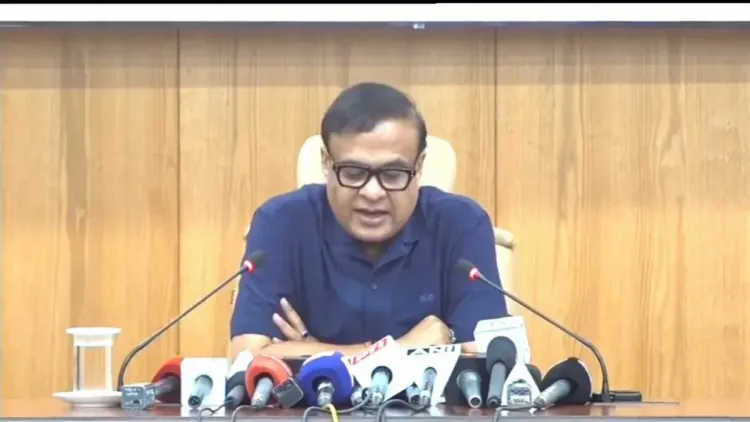
Assam Chief Minister Himanta Biswa Sarma posted on October 12, 2026, calling ongoing protests a 'regime-change project by Dimagi Naxals', signalling the BJP's intent to delegitimise the movement's framing rather than engage with its demands.
Key Takeaways
Assam CM Himanta Biswa Sarma posted on October 12, 2026 , describing ongoing protests as a 'regime-change project' rather than a genuine people's movement.
He invoked the term 'Dimagi Naxals' — a BJP-circuit label for alleged urban-intellectual enablers of left-wing extremism.
The framing contests the legitimacy and motivation of protesters, not merely their specific demands.
As NEDA convenor , Sarma's rhetoric carries political weight across multiple North-East states sensitive to insurgency history.
The post contains no policy engagement, indicating the BJP is choosing narrative warfare over point-by-point rebuttal at this stage.
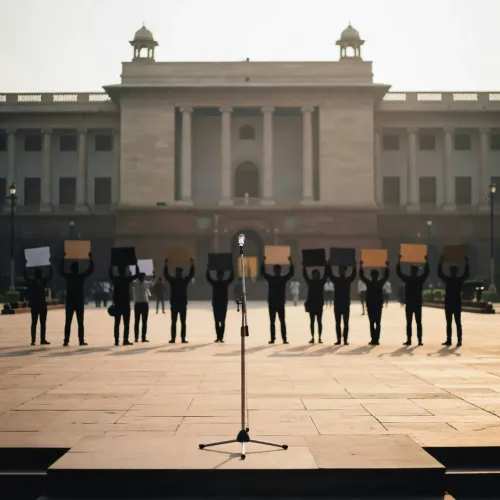
A pointed two-line post from Assam Chief Minister Himanta Biswa Sarma landed on Monday, October 12, 2026, and it cut straight to the bone: what critics frame as a popular movement, he frames as something far more calculated — and far more sinister.
The phrase that demands unpacking: 'Dimagi Naxals'
The term 'Dimagi Naxals' — roughly, 'intellectual Naxals' or 'cerebral Naxals' — has circulated in Indian right-wing political discourse for several years as a label for urban activists, academics, and civil society figures whom BJP leaders accuse of providing ideological cover for violent left-wing extremism without picking up a weapon themselves. Sarma is deploying it here to draw a direct line between organised street agitation and what he describes as an orchestrated bid to topple a government rather than reform policy.
The distinction he is drawing is deliberate: a 'movement' implies organic, grassroots grievance; a 'regime-change project' implies foreign or elite-funded engineering. By collapsing both into a single sentence, Sarma is signalling that the BJP intends to contest not just the demands being raised but the very legitimacy and motivation of the people raising them.
Sarma's place in the BJP's ideological front line
Himanta Biswa Sarma has emerged as one of the party's sharpest combative voices — a politician who rarely reaches for diplomatic language when a blunt formulation is available. As convenor of the North-East Democratic Alliance (NEDA), he also carries strategic weight well beyond Assam's borders, making his framing of domestic unrest politically consequential across a region sensitive to both insurgency history and identity politics.
His choice of the word 'regime-change' is especially loaded in the current climate. The phrase has become a rhetorical staple globally when incumbents wish to delegitimise opposition pressure, and its use by a sitting chief minister signals that the ruling establishment intends to fight the narrative of the protests as hard as it fights any of the specific demands.
What the post signals for the political moment
With no policy detail in the post and no research context available, the article's news value sits squarely in the political signal itself. Sarma is not engaging with any specific protest demand — he is rejecting the entire frame. That is a governing posture, not a debating one. Expect it to be amplified across BJP communication channels and countered equally hard by opposition figures who will argue it is exactly the kind of language used to shut down legitimate dissent.
When a senior minister stops arguing about the 'what' and starts arguing about the 'who' and the 'why', the political temperature has already moved well past policy disagreement.
Point of View
The BJP pre-empts sympathy and forces opponents to defend their intentions before their arguments. It fits a broader pattern in which the ruling party has consistently moved the arena of political contest from policy specifics to questions of loyalty and motivation. For the opposition, the challenge is now to reclaim the moral legitimacy of protest — a harder fight than any debate over a particular grievance. The phrase is also a window into how the BJP plans to frame urban civil society for the remainder of this political cycle.
NationPress
12 Oct 2026
Frequently Asked Questions
What did Himanta Biswa Sarma mean by 'Dimagi Naxals'?
'Dimagi Naxal' is a term used in BJP political discourse to describe urban intellectuals, academics, or activists accused of providing ideological support to left-wing extremism without direct involvement in violence. Sarma used it to suggest the protests are driven by subversive elite networks rather than genuine public grievance.
Who is Himanta Biswa Sarma and why does his statement matter?
Himanta Biswa Sarma is the Chief Minister of Assam and a senior BJP leader. He is also the convenor of the North-East Democratic Alliance (NEDA), giving him political influence across multiple North-Eastern states, which means his statements carry weight beyond Assam alone.
What is a 'regime-change project' in this political context?
In Sarma's framing, calling something a 'regime-change project' implies the protests are not organic or issue-based but are externally or elite-funded efforts to topple the elected government. It is a phrase designed to question the motivation behind the agitation rather than its stated demands.
What movement or protest is Sarma referring to?
The post does not specify a particular protest. Based on the post alone, Sarma appears to be addressing a broader wave of opposition-aligned agitation, though the specific trigger or movement he is referring to has not been identified in available sources.
Has Sarma used this kind of language before?
Yes. Sarma has consistently been one of the BJP's most direct rhetorical voices, often choosing confrontational framing over conciliatory language when responding to political opposition or civil society agitation. The use of 'Dimagi Naxals' aligns with a pattern of BJP leaders using the term to discredit urban-based protest leadership.