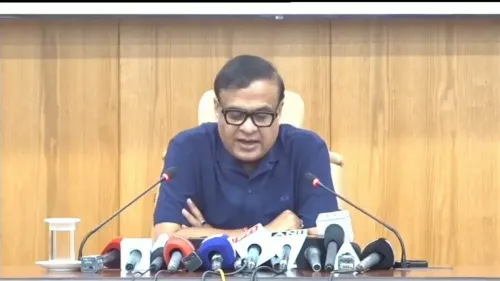
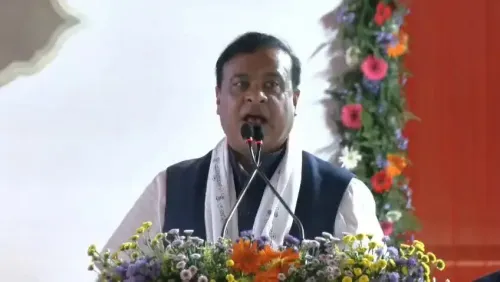
CM Himanta Warns Congress Over 'Regime Change' Push
Synopsis
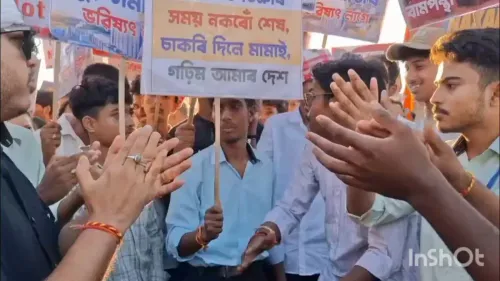
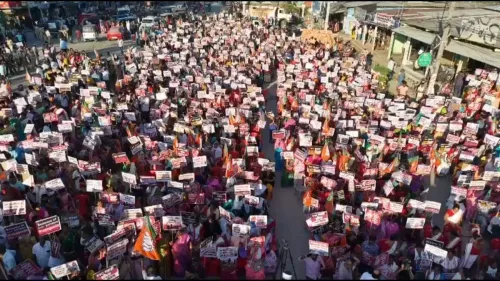
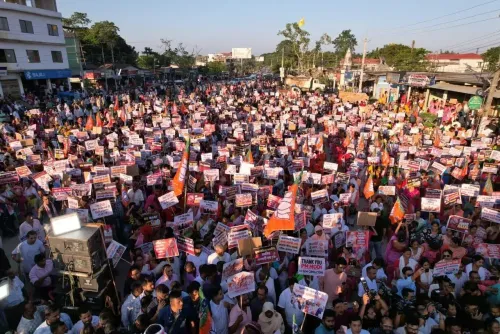
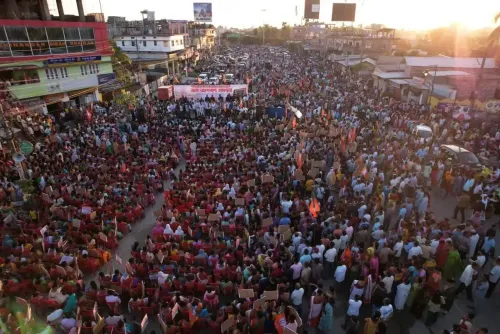
Assam CM Himanta Biswa Sarma invoked a crowd of 30,000 to issue a sharp warning against Congress and what he termed 'Dimagi Naxals,' accusing them of a 'regime change agenda' as youth mobilisation intensifies ahead of the 2026 state elections.
Key Takeaways
Assam Chief Minister Himanta Biswa Sarma posted on October 14, 2026 citing a crowd of 30,000 at a recent gathering.
He described it as 'a warning, not a crowd,' promising even larger turnouts ahead.
Sarma accused the Indian National Congress and 'Dimagi Naxals' of pursuing a 'regime change agenda.' The term 'Dimagi Naxals' is Sarma's own rhetorical coinage — it is not a formal security or legal designation.
The rhetoric follows a consistent BJP pattern in Assam of framing opposition activity as destabilising ahead of election cycles.
The 2026 Assam assembly elections are the critical backdrop to this surge in youth mobilisation messaging.
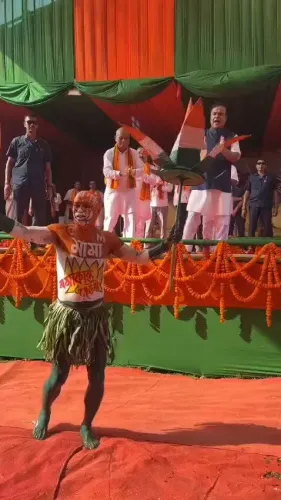
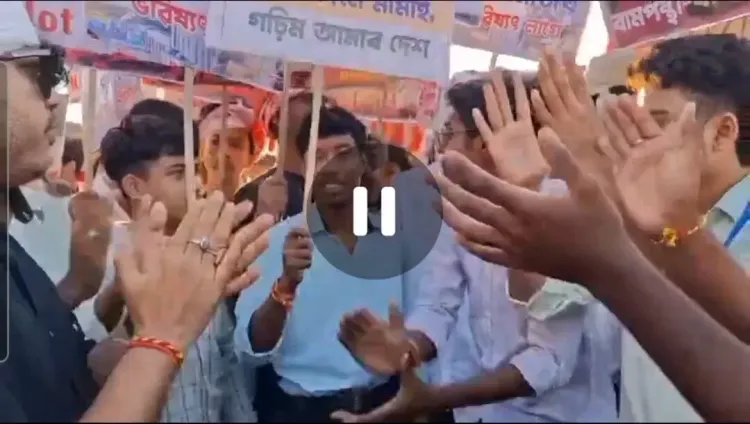
A crowd of 30,000, Assam Chief Minister Himanta Biswa Sarma declared on Wednesday, October 14, is not a gathering — it is a political signal. The BJP leader and NEDA convenor took to X to warn that India's youth are mobilising in force, and that the numbers will only grow.
Posting in combative terms, Sarma wrote: 'This isn't a crowd, it's a warning. 30,000 yesterday, far more in the days ahead. India's youth won't stay silent while Cong and Dimagi Naxals push their regime change agenda.' The post, carrying a video, was directed squarely at the Indian National Congress and what Sarma labelled — in his own coinage — 'Dimagi Naxals,' a rhetorical phrase he uses to describe ideological opponents he accuses of destabilising India from within.
The 'Regime Change' Charge and What Sarma Means by It
The phrase 'regime change agenda' is deliberate and loaded. In BJP political vocabulary, it frames opposition electoral efforts not as democratic contest but as a coordinated assault on state stability — a charge that blends domestic opposition with the language of geopolitical subversion. Sarma has been one of the most consistent voices in the BJP ecosystem deploying this framing, particularly in the North-East where he also steers the multi-party North-East Democratic Alliance (NEDA). The term 'Dimagi Naxals' — roughly translating to 'intellectual Naxals' or 'Naxals of the mind' — is a rhetorical escalation, grouping liberal critics and left-leaning activists with the armed Naxalite insurgency in the public imagination. It is not a formal legal or security designation.Youth Mobilisation as Sarma's Signature Move
Under Sarma's leadership, Assam politics has been marked by high-decibel youth outreach alongside uncompromising postures on internal security. The invocation of a 30,000-strong crowd — with a promise of 'far more in the days ahead' — follows a pattern seen ahead of election cycles: large public shows of strength timed to project momentum and put the opposition on the defensive. Congress has historically been the primary target of this messaging in Assam, a state where the BJP dramatically expanded its footprint in the 2021 assembly elections and which is expected to head back to the polls in 2026. Sarma's framing of youth participation as a spontaneous warning — rather than an organised campaign event — is itself a rhetorical choice: it casts the crowd as a civic uprising, not a party rally. Whether Congress or other opposition groups respond formally to the 'regime change' accusation, and whether these youth gatherings translate into organisational ground strength as the 2026 Assam assembly elections approach, will be the real test of the momentum Sarma is claiming today.Point of View
He attempts to shift the narrative from organised campaigning to organic popular uprising. The 'regime change' charge is an escalation designed to nationalise a state-level contest, tying Congress to an existential threat rather than a policy debate. Historically, such rhetoric in Assam has served to consolidate BJP's hold on nationalist voters while putting the opposition in a defensive crouch before a single vote is cast. With the 2026 assembly elections approaching, expect this youth-mobilisation framing to become the dominant BJP communication strategy across the North-East.
NationPress
14 Oct 2026
Frequently Asked Questions
What did Himanta Biswa Sarma say about the 30,000 crowd?
Sarma described the crowd of 30,000 as 'a warning, not a crowd,' and said India's youth would not stay silent while Congress and 'Dimagi Naxals' pursue what he called a 'regime change agenda.'
What does 'Dimagi Naxals' mean?
'Dimagi Naxals' is a rhetorical phrase coined by BJP leaders — roughly meaning 'intellectual Naxals' — used to describe liberal critics or left-leaning activists by associating them with the armed Naxalite insurgency. It is not a formal legal or security designation.
What is the 'regime change agenda' Sarma is referring to?
Sarma uses the term to frame Congress and opposition activity not as standard electoral competition but as an organised effort to destabilise the current government — a charge the Congress party disputes.
When are the next Assam assembly elections?
The next Assam assembly elections are expected in 2026 , making the current period a critical window for both BJP's youth mobilisation drive and opposition counter-campaigns.
What is NEDA and what role does Sarma play in it?
The North-East Democratic Alliance (NEDA) is a BJP-led coalition of regional parties across the North-East. Himanta Biswa Sarma serves as its convenor, giving him an outsized political role beyond Assam's borders.