Mahua Moitra warns Supreme Court of constitutional complicity

Synopsis
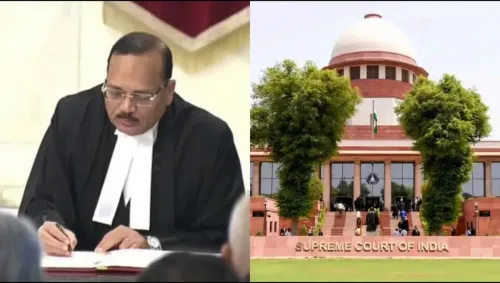
TMC MP Mahua Moitra on October 14, 2026, accused the Supreme Court of India of complicity in 'the murder of the Constitution,' warning that the apex court's continued silence on a specific unnamed act makes it a participant, not a bystander.
Key Takeaways
TMC MP Mahua Moitra posted a sharp warning to the Supreme Court of India on October 14, 2026 .
She declared the Court 'complicit in the murder of the Constitution' if it remains silent on an unspecified act she described as criminal.
The post uses the word 'still,' implying the grievance is ongoing and a response is overdue.
The specific event or legislation triggering the post could not be independently verified at the time of writing.
Moitra's intervention fits a broader pattern of Indian opposition MPs challenging judicial inaction during disputes with the central government.
Any subsequent Supreme Court orders or observations on constitutional challenges will be the key development to watch.
TMC MP Mahua Moitra fired a stark warning at the Supreme Court of India on Wednesday, October 14, 2026, declaring that the apex court's silence on what she described as a criminal act makes it complicit in what she called 'the murder of our Constitution.'
In a blunt post on X, Moitra wrote: 'This cannot be a criminal act. If the Supreme Court is still quiet then it is complicit in the murder of our Constitution. Simple.' The message was unambiguous in its escalation — framing judicial inaction not as negligence, but as active participation in a constitutional breakdown.
A familiar charge, carried to a sharper edge
Moitra's accusation lands within a pattern that India's opposition has rehearsed across multiple flashpoints: the argument that the Supreme Court has been slow — or altogether unwilling — to exercise its power of judicial review when the executive pushes against constitutional limits. What distinguishes this post is the sharpness of the language. 'Complicit in murder' is not the vocabulary of procedural critique. It is a verdict.
Indian opposition MPs, particularly those from regional parties facing direct confrontation with the central government, have periodically tested this rhetorical boundary. Each time, the charge triggers a wider conversation about judicial independence: when should the Court act suo motu, and what message does prolonged silence send to those who see themselves as the Constitution's guardians?
The weight behind 'still quiet'
The operative word in Moitra's post is 'still.' It implies a clock that has been running — a grievance already registered, a threshold already crossed, and an institution that, in her framing, has chosen not to respond. The research does not allow identification of the specific act or event she labels a 'criminal act'; that context lies outside verifiable public record at the time of writing.
What is verifiable is the institutional dynamic she is invoking. The Supreme Court of India holds sweeping powers of judicial review and the authority to intervene in matters of fundamental rights and constitutional integrity. Critics from across the opposition spectrum have argued that those powers are most consequential — and most tested — precisely when they are not used.
Whether the Court responds, and how, will determine whether this post remains a rhetorical salvo or marks the opening of a sharper institutional confrontation.
Point of View
' she shifts the framing from procedural delay to moral and institutional guilt — a deliberate escalation designed to force a public reckoning. This tactic has historically served a dual purpose: pressuring the Court indirectly while energising opposition supporters who see judicial independence as a live battleground. The test, as always, lies in whether the Court responds, stays silent, or whether other parliamentary voices — including within the ruling coalition — feel compelled to answer the charge.
NationPress
14 Oct 2026
Frequently Asked Questions
What did Mahua Moitra say about the Supreme Court?
Mahua Moitra said that if the Supreme Court remains silent on what she described as a criminal act, it becomes 'complicit in the murder of the Constitution.'
Why is Mahua Moitra criticising the Supreme Court?
Moitra is invoking the Court's alleged inaction on a specific matter she considers a constitutional violation, though the exact event triggering her post has not been independently confirmed.
Can an MP accuse the Supreme Court of complicity?
There are no legal restrictions on MPs expressing political opinion about judicial conduct in public forums, though contempt of court provisions apply if statements are found to scandalise the Court in a legally actionable way.
What does 'complicit in murder of Constitution' mean?
It is a rhetorical phrase used by Moitra to argue that the Supreme Court's silence effectively enables a constitutional breach — making the Court a participant in, rather than a check against, that breach.
Has the opposition accused the Supreme Court of inaction before?
Yes. Indian opposition MPs across multiple parties have periodically accused the Supreme Court of delayed or insufficient intervention during disputes involving alleged executive overreach.