Mahua Moitra Slams Supreme Court Over By-Election Remarks
Synopsis
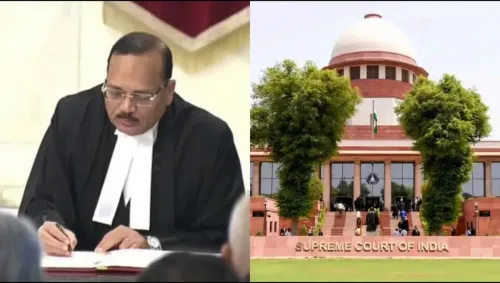
TMC MP Mahua Moitra publicly challenged the Supreme Court of India on 29 September 2026, quoting reported judicial remarks that called a contested seat 'only a by-election' and accused the apex court of dereliction of its constitutional duty.
Key Takeaways
TMC MP Mahua Moitra posted a pointed challenge to the Supreme Court of India on 29 September 2026 .
She quoted two remarks attributed to the court: 'Only a by-election' and 'They can vote in the next election.' Moitra accused the apex court of 'dereliction of duty' in upholding the Constitution, while framing her critique as respectful.
The remarks arose in the context of an election petition the court was hearing; the specific case details fall outside verified reporting.
Indian opposition figures have a documented pattern of criticising judicial observations that appear to downplay bypolls and voter rights.
Further hearings in the underlying petition and potential parliamentary debate on the remarks are anticipated.
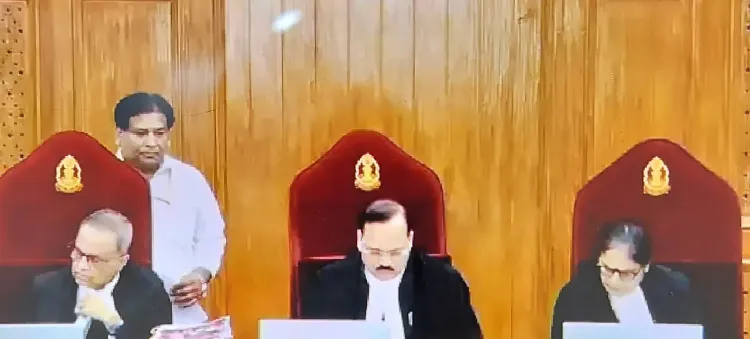
A stinging challenge to the highest court in the land — and it came not from a legal brief, but from a Lok Sabha chamber. TMC MP Mahua Moitra took to X on Tuesday, 29 September 2026, to publicly confront the Supreme Court of India over remarks it reportedly made while hearing an election-related petition, calling out what she described as a dereliction of constitutional duty.
Moitra quoted two statements she attributed directly to the court: 'Only a by-election' and 'They can vote in the next election' — phrases that, in her reading, reduce the democratic franchise to a procedural inconvenience. 'MiLords — with due humility you are entrusted with upholding our Constitution — how can you be so guilty of dereliction of duty? How?' she wrote, the repetition of that final word landing like a gavel.
The Weight Behind 'Only a By-Election'
The phrase that detonated Moitra's post is deceptively small. A by-election is not a footnote — it is, for the voters of a constituency that loses its representative, the only immediate democratic recourse available. When a seat falls vacant through disqualification, death, or resignation, constituents are left without parliamentary representation until a bypoll is held.
The Supreme Court of India routinely adjudicates petitions under the Representation of the People Act concerning vacancies, electoral rolls, and disqualification timelines. Opposition figures have historically taken sharp exception when judicial observations in such matters appear to minimise the urgency of restoring representation — and Moitra's post places that tension front and centre.
Moitra's Broader Pattern of Institutional Pushback
This is not the first time the Krishnanagar MP has used her public platform to confront institutional authority. Moitra has consistently positioned herself as a vocal critic on constitutional issues, frequently challenging both executive action and judicial posture from the floor of Parliament and on social media. Her pointed phrasing here — 'with due humility' preceding a direct accusation of dereliction — is calibrated: deferential in form, devastating in substance.
The broader pattern is telling. Indian democracy has seen sustained debate over how swiftly by-elections must be called, and whether judicial latitude on timelines effectively disenfranchises voters. Every day a seat sits vacant is a day a constituency goes unrepresented in the world's largest legislature. That is the constitutional stakes Moitra is invoking.
What Comes Next in Parliament and Court
The underlying petition — whatever its specific facts — is likely to face fresh scrutiny following the public attention Moitra's post draws. Parliamentary debate on judicial remarks in election matters has precedent, and this intervention may prompt opposition benches to raise the issue formally. Further hearings or orders in the case will now carry an added layer of public and political attention.
The Supreme Court's words, in election matters, are never just procedural. They set the tempo of democracy itself — and when a sitting MP accuses the apex court of failing its constitutional mandate, that is a moment the institution cannot simply let pass.
Point of View
If accurate, touch a raw nerve: treating a bypoll as trivial is, constitutionally, a failure to treat representation as the core right it is. Her calculated framing — 'with due humility' followed by a direct accusation — is a political manoeuvre designed to force the court into the court of public opinion. Whether this escalates into formal parliamentary scrutiny of judicial remarks on election timelines is the next consequential question.
NationPress
29 Sept 2026
Frequently Asked Questions
What did Mahua Moitra say about the Supreme Court?
Mahua Moitra accused the Supreme Court of India of 'dereliction of duty,' quoting remarks she attributed to the court — 'Only a by-election' and 'They can vote in the next election' — which she argued trivialised voters' constitutional right to representation.
What is a by-election and why is it important?
A by-election is held to fill a parliamentary or assembly seat that has fallen vacant between general elections. Until the bypoll is conducted, the affected constituency has no elected representative, making the timely holding of by-elections a direct constitutional concern.
Can the Supreme Court be criticised for its remarks in election cases?
Judicial observations during hearings are subject to public and political commentary in India. While courts are insulated from contempt for good-faith criticism, remarks that appear to minimise democratic rights often draw sharp responses from lawmakers and civil society.
Which party does Mahua Moitra belong to?
Mahua Moitra is a Lok Sabha MP from Krishnanagar, West Bengal , representing the All India Trinamool Congress (TMC) .
What could happen next after Moitra's Supreme Court criticism?
The underlying election petition is likely to receive heightened scrutiny. Opposition MPs may raise the issue in Parliament, and the specific judicial remarks Moitra cited could become a reference point in debates over how courts handle by-election timelines.