CM Bhupendra Patel Champions Women's Self-Reliance on Navratri
Synopsis
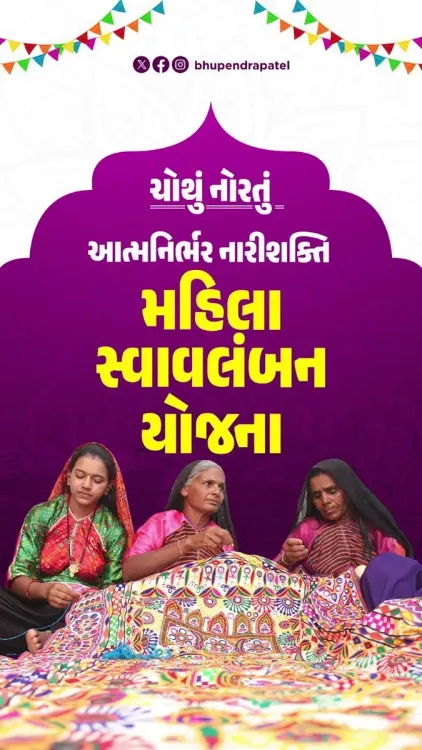
Gujarat Chief Minister Bhupendra Patel, on Navratri's fourth night dedicated to Maa Kushmanda, highlighted the state's Mahila Swavalamban Yojana — a scheme offering financial support to women for self-employment and community job creation — and pledged economic empowerment for every woman in Gujarat.
Key Takeaways
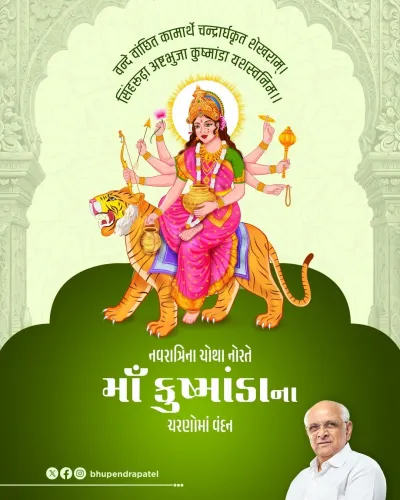
Gujarat CM Bhupendra Patel posted on 14 October 2026 , the fourth night of Navratri, linking his message to Maa Kushmanda , the deity associated with cosmic creation.
The Mahila Swavalamban Yojana is a Gujarat state government scheme providing financial assistance to women for self-employment ventures.
The scheme aims not only to make women financially independent but to enable them to generate employment for others in their communities.
The Chief Minister described the scheme as giving women's dreams 'economic wings' — a pathway from aspiration to viable livelihood.
Gujarat governments have a tradition of using festival occasions to amplify welfare and women's empowerment messaging.
Specific beneficiary numbers, disbursement figures, and budget allocations for the scheme remain to be confirmed in forthcoming fiscal announcements.
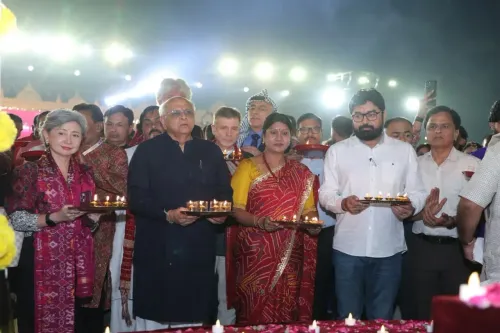
On the fourth day of Navratri, Gujarat Chief Minister Bhupendra Patel invoked the spirit of Maa Kushmanda — the goddess of creation — to spotlight his government's commitment to economic empowerment for every woman in the state, anchoring the message in the Mahila Swavalamban Yojana.
Posting on Wednesday, 14 October 2026, the Chief Minister wrote in Gujarati: 'દરેક મહિલામાં એક અદભુત સર્જનશક્તિ રહેલી છે, માત્ર તેને એક યોગ્ય તક અને પ્રોત્સાહનની જરૂર હોય છે.' ['Every woman carries within her a remarkable creative power — she only needs the right opportunity and encouragement.'] He called on citizens to join him in pledging economic self-reliance for every woman in Gujarat.
What the Mahila Swavalamban Yojana promises
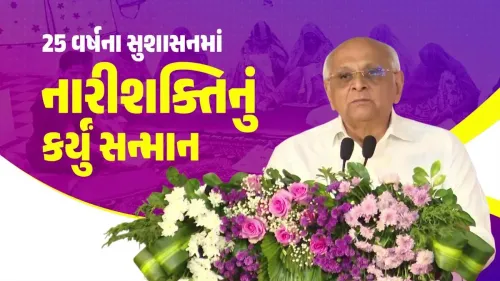
The Mahila Swavalamban Yojana is a Gujarat government scheme designed to give women's aspirations, in the Chief Minister's words, 'આર્થિક પાંખો' — 'economic wings'. The scheme channels financial assistance and institutional support toward self-employment ventures run by women, with an explicit aim of generating jobs not just for the beneficiaries but for others in their communities as well.
Gujarat administrations have periodically rolled out targeted interventions to raise women's economic participation — but the framing of this scheme places direct emphasis on enabling women to become employers, not merely earners. That distinction matters: a woman who starts a small enterprise creates a multiplier, pulling others into the formal or semi-formal economy alongside her.
Navratri as a policy moment, not just a festival
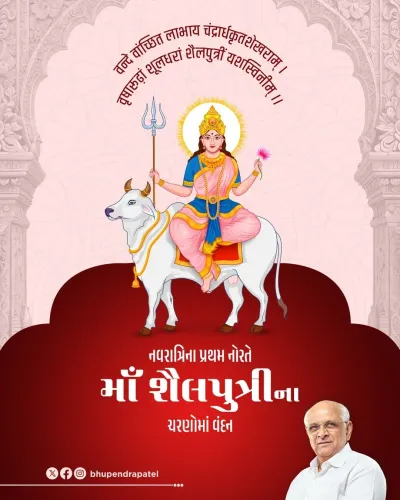
The timing is deliberate. Each of Navratri's nine nights is associated with a distinct form of the goddess Durga; the fourth night (Chaturthi) honours Maa Kushmanda, whose name literally translates to 'the creator of the universe' — the deity believed to have created the cosmos with her radiant smile. Anchoring an economic-empowerment pledge to that specific form of the goddess is a conscious act of cultural storytelling: creation, energy, and light as metaphors for women's entrepreneurial potential.
Gujarat's political tradition has long used festival calendars to amplify welfare messaging, giving policy announcements an emotional resonance that straightforward press releases cannot match. The Chief Minister's post follows that pattern — simultaneously a devotional message and a policy signal.
Eyes on what comes next for beneficiaries
What will sharpen the picture is hard data: beneficiary numbers, loan or grant disbursements, and how the scheme figures in Gujarat's forthcoming budget cycle. The pledge made on Navratri's fourth night sets a public benchmark — the state government will now be held to it.
For the women entrepreneurs the scheme is meant to serve, the promise is clear. The question is how quickly the wings become real.
Point of View
However, lies beyond the post: without publicly disclosed beneficiary counts or disbursement data, the pledge risks remaining aspirational rather than accountable. Navratri's symbolism is powerful; performance metrics will determine whether the wings are real.
NationPress
14 Oct 2026
Frequently Asked Questions
What is the Mahila Swavalamban Yojana in Gujarat?
The Mahila Swavalamban Yojana is a Gujarat state government scheme that provides financial assistance and support to women to help them start self-employment ventures and, in turn, create jobs for others in their communities.
What did Gujarat CM Bhupendra Patel say on Navratri 2026?
On the fourth night of Navratri 2026, CM Bhupendra Patel posted that every woman carries a remarkable creative power and needs only the right opportunity. He invoked Maa Kushmanda and called for a collective pledge of economic self-reliance for all women in Gujarat.
Which goddess is worshipped on the fourth day of Navratri?
The fourth day of Navratri is dedicated to Maa Kushmanda, believed to be the creator of the universe. Her name means 'the one who created the cosmos' and she is associated with radiant energy and new beginnings.
How does Gujarat government support women entrepreneurs?
The Gujarat government's Mahila Swavalamban Yojana offers financial assistance to women pursuing self-employment, aiming to make them economically independent and capable of generating additional jobs within their communities.
Why do Indian politicians announce welfare schemes during Navratri?
Navratri is one of India's most widely observed festivals and carries deep cultural significance around feminine power. Linking policy announcements to specific goddess forms during the nine-night festival allows political leaders to reinforce welfare messaging with strong emotional and cultural resonance.