Rijiju Hails Return of Anaimangalam Copper Plates from Netherlands
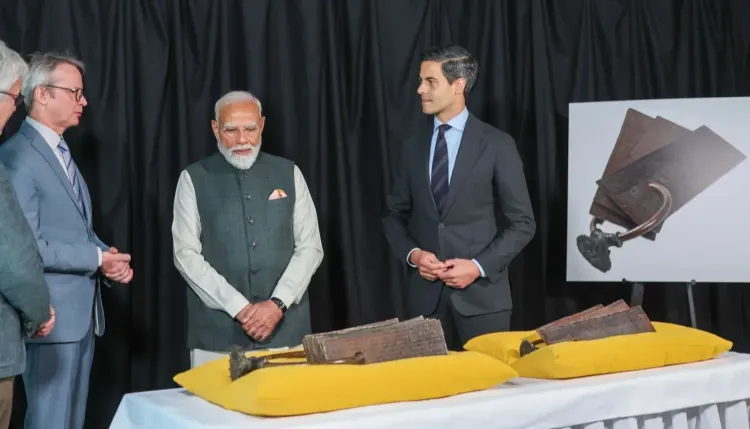
Synopsis
Union Minister Kiren Rijiju on May 24, 2026 welcomed the return of the Anaimangalam Copper Plates from the Netherlands, crediting PM Modi's cultural diplomacy. The Chola-era artefacts are rare records of Tamil civilisation's maritime and administrative legacy.
Key Takeaways
Union Parliamentary Affairs Minister Kiren Rijiju welcomed the return of the Anaimangalam Copper Plates from the Netherlands on May 24, 2026 .
The copper plates date to the imperial Chola dynasty , associated with rulers Rajaraja Chola and Rajendra Chola of the 10th–11th centuries .
Rijiju credited PM Narendra Modi 's commitment to reclaiming India's civilisational heritage for the repatriation.
The return is part of a broader pattern of cultural diplomacy pursued by the Modi government since 2014 , which has seen Chola bronzes and inscriptions returned from the US, UK, and Australia .
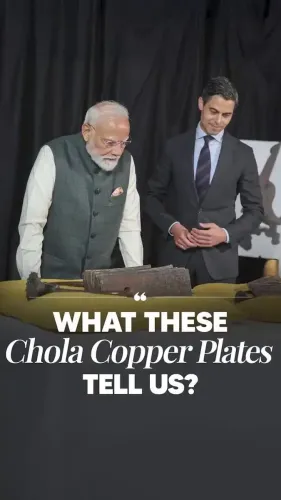
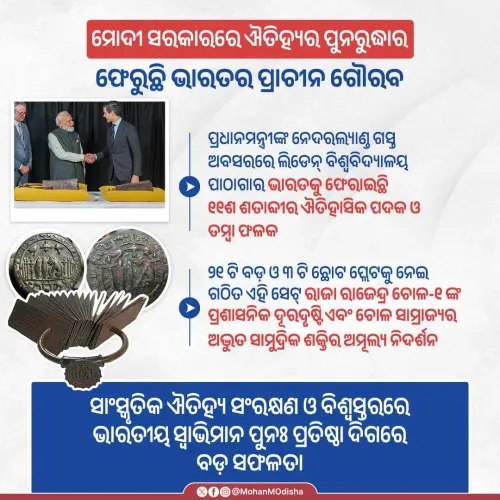
The plates are considered rare primary records of Tamil Nadu 's Chola-era land rights, administration, and maritime history.
Further repatriation announcements and possible heritage exhibitions are anticipated as part of ongoing India-Netherlands bilateral talks .
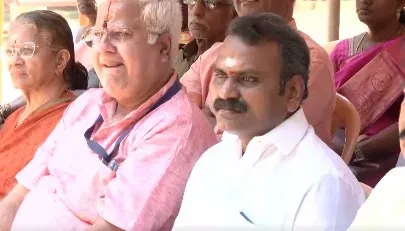
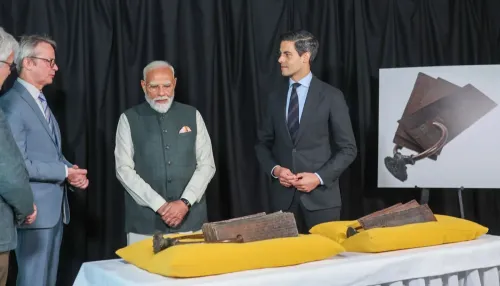
Union Parliamentary Affairs Minister Kiren Rijiju on Sunday, May 24, 2026, welcomed the return of the historic Anaimangalam Copper Plates from the Netherlands, calling it a tribute to the greatness of the Chola era, Tamil civilisation, and India's rich maritime and administrative legacy.
Context
Rijiju, in his post on X, credited Prime Minister Narendra Modi's commitment to reclaiming India's civilisational heritage for the return of the copper plates. He described the development as 'another priceless chapter of Bharat's history returns home,' underlining the cultural and historical significance of the artefacts.
The Anaimangalam Copper Plates are associated with the imperial Chola dynasty of Tamil Nadu, whose rulers — notably Rajaraja Chola and Rajendra Chola — used such copper-plate grants to document land rights, administrative orders, and maritime activities between the 10th and 11th centuries. The plates are considered rare primary records of one of South Asia's most powerful medieval empires.
Policy Backdrop
The repatriation fits into a sustained pattern of cultural diplomacy that successive Indian governments, and particularly the Modi administration since 2014, have pursued through bilateral agreements and museum-to-museum negotiations. Several Chola bronzes and inscriptions have previously been returned from institutions in the United States, the United Kingdom, and Australia.
The Netherlands has historical trade ties with India stretching back to the Dutch East India Company era, and the return of the copper plates through diplomatic channels marks a notable addition to this repatriation record. Such returns are typically framed within the broader narrative of a rising 'Viksit Bharat' — a self-reliant, civilisationally confident India — a framing Rijiju's post explicitly invokes through the hashtag #ViksitBharat.
Renewed academic and political interest in pre-colonial Indian Ocean networks has also lent fresh urgency to recovering Chola-era maritime records, which scholars regard as foundational evidence of India's historic reach across Southeast Asia and the wider Indian Ocean world.
Stakeholders and Impact
Tamil historians, heritage organisations, and cultural institutions in Tamil Nadu stand to benefit most directly from the return of the plates, which could be housed at the National Museum in New Delhi or at a state heritage institution. The development is likely to resonate strongly with Tamil cultural groups who have long advocated for the recovery of Chola-era artefacts dispersed during colonial and post-colonial periods.
For the central government, the repatriation reinforces its positioning on cultural sovereignty — a message that carries both domestic political weight in Tamil Nadu and diplomatic significance in India's engagement with European nations.
What's Next
Further repatriation announcements are anticipated as part of ongoing India-Netherlands bilateral engagements. Heritage protection legislation and special public exhibitions — potentially at the National Museum or Tamil Nadu state institutions — are being watched as possible follow-up steps. The return of the Anaimangalam Copper Plates is expected to add momentum to India's broader push to recover artefacts held in foreign collections, with diplomatic groundwork reportedly continuing across multiple countries.
Point of View
And Rijiju's prominent amplification of the event, reflects how cultural repatriation has become a core instrument of the BJP government's civilisational-pride narrative. By explicitly invoking Rajaraja Chola, Rajendra Chola, and Tamil maritime legacy alongside the 'Viksit Bharat' frame, the messaging is calibrated to resonate in Tamil Nadu — a state where the BJP has historically struggled electorally. Each high-profile repatriation also builds India's diplomatic leverage, signalling to European custodian nations that New Delhi expects active cooperation on heritage recovery. The pattern suggests repatriation diplomacy will continue to intensify as a soft-power tool ahead of future bilateral summits.
NationPress
9 Oct 2026
Frequently Asked Questions
What are the Anaimangalam Copper Plates?
The Anaimangalam Copper Plates are rare Chola-era artefacts from Tamil Nadu that document land grants, administrative orders, and maritime activities of the Chola dynasty, particularly associated with rulers Rajaraja Chola and Rajendra Chola of the 10th–11th centuries.
Why were the Anaimangalam Copper Plates in the Netherlands?
The plates had been held in the Netherlands, a country with historical trade ties to India dating to the Dutch East India Company era. They were returned through bilateral diplomatic channels as part of India's ongoing cultural repatriation efforts.
What did Kiren Rijiju say about the return of the copper plates?
Rijiju called the return 'a tribute to the greatness of the Chola era, Tamil civilisation and India's rich maritime and administrative legacy,' and credited PM Modi's commitment to reclaiming India's civilisational heritage.
How many artefacts has India repatriated under PM Modi?
Since 2014, the Modi government has secured the return of several Chola bronzes and inscriptions from institutions in the United States, the United Kingdom, Australia, and now the Netherlands, as part of sustained cultural diplomacy.
Where will the Anaimangalam Copper Plates be kept after their return?
An official decision on the final repository has not been announced, but possibilities include the National Museum in New Delhi or a Tamil Nadu state heritage institution, given the plates' direct connection to Tamil civilisation.