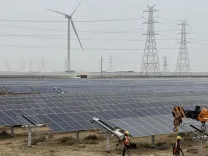
Bihar CM Office Pushes Private Investment in Renewables

Synopsis
The Chief Minister's Office of Bihar on 9 July 2026 called for a favourable environment for private investment in the renewable energy sector and stressed that all projects must be executed in a time-bound, transparent, and well-organised manner, reinforcing the state's green energy ambitions.
Key Takeaways
The Chief Minister's Office of Bihar issued a directive on 9 July 2026 stressing private investment in the renewable energy sector.
The statement called for a conducive environment to encourage private capital into Bihar's renewables space.
All renewable energy projects must be implemented in a time-bound, transparent, and well-organised manner, per the directive.
Bihar's Renewable Energy Policy was first framed in 2017 to promote solar and non-conventional energy sources.
India is targeting 500 GW of non-fossil fuel capacity by 2030 , making state-level action critical.
Private developers and institutional investors are the primary stakeholders who stand to benefit from improved project execution frameworks.
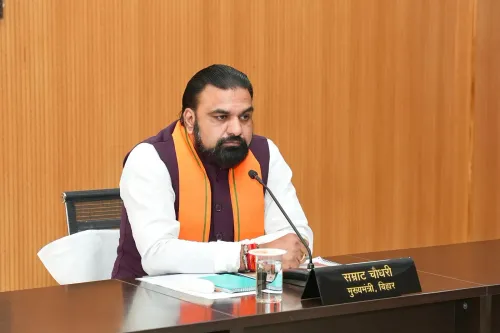
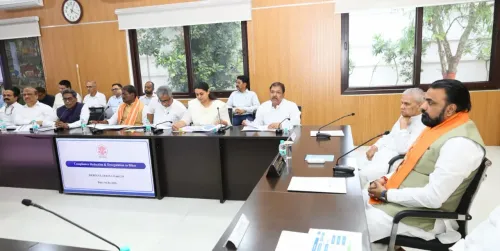
The Chief Minister's Office of Bihar on Thursday, 9 July 2026 shared a statement emphasising the need to create a conducive environment for private investment in the renewable energy sector, while stressing that all projects must be executed in a time-bound, transparent, and well-organised manner.
The post, shared from the official @officecmbihar account, quoted a senior functionary as underlining the importance of building an ecosystem that actively encourages private capital to flow into Bihar's renewables space. In Hindi, the directive read: 'नवीकरणीय ऊर्जा क्षेत्र में निजी निवेश को प्रोत्साहित करने हेतु अनुकूल वातावरण विकसित करने तथा सभी परियोजनाओं को समयबद्ध, पारदर्शी एवं सुव्यवस्थित ढंग से क्रियान्वित करने पर बल दिया' — meaning, stress was laid on developing a favourable environment to encourage private investment in the renewable energy sector and on implementing all projects in a time-bound, transparent, and well-organised manner.
Context
Bihar, an eastern Indian state with a historically constrained power infrastructure, has been working to expand its renewable energy capacity for over a decade. The state's push for private investment in clean energy aligns with its broader goal of addressing persistent power deficits. Chief Minister Nitish Kumar has overseen multiple policy iterations aimed at attracting non-conventional energy developers to the state.
Policy Backdrop
Bihar introduced its Renewable Energy Policy framework in 2017, laying the groundwork for solar and other non-conventional energy projects. The emphasis on time-bound and transparent execution reflects a governance priority that has gained prominence across Indian states since the mid-2010s. At the national level, India is targeting 500 GW of non-fossil fuel capacity by 2030, and state-level policies are critical to meeting that goal.
Implementation delays and opaque procurement processes have historically deterred private developers from committing capital to state energy projects. The Bihar government's renewed stress on structured execution signals an attempt to address these longstanding concerns and position the state as a credible destination for green investment.
Stakeholders and Impact
Private renewable energy developers and institutional investors stand to benefit most directly if the state follows through on its commitment to streamlined project execution. A more predictable regulatory and administrative environment lowers the risk premium that investors typically attach to projects in states with weaker governance track records. For ordinary consumers in Bihar, expanded renewable capacity could translate into more reliable electricity supply and reduced dependence on costly conventional power.
The push also carries significance for employment, as large-scale solar and wind projects generate both construction-phase and long-term operational jobs, particularly relevant in a state with high labour migration rates.
What's Next
Observers will watch for concrete follow-through in the form of state-level renewable energy summits, revised investment incentive structures, or budget allocations that back the stated commitment. Announcements detailing specific project timelines, land allocation frameworks, or single-window clearance mechanisms would signal whether the directive translates into actionable policy. Bihar's ability to attract meaningful private capital in renewables will serve as a key indicator of its broader governance reform trajectory in the energy sector.
Point of View
Bihar cannot afford to remain a laggard in attracting renewable capital. The stress on 'time-bound' delivery is particularly pointed: it implicitly acknowledges that delayed clearances and poor coordination have been real deterrents. Whether this translates into structural reforms — single-window clearances, revised land frameworks, or dedicated project monitoring cells — will determine if the signal carries weight.
NationPress
10 Jul 2026
Frequently Asked Questions
What did the Bihar CM Office say about renewable energy investment?
The Bihar CM Office on 9 July 2026 stressed the need to create a favourable environment for private investment in the renewable energy sector and called for all projects to be executed in a time-bound, transparent, and well-organised manner.
What is Bihar's renewable energy policy?
Bihar introduced a Renewable Energy Policy framework in 2017 aimed at promoting solar and other non-conventional energy sources, laying the foundation for private and public investment in the sector.
Why is private investment important for Bihar's energy sector?
Bihar has historically faced power deficits and constrained infrastructure. Private investment in renewables can help expand capacity, improve supply reliability, and reduce dependence on costly conventional power sources.
How does Bihar's push relate to India's national energy targets?
India aims to achieve 500 GW of non-fossil fuel capacity by 2030. State-level policies and investment frameworks, like those being promoted by Bihar, are essential to meeting this national target.
Who benefits from Bihar's renewable energy push?
Private renewable energy developers and institutional investors benefit from a more predictable regulatory environment, while consumers in Bihar could gain from improved electricity supply and lower costs over time.