Bihar CMO: Nitish Kumar pushes textile hub, startup ecosystem
Synopsis
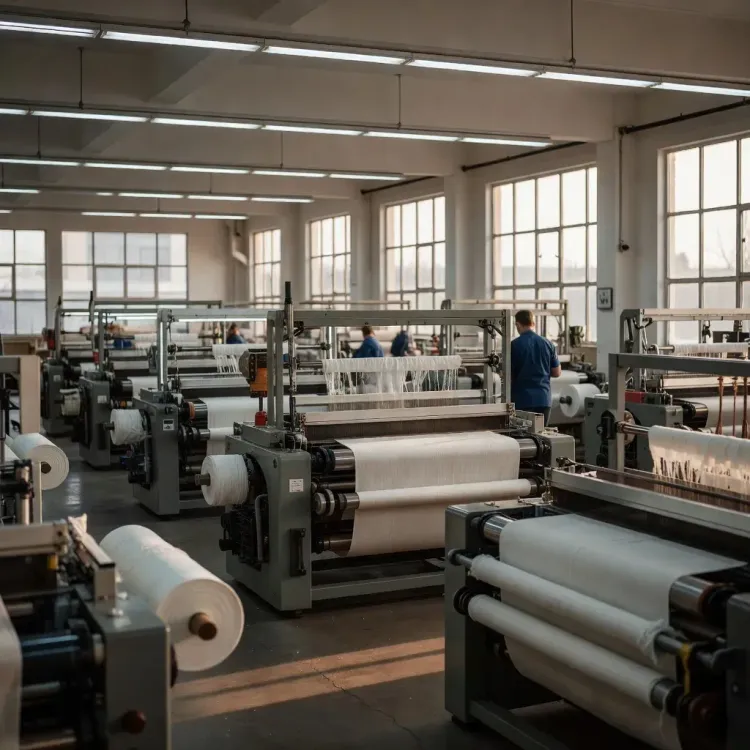
The Chief Minister's Office of Bihar announced that CM Nitish Kumar has ordered concrete steps to establish a Textile Industrial Centre in the state and to strengthen the startup ecosystem, aiming to generate new employment and entrepreneurial opportunities for Bihar's youth.
Key Takeaways
CM Nitish Kumar directed officials to set up a Textile Industrial Centre in Bihar.
The directive includes strengthening the state's startup ecosystem.
Stated objective is to create new opportunities for youth and curb out-migration.
Builds on the Bihar Industrial Investment Promotion Policy, 2016 and Bihar Startup Policy, 2017.
Aligns with central frameworks such as Startup India and integrated textile park schemes.
Operational details on location, funding and timelines are awaited from the industry department.
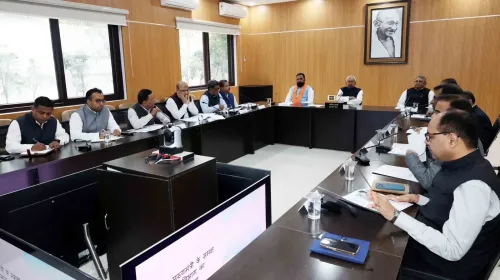
The Chief Minister's Office of Bihar on 3 June 2026 said Chief Minister Nitish Kumar has directed officials to take concrete steps towards setting up a Textile Industrial Centre in the state and to strengthen the startup ecosystem so as to create fresh opportunities for young people. The directive, issued from Patna, links Bihar's industrial diversification push with its youth employment agenda.
In its post, the CMO said in Hindi: 'उन्होंने बिहार में टेक्सटाइल इंडस्ट्रियल सेंटर की स्थापना की दिशा में ठोस पहल करने तथा स्टार्टअप इकोसिस्टम को सशक्त बनाकर युवाओं के लिए नए अवसर सृजित करने का निर्देश दिया।' Translated, the Chief Minister 'directed officials to take concrete initiatives towards establishing a Textile Industrial Centre in Bihar and to empower the startup ecosystem to generate new opportunities for the youth'.
Context
The instruction folds two priorities into one announcement: a dedicated cluster for textile manufacturing, and broader institutional support for first-time entrepreneurs. Both are framed as instruments to expand non-farm employment in a state where a large share of the workforce continues to migrate to Delhi, Maharashtra, Gujarat and Punjab for work.
Textiles are a labour-intensive sector and have historically been used by Indian states to absorb semi-skilled workers at scale. A dedicated industrial centre typically implies plug-and-play infrastructure — land, power, effluent treatment and common facilities — that lowers the entry cost for mid-sized units.
Policy backdrop
The directive sits on top of an existing policy stack. The Bihar Industrial Investment Promotion Policy, 2016 offered capital subsidy, interest subvention and stamp-duty concessions for manufacturing units, with additional sweeteners for textile and leather investors. The Bihar Startup Policy, 2017, since revised, provided seed funding, incubation support and procedural easing for early-stage ventures.
At the central level, the directive aligns with Startup India, launched in 2016, and with the union government's PM MITRA mega textile park framework, which encourages states to develop integrated textile zones. Bihar's earlier attempts to attract garment and handloom investment have leaned on its cotton-to-jute value chains and a young labour pool.
Stakeholders and impact
The most immediate beneficiaries, if the centre materialises, would be textile MSMEs — spinning, weaving, processing and ready-made garment units — that have struggled with fragmented infrastructure. A consolidated centre could also draw ancillary investment in packaging, logistics and skilling.
On the startup side, the directive signals continued state interest in incubators, accelerator partnerships and easier access to working capital for first-generation entrepreneurs. The intended audience is Bihar's large youth cohort; the state has one of the youngest median ages in India, and absorbing this demographic into productive employment remains the central economic challenge.
Industry associations are likely to seek clarity on the proposed centre's location, anchor investors and the quantum of state support. District administrations in Bhagalpur, long associated with silk weaving, and in Gaya and Muzaffarpur may also lobby for hosting rights.
What's next
Operational detail is expected to follow through industry department notifications and the next state budget, including land identification, fiscal incentives and a timeline for ground-breaking. Parallel movement on the startup front could come in the form of revised policy guidelines, fresh fund-of-funds commitments or expanded incubation tie-ups with academic institutions.
If executed at pace, the twin push on textiles and startups could mark a meaningful step in Bihar's stated ambition to shift from a remittance-dependent economy to one anchored in local manufacturing and enterprise.
Point of View
And a dedicated centre could plug a long-standing infrastructure gap. The political signal — economic activism ahead of policy reviews and electoral cycles — is unmistakable, but execution will hinge on land, anchor investors and the depth of fiscal support that follows in the next budget.
NationPress
17 Oct 2026
Frequently Asked Questions
What did the Bihar CMO announce about the textile industrial centre?
The CMO said Chief Minister Nitish Kumar has directed officials to take concrete initiatives to establish a Textile Industrial Centre in Bihar, aimed at boosting manufacturing and employment in the state.
How will Bihar strengthen its startup ecosystem?
The Chief Minister has instructed that the startup ecosystem be empowered to create new opportunities for youth, building on the Bihar Startup Policy framework that offers seed funding, incubation and regulatory easing.
Which existing policies support Bihar's textile and startup push?
The Bihar Industrial Investment Promotion Policy, 2016 supports manufacturing incentives, while the Bihar Startup Policy, 2017 provides financial and incubation support for early-stage ventures.
Why is textile manufacturing important for Bihar?
Textiles are labour-intensive and can absorb large numbers of semi-skilled workers, helping Bihar reduce out-migration and diversify beyond agriculture.
When will details of the Textile Industrial Centre be released?
Specifics on location, funding and timelines are expected through forthcoming industry department notifications and the next Bihar state budget.