CM Nitish Kumar: Industries Must Come to Bihar for Real Change
Synopsis
Chief Minister Nitish Kumar, speaking at a public programme on 24 May 2026, declared that industrial investment is the only path to transforming Bihar, adding that genuine development requires ensuring prosperity for every citizen of the state.
Key Takeaways
CM Nitish Kumar declared on 24 May 2026 that industrial investment is essential for transforming Bihar .
He linked inclusive development directly to ensuring the prosperity of all citizens, not just growth in aggregate numbers.
Bihar has pursued industrial policies since 2005 , with formal frameworks launched in 2011 and 2016 .
The state's manufacturing base remains limited relative to its population of over 12 crore , driving significant out-migration.
Sectors such as food processing, light manufacturing, and logistics are seen as priority areas for future industrial growth.
Observers are watching for an updated investment promotion policy or a major investment summit to follow the Chief Minister's remarks.
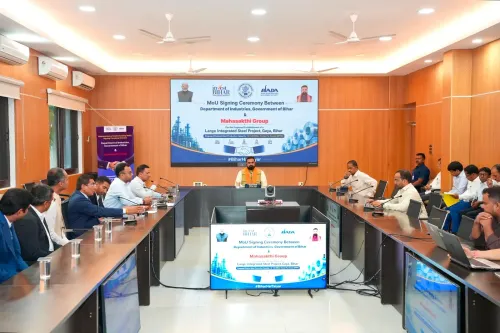
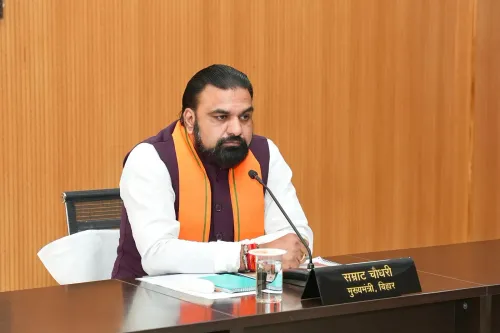
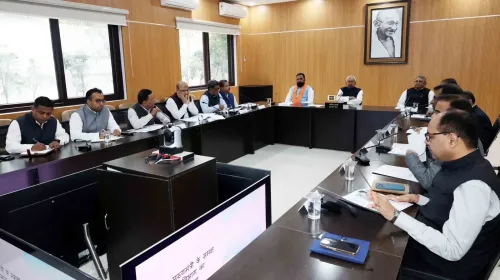
The Chief Minister's Office of Bihar on Sunday, 24 May 2026 shared remarks by Chief Minister Nitish Kumar at a public programme, in which he underscored industrial investment as the central driver of the state's transformation and inclusive prosperity.
Context
Addressing the gathering, CM Nitish Kumar stated — 'Bihar mein udyog aayenge, tabhi rajya ki tasveer badlegi' ('Industries will come to Bihar, only then will the state's picture change'). He added that 'sabki samridhi sunishchit hone par hi sabka vikas sambhav hai' — meaning 'inclusive development is possible only when the prosperity of all is ensured.' The remarks signal a continued push to reframe Bihar as an investment-ready destination.
Policy Backdrop
Bihar has historically carried one of India's lowest per-capita incomes, with its economy long dominated by agriculture and marked by large-scale out-migration of working-age youth. Since Nitish Kumar returned to power in 2005, successive governments have introduced industrial policies — notably in 2011 and 2016 — aimed at reversing decades of industrial stagnation by improving law and order and offering incentives to private capital. The state's manufacturing base, however, remains thin relative to its population of over 12 crore.
The framing of industrial arrival as the key to structural change echoes national priorities around eastern India development and the broader 'Make in India' push, while addressing the specific challenge of creating jobs locally so that migration pressure eases.
Stakeholders and Impact
The primary beneficiaries of sustained industrial investment in Bihar would be the state's large youth population, which currently seeks employment primarily outside the state in cities such as Delhi, Mumbai, and Surat. Industrial clusters, if established, would also generate upstream demand for the agrarian economy and expand the state's tax base, enabling further public investment.
Private investors and industry bodies have in the past cited infrastructure gaps and logistical costs as barriers. CM Nitish Kumar's repeated emphasis on prosperity-linked development suggests the government is aware that investment alone is insufficient — distribution of economic gains remains a political and administrative priority.
What's Next
Observers will watch for the release of an updated Bihar Industrial Investment Promotion Policy or the announcement of a major investment summit that could give concrete shape to the Chief Minister's stated vision. The government's ability to attract anchor investors in sectors such as food processing, light manufacturing, and logistics will be a key test of whether the rhetoric translates into measurable employment and income gains for Bihar's residents.
Point of View
Not the other way around. After two decades in power, the Chief Minister continues to use investment rhetoric as a political signal to both domestic voters and potential investors, suggesting that the structural challenge of industrialising Bihar remains unresolved. The linkage of 'sabka vikas' (development for all) to 'sabki samridhi' (prosperity for all) also borrows the grammar of national political messaging, positioning Bihar's ambitions within a larger federal development narrative. Whether the May 2026 programme produced concrete policy outputs will determine if this marks a new phase or a continuation of aspirational framing.
NationPress
8 Oct 2026
Frequently Asked Questions
What did Bihar CM Nitish Kumar say about industries on 24 May 2026?
CM Nitish Kumar said that industries must come to Bihar for the state's situation to truly change, and that inclusive development is possible only when the prosperity of all citizens is ensured.
Why is industrial investment important for Bihar?
Bihar has a historically agrarian economy with a thin manufacturing base, leading to large-scale out-migration of youth. Industrial investment is seen as the key lever to create local jobs, raise per-capita income, and reduce dependence on remittances.
What is Bihar's industrial policy history under Nitish Kumar?
Since Nitish Kumar returned as Chief Minister in 2005, Bihar has launched successive industrial policies in 2011 and 2016, focusing on law-and-order improvements and investor incentives to reverse decades of industrial stagnation.
What challenges does Bihar face in attracting industries?
Private investors have historically cited infrastructure gaps and high logistical costs as barriers to setting up in Bihar, even as the government has worked to improve governance and offer policy incentives.
What should we watch for next regarding Bihar's industrial push?
Key developments to watch include the release of an updated Bihar Industrial Investment Promotion Policy and the announcement of any major investment summit that could translate the Chief Minister's stated vision into concrete commitments.