CM Nitish Invites Industrialists to Seek Policy Changes

Synopsis
Bihar Chief Minister Nitish Kumar has publicly invited industrialists to approach the Industry Minister if they seek changes in the state's industrial policy, signalling a consultative, investor-responsive governance approach aimed at accelerating the state's industrialisation drive.
Key Takeaways
CM Nitish Kumar invited industrialists to meet the Industry Minister directly for any industrial policy change requests.
The government stated it is 'committed to formulating policies in accordance with the needs of industries.' Bihar's Industrial Investment Promotion Policy , first notified in 2016 , provides fiscal incentives and single-window clearance for new units.
The statement reflects a consultative, iterative approach to policy revision rather than a one-time overhaul.
Bihar has been incrementally liberalising its industrial framework since the mid-2000s to counter decades of under-industrialisation and out-migration.
Formal policy amendments, if any, would be tracked through the state's single-window investment portal.
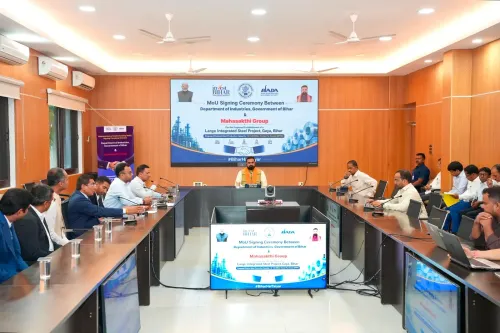
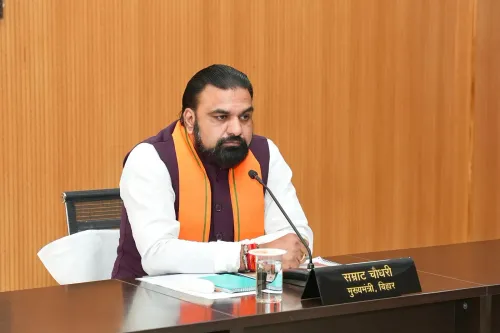
The Chief Minister's Office of Bihar on Sunday, 24 May 2026, conveyed that Chief Minister Nitish Kumar has invited industrialists to approach the Industry Minister directly if they feel any changes are needed in the state's industrial policy, reaffirming the government's commitment to shaping policies in line with industry requirements.
The official post stated: 'यदि उद्योगपतियों को औद्योगिक नीति में किसी भी स्तर पर बदलाव की आवश्यकता महसूस होती है, तो वे उद्योग मंत्री से मिलें' — 'If industrialists feel the need for changes in the industrial policy at any level, they should meet the Industry Minister.' The Chief Minister added that 'the government is committed to formulating policies in accordance with the needs of industries.'
Context
Bihar has historically struggled with under-industrialisation, with its economy dominated by agriculture and its working-age population among the largest sources of inter-state out-migration in India. Chief Minister Nitish Kumar, who has governed the state across multiple terms since 2005, has made industrial promotion a recurring policy priority. The statement signals a consultative posture — that the administration is open to mid-course corrections rather than treating the existing framework as fixed.
Policy Backdrop
Bihar notified its Industrial Investment Promotion Policy in 2016, establishing a framework of fiscal incentives and single-window clearance mechanisms to attract new manufacturing units. The policy has been part of a broader competitive federalism trend across Indian states, each seeking to improve ease-of-doing-business rankings and draw private capital. Successive revisions to such frameworks have typically followed structured dialogue between state governments and investor communities — precisely the kind of engagement the Chief Minister is now publicly encouraging.
The invitation to meet the Industry Minister directly is notable because it bypasses bureaucratic intermediaries, signalling that investor grievances or suggestions will receive political-level attention rather than being routed solely through departmental channels.
Stakeholders and Impact
The primary beneficiaries of a more responsive industrial policy would be private investors and industrialists already operating in or considering entry into Bihar. Sectors such as food processing, light manufacturing, and logistics — areas where Bihar has sought to leverage its agricultural base and geographic position — stand to gain from any policy refinements that emerge from such consultations. For workers and job-seekers, a more investor-friendly environment could translate into new employment opportunities within the state, reducing the pressure to migrate.
Small and medium enterprises, which often find it harder to navigate policy ambiguities than large conglomerates, could benefit disproportionately if the Industry Minister's consultations lead to simplified compliance requirements or enhanced incentive slabs.
What's Next
The immediate watch-point is whether formal meetings between industrialists and the Industry Minister materialise in the coming weeks, and whether those discussions result in notified amendments to the Bihar Industrial Investment Promotion Policy. Any new incentive chapters or revised clearance timelines would be visible through the state's single-window investment portal. Analysts tracking Bihar's investment climate will also watch for fresh investment proposals as a measure of whether the Chief Minister's open-door signal translates into tangible capital commitments.
The statement sets up an accountability benchmark: having publicly committed to policy responsiveness, the government's credibility with the investor community will now depend on how quickly and substantively it acts on feedback received through the Industry Minister's office.
Point of View
The Bihar government is attempting to project a more responsive, politically accountable investment climate. This fits a broader pattern of competitive federalism where state executives use visible, direct-access gestures to differentiate their investment pitch. The real test, however, lies not in the statement but in whether the consultations produce notified policy changes — a gap between rhetoric and action that has historically dogged industrial policy reform in Bihar.
NationPress
9 Oct 2026
Frequently Asked Questions
What did Bihar CM Nitish Kumar say about industrial policy changes?
Bihar Chief Minister Nitish Kumar said that if industrialists feel the need for changes in the state's industrial policy at any level, they should meet the Industry Minister, and that the government is committed to making policies in line with industry needs.
Which policy governs industrial investment in Bihar?
Bihar's industrial investment framework is governed by the Bihar Industrial Investment Promotion Policy , first notified in 2016 , which offers fiscal incentives and single-window clearance to attract new manufacturing units.
How can industrialists seek changes in Bihar's industrial policy?
According to the Chief Minister's statement, industrialists should approach the Industry Minister directly with their suggestions or requirements for policy changes.
Why is industrial policy reform important for Bihar?
Bihar has historically been under-industrialised and has seen significant out-migration of its working-age population. Reforms that attract private investment can create local employment and reduce dependence on agriculture.
What should investors watch for after this Bihar CM statement?
Investors should watch for formal meetings between industry representatives and the Industry Minister, any notified amendments to the Bihar Industrial Investment Promotion Policy , and new investment proposals filed through the state's single-window portal.