Bihar CM Office Stresses Investment, Infrastructure Push
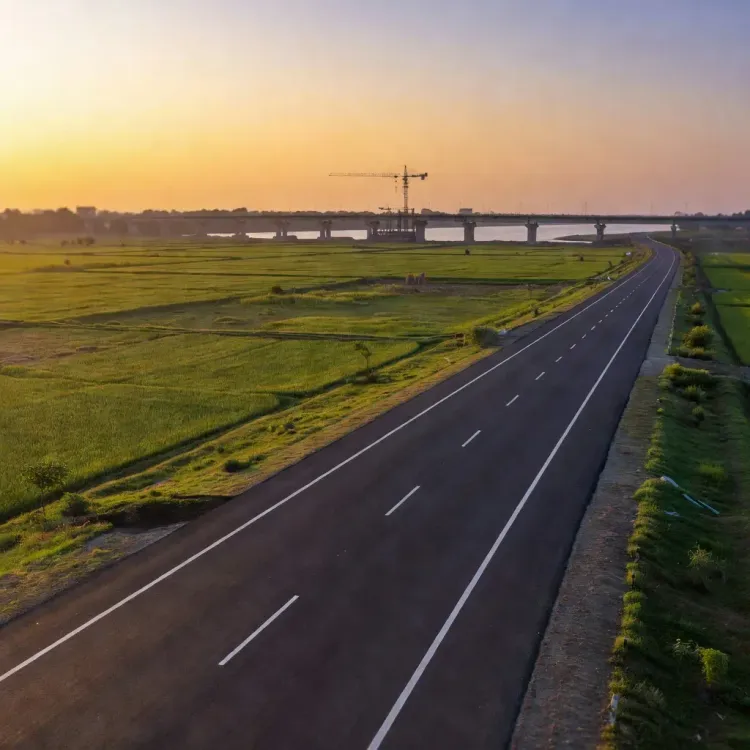
Synopsis
The Chief Minister's Office of Bihar on 12 June 2026 reaffirmed the state government's focus on encouraging investment, strengthening infrastructure, and ensuring time-bound implementation of development projects — pillars of Bihar's post-2005 growth strategy.
Key Takeaways
The Chief Minister's Office of Bihar posted on 12 June 2026 reaffirming three core development priorities: investment promotion, infrastructure strengthening, and time-bound project execution.
The statement was made in Hindi , emphasising 'special focus' ( vishesh bal ) on these areas as part of ongoing governance efforts.
Bihar's infrastructure push dates to 2005 , when large-scale road and bridge programmes were launched under Chief Minister Nitish Kumar .
The Bihar Industrial Investment Promotion Policy, 2016 , introduced fiscal incentives and single-window clearance to attract private capital into manufacturing and logistics.
Key beneficiaries include private investors , rural households , and MSMEs reliant on improved connectivity and logistics corridors.
The next Bihar Economic Survey and any investor summit will be watched for data on new commitments and project delivery progress.
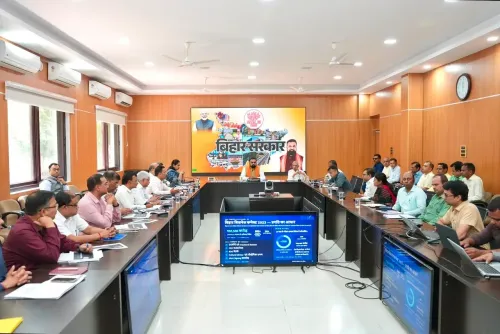
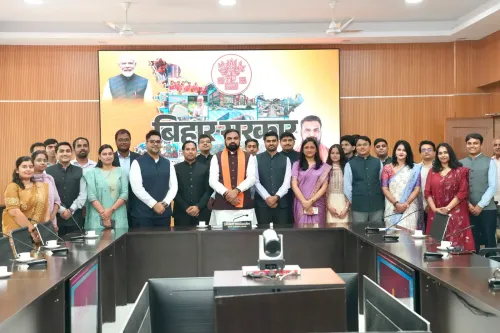
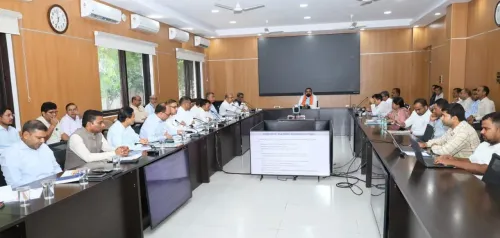
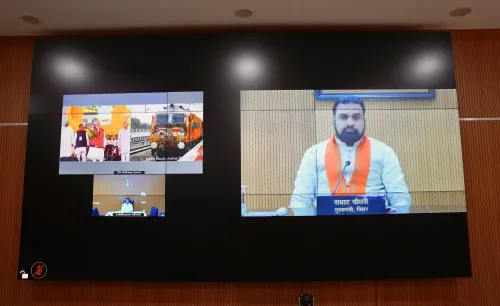
The Chief Minister's Office of Bihar reaffirmed on Friday, 12 June 2026 the state government's commitment to accelerating development by encouraging investment, strengthening infrastructure, and ensuring time-bound implementation of ongoing projects. The statement, posted on X, underscores a governance priority that has defined Bihar's policy direction for over two decades.
Context
The post, a reply from the official @officecmbihar handle, stated in Hindi: 'Iske liye nivesh ko protsahit karne, aadhaarbhoot sanrachna ko sudridh banane tatha vikas pariyojanaon ke samayabaddh kriyanvayan par vishesh bal diya ja raha hai' — meaning, 'Special emphasis is being placed on encouraging investment, strengthening basic infrastructure, and time-bound implementation of development projects.' The brevity of the statement signals a reaffirmation of standing policy priorities rather than a new announcement.
The remark was made in the context of a broader discussion on Bihar's development agenda, reflecting the state government's consistent public messaging around infrastructure-led growth.
Policy Backdrop
Bihar's infrastructure push has its roots in the governance overhaul that began after 2005, when Chief Minister Nitish Kumar took office and launched large-scale road and bridge construction programmes to reverse decades of connectivity deficit. The state's physical infrastructure was widely regarded as among the weakest in the country at the time.
The Bihar Industrial Investment Promotion Policy, 2016, further institutionalised the investment-attraction framework by introducing fiscal incentives and a single-window clearance mechanism aimed at drawing private capital into manufacturing and logistics. These measures have been periodically updated to remain competitive with other eastern Indian states pursuing similar growth strategies.
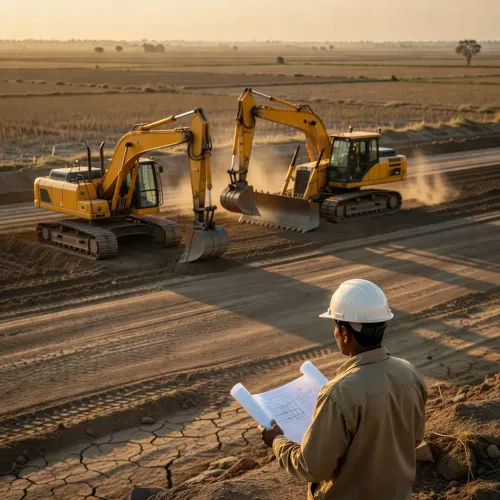
The emphasis on time-bound project implementation addresses a long-standing challenge in public works delivery — cost overruns and delays that erode the value of capital expenditure and undermine investor confidence.
Stakeholders and Impact
The three pillars cited — investment promotion, infrastructure strengthening, and project execution — directly affect a wide cross-section of Bihar's economy. Private investors, particularly in manufacturing and logistics, look to infrastructure quality and policy predictability before committing capital to a state.
Rural households are among the most immediate beneficiaries of road connectivity and bridge projects, which reduce travel time to markets, health facilities, and schools. Micro, small, and medium enterprises (MSMEs) depend on reliable logistics corridors and a stable power supply, both of which improve as infrastructure investment compounds over time.
Bihar's trajectory since 2005 demonstrates that improved law and order, combined with basic connectivity, can translate into measurably higher private investment flows — a pattern visible across eastern India as states compete to close the development gap with western and southern counterparts.
What's Next
The next Bihar Economic Survey and any forthcoming investor summit will be closely watched for data quantifying new capital commitments and physical progress on flagship corridors. Analysts will look for whether the state can sustain project delivery momentum amid fiscal constraints common to high-expenditure development programmes.
The government's ability to translate stated priorities into measurable outcomes — kilometres of road built, factories commissioned, projects completed on schedule — will determine whether Bihar's investment narrative gains further credibility with domestic and international capital.
Point of View
Infrastructure, and time-bound delivery as core priorities reflects a governance philosophy that has been central to Bihar's political identity since 2005 — and one that Chief Minister Nitish Kumar has consistently used to differentiate the state from its earlier reputation for poor governance. By publicly restating these pillars in mid-2026, the government is signalling continuity of direction at a time when Bihar's development narrative faces scrutiny ahead of potential investor summits and economic surveys. The emphasis on 'time-bound implementation' is particularly pointed, acknowledging that capital expenditure alone does not drive outcomes — execution quality does. This messaging also positions Bihar competitively within eastern India, where states are increasingly vying for the same pool of domestic and foreign industrial investment.
NationPress
27 Oct 2026
Frequently Asked Questions
What did the Bihar CM Office say about infrastructure on 12 June 2026?
The Bihar CM Office stated that special emphasis is being placed on encouraging investment, strengthening basic infrastructure, and ensuring time-bound implementation of development projects in the state.
What is Bihar's investment promotion policy?
The Bihar Industrial Investment Promotion Policy, 2016, offers fiscal incentives and single-window clearance to attract private capital into manufacturing and logistics sectors in the state.
Who is the Chief Minister of Bihar in 2026?
Nitish Kumar has served as Bihar's Chief Minister across multiple terms since 2005 and has been the central figure in the state's infrastructure and governance reforms.
How has Bihar's infrastructure improved since 2005?
After 2005, the Bihar government launched large-scale road and bridge construction programmes that addressed decades of connectivity deficit, improving access to markets, health facilities, and schools for rural households.
What does time-bound project implementation mean for Bihar's development?
Time-bound implementation refers to completing government projects within set deadlines, which reduces cost overruns, builds investor confidence, and ensures that budgeted capital expenditure translates into usable infrastructure on the ground.