Bihar CMO Pushes Faster Industrial Grievance Redressal, Timely Incentives

Synopsis
The Chief Minister's Office of Bihar has directed officials to fast-track resolution of industry-related problems and ensure that prescribed incentives reach new industrial units on time, sharpening the focus on delivery under the state's investment promotion framework.
Key Takeaways
The Chief Minister's Office of Bihar posted the directive on 3 June 2026 from Patna .
Focus is on quick resolution of industry grievances and timely disbursal of prescribed incentives.
The message targets new industrial units setting up in Bihar.
Core framework remains the Bihar Industrial Investment Promotion Policy 2016 .
Delivery timelines, not incentive rates, are the stated bottleneck.
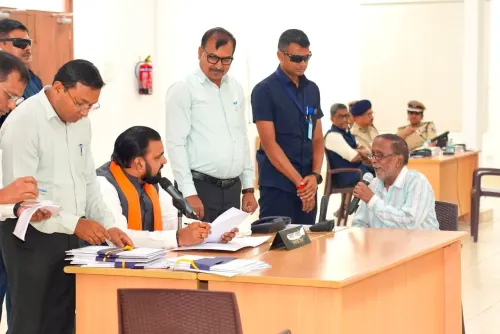
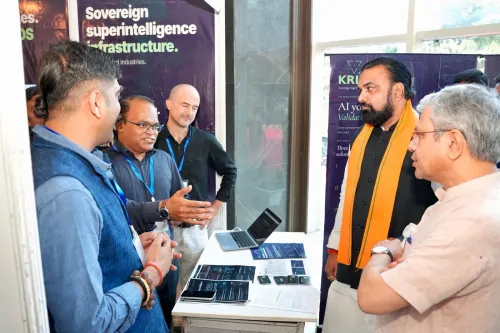
The Chief Minister's Office of Bihar on 3 June 2026 said the state administration has placed 'special emphasis' on the rapid resolution of industry-related problems and the timely disbursal of prescribed incentives to new industrial units. The directive, posted from Patna, signals a renewed push to tighten delivery on existing investment-promotion commitments.
In its post, the CMO stated, in translation from Hindi, that 'special emphasis was laid on the quick resolution of problems related to industries and on making the prescribed incentives available to new industrial units on time.' The original phrasing 'निर्धारित प्रोत्साहन (इंसेंटिव) समय पर उपलब्ध कराने' (making the prescribed incentives available on time) frames the message around delivery timelines rather than fresh announcements.
Context
The communication is part of a broader thread from the CMO outlining administrative priorities under Chief Minister Nitish Kumar. It follows a familiar pattern in which the state government reiterates that grievance redressal for entrepreneurs and prompt release of fiscal sops are non-negotiable for officials handling industry files.
The focus on 'timely' disbursal is significant. Industry bodies in eastern India have long flagged delays between approval of incentives and their actual credit to promoters as a friction point, even when the policy framework itself is competitive.
Policy backdrop
Bihar's primary industrial framework remains the Bihar Industrial Investment Promotion Policy 2016, which offers a menu of incentives — including capital subsidy, interest subvention, stamp duty reimbursement and SGST-linked benefits — for new manufacturing units setting up in the state. The policy was designed to compensate for Bihar's locational disadvantages and to seed a manufacturing base in a predominantly agrarian economy.
Over the past decade, successive administrations in Patna have layered sector-specific sweeteners on top of the 2016 policy, particularly for food processing, textiles, leather and ethanol. The CMO's latest emphasis suggests that the bottleneck the government wants to attack is administrative throughput, not the headline incentive rates.
Stakeholders and impact
The most direct beneficiaries of faster clearances would be small and medium industrial units and first-time promoters, for whom delayed incentive payouts often translate into stressed working capital. Larger investors tracking Bihar against neighbouring states such as Jharkhand, Odisha and West Bengal are likely to read the message as a signal on ease of doing business.
For the state bureaucracy, the directive narrows the discretion to sit on files. Departments dealing with land allotment at industrial areas, power connections and incentive verification are the typical choke points that such instructions target.
What's next
Attention will now turn to whether the Bihar government follows up the directive with measurable benchmarks — such as fixed timelines for incentive sanction, a published dashboard of pending applications, or strengthened single-window clearance machinery. The credibility of the 'timely disbursal' promise will rest on whether pending claims under the 2016 policy are cleared in a defined window.
If executed, the push could nudge Bihar's standing on investment-readiness metrics and strengthen the state's pitch at upcoming investor outreach events. If it remains rhetorical, it will join a long list of administrative exhortations that industry has heard before.
Point of View
The CMO is implicitly acknowledging that policy on paper has outpaced delivery on the ground. This fits a wider pattern across eastern Indian states competing for manufacturing investment by fixing process friction rather than rewriting fiscal sops. The political subtext, ahead of a likely intensifying investment-outreach cycle, is that the government wants to be seen as execution-focused.
NationPress
17 Oct 2026
Frequently Asked Questions
What did the Bihar Chief Minister's Office say about industrial incentives?
The Chief Minister's Office of Bihar said special emphasis is being laid on the quick resolution of industry-related problems and on making prescribed incentives available to new industrial units on time.
Which policy governs industrial incentives in Bihar?
The Bihar Industrial Investment Promotion Policy 2016 is the main framework, offering capital subsidy, interest subvention, stamp duty reimbursement and SGST-linked benefits to new manufacturing units.
Who is the Chief Minister of Bihar?
Nitish Kumar is the Chief Minister of Bihar and heads the administration overseeing industrial promotion efforts in the state.
Why are timely incentives important for industries in Bihar?
Delays between approval and actual disbursal of incentives strain the working capital of new units, especially small and medium enterprises, and weaken Bihar's competitiveness against neighbouring manufacturing destinations.
What should investors watch next in Bihar?
Investors should watch for measurable timelines for incentive sanction, dashboards on pending applications, and any strengthening of the single-window clearance system following the CMO's directive.