Bihar CMO: Nitish pushes 50,000-acre land bank, easier business rules
Synopsis
The Chief Minister's Office of Bihar said Nitish Kumar has directed officials to build a 50,000-acre industrial land bank and simplify procedures to place Bihar among India's leading states on ease of doing business, signalling a fresh push on land assembly and regulatory streamlining.
Key Takeaways
CM Nitish Kumar has directed creation of a 50,000-acre industrial land bank in Bihar.
He pressed for further simplification of business approval procedures.
Goal is to place Bihar among India's leading states on Ease of Doing Business.
Move builds on the Bihar Industrial Investment Promotion Policy, 2016 framework.
Next DPIIT rankings will be an external test of the reform push.
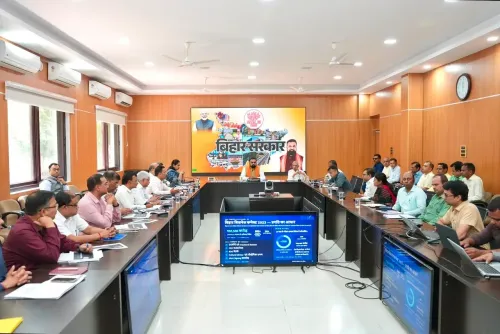
The Chief Minister's Office of Bihar on 3 June 2026 said Chief Minister Nitish Kumar has directed officials to ensure adequate land availability for industrial growth and to build a 50,000-acre land bank, while pressing for further simplification of procedures to push Bihar into the country's top tier on 'Ease of Doing Business'. The statement, issued from Patna, frames land assembly and regulatory streamlining as the twin levers for the state's next phase of industrialisation.
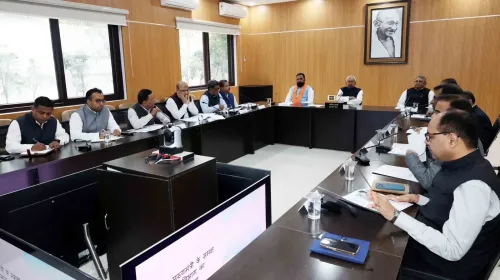
In the post, the CMO wrote that the Chief Minister 'stressed on ensuring adequate availability of land for industrial development and on preparing a 50,000-acre land bank', and added that to place Bihar among the country's leading states in 'ease of doing business', processes must be made 'simpler and more streamlined'. The communication is part of a thread on a recent review of industries and investment promotion.
Context
The directive comes as Bihar tries to convert investor interest into ground-level projects. State officials have for several years cited difficulty in aggregating contiguous parcels as a chronic bottleneck for large factories, logistics parks and food-processing clusters.
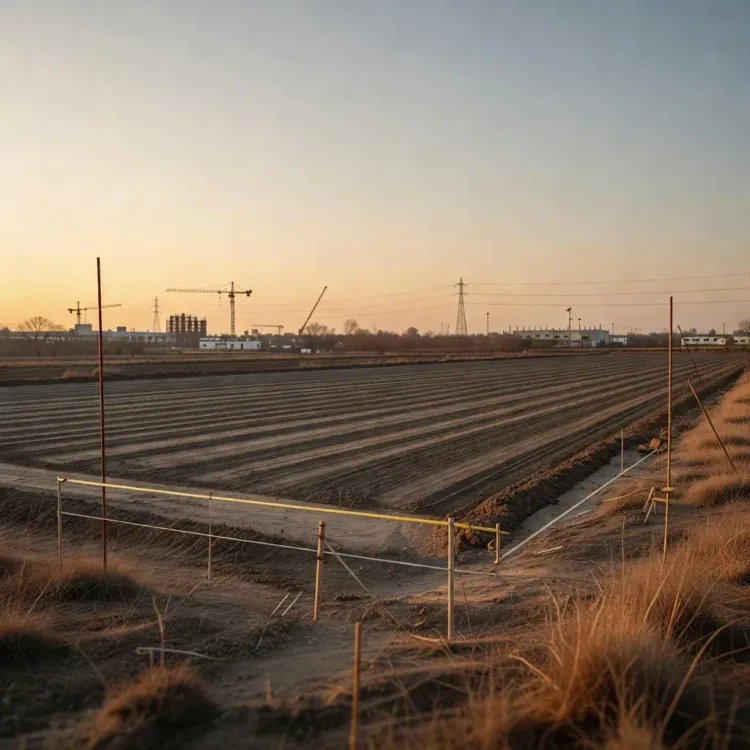
A dedicated land bank — pooled from government holdings, closed public-sector units and acquired private parcels — is intended to let promoters skip the multi-year process of buying fragmented plots in a densely populated state. The 50,000-acre target, if achieved, would mark one of the larger such pools attempted by an eastern Indian state.
Policy backdrop
The push builds on the Bihar Industrial Investment Promotion Policy, 2016, which introduced incentives, a single-window clearance mechanism and capital subsidies aimed at speeding up project approvals. Subsequent sector-specific policies for textiles, leather, ethanol and food processing layered additional benefits on top of that framework.
Bihar's improvement on the Department for Promotion of Industry and Internal Trade (DPIIT) Ease of Doing Business rankings has been uneven, with the state lagging western and southern peers on parameters such as land allotment, construction permits and utility connections. The Chief Minister's instruction to make procedures 'simpler' signals another round of process re-engineering on these specific indicators.
Mr Kumar, in office since 2005 across multiple terms, has consistently linked industrial revival to governance reform, road connectivity and law-and-order improvements. The latest review continues that arc, with land and paperwork identified as the two remaining frictions.
Stakeholders and impact
For industrial investors, a ready land bank reduces the most unpredictable variable in any Bihar project — site assembly. Larger anchor units in cement, ethanol, food processing and electronics assembly have repeatedly cited land as the decisive factor in choosing between Bihar and rival states such as Odisha, Jharkhand and Uttar Pradesh.
For local entrepreneurs and micro, small and medium enterprises, simpler clearance procedures could compress timelines for factory registrations, pollution consents and power connections, which currently move at varied speeds across districts.
The announcement also has a political dimension. With Bihar's economy still heavily dependent on agriculture and remittances from migrant workers, visible industrial investment is a recurring theme in state-level politics, cutting across ruling and opposition camps.
What's next
Attention will turn to the operational details: how the 50,000-acre pool is to be aggregated, the share coming from government versus private land, and the timeline for notifying parcels as industrial-use. Investors will also look for amendments to existing single-window rules and any fresh investor summit announcements.
The next set of DPIIT Ease of Doing Business state rankings will be an early external benchmark of whether the procedural changes signalled by the Chief Minister translate into measurable improvement on the ground.
Point of View
Agrarian state. By pairing the land bank target with another round of procedural simplification, the state government is signalling that it sees Ease of Doing Business indicators as a political deliverable, not just an administrative one. The credibility of the announcement will hinge on how quickly notified parcels and revised single-window rules appear on paper.
NationPress
18 Oct 2026
Frequently Asked Questions
What is the size of the land bank announced by Bihar?
Bihar's Chief Minister has directed officials to prepare a 50,000-acre land bank for industrial development, according to the Chief Minister's Office.
Why is Bihar creating an industrial land bank?
The land bank is meant to give investors ready-to-allot parcels, removing the long-standing bottleneck of aggregating contiguous land in a densely populated state and speeding up factory and logistics projects.
What did Nitish Kumar say about Ease of Doing Business?
He said procedures must be made simpler and more streamlined so that Bihar can be counted among the country's leading states on Ease of Doing Business.
Which existing policy supports Bihar's industrial push?
The Bihar Industrial Investment Promotion Policy, 2016 underpins the current push, offering incentives, capital subsidies and a single-window clearance system for industrial projects.
How is progress on Ease of Doing Business measured?
State performance is tracked through annual rankings coordinated by the Department for Promotion of Industry and Internal Trade (DPIIT), which assesses regulatory environment, single-window systems and land availability.