India eyes global FTA network after landmark EU trade deal
Synopsis
India has already covered half the global economy through trade pacts — and is now going for the rest. With active negotiations spanning Canada, Mexico, Chile, Peru, Mercosur, the Gulf, and Africa, New Delhi is running the most expansive trade diplomacy push in its history, using the landmark EU deal as both template and momentum.
Key Takeaways
India is negotiating or planning free trade agreements across North America , Latin America , Africa , and the Gulf following its landmark EU-India FTA .
Chief Negotiator Darpan Jain said India has already covered nearly 50% of global trade and 50% of the global economy through agreements over the past five years .
Active negotiations are underway with Canada , Mexico , Chile , Peru , Mercosur , Qatar , the GCC , the Southern African Customs Union , and Kenya .
India already has trade agreements with UAE , Oman , Japan , South Korea , Singapore , ASEAN , Australia , and New Zealand .
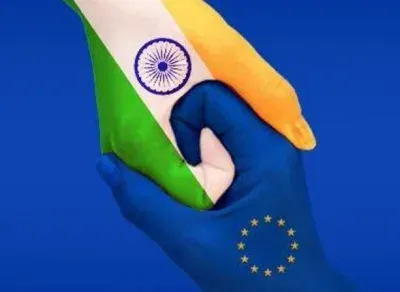
The EU-India FTA links economies representing nearly two billion people and is described as one of the world's largest bilateral trade agreements.
Fresh from sealing its landmark free trade agreement with the European Union, India is now pursuing an ambitious strategy to extend its network of trade pacts across North America, Latin America, Africa, and the Gulf, with negotiations already underway or in the pipeline with several major economies, the country's chief trade negotiator said on 9 July.
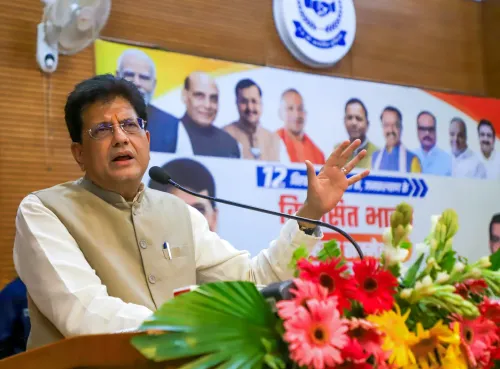
Speaking at an event hosted by the Peterson Institute for International Economics in Washington, Darpan Jain, India's Chief Negotiator for the EU-India Free Trade Agreement, laid out New Delhi's sweeping commercial ambitions.
'Broadly, our intent is to cover the entire world,' Jain said. 'Hands are full. The table is full. Mind space is full. So we are all working with all efforts to try and diversify our relations, expand our partnerships, and enhance trade.'
How Far India Has Come
Jain noted that India has already covered 'almost 50 per cent of global trade and 50 per cent of the global economy' through trade agreements concluded over the past five years. The focus is now shifting to regions where India's trade pact coverage remains limited.
Looking east, India has existing agreements with Japan, South Korea, Singapore, and ASEAN member states. In Oceania, New Delhi has recently concluded deals with Australia and New Zealand.
New Fronts: Americas, Africa, and the Gulf
In North America, India is actively negotiating a free trade agreement with Canada, while discussions have been initiated with Mexico. In Latin America, New Delhi is negotiating with Chile and Peru and has begun talks with the Mercosur bloc to expand an existing Preferential Trade Agreement. 'We intend to expand that,' Jain said of the Mercosur engagement.
In West Asia, India already holds trade agreements with the United Arab Emirates and Oman and is now in discussions with Qatar, the Gulf Cooperation Council (GCC), and other regional partners. On the African front, India is negotiating with the Southern African Customs Union and Kenya as it seeks broader economic engagement across the continent.
The EU Deal as a Template
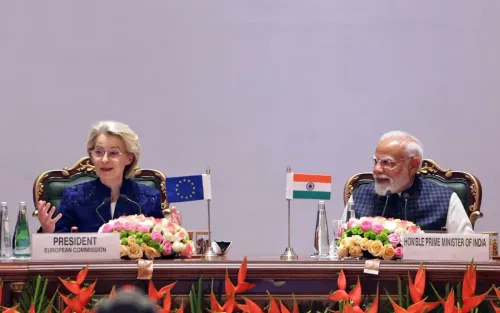
The comments come months after India and the European Union concluded what has been described as one of the world's largest bilateral trade agreements, linking economies representing nearly two billion people. Jain called the EU pact one of India's most ambitious trade agreements, saying it reflected a strong political commitment to expand market access and reduce disadvantages faced by Indian exporters.
'There is a strong political commitment to expand India's trade relationship with other countries, expand market access to other countries, and reduce the disadvantages which our exporters face,' he said.
A Broader Shift in India's Trade Outlook
Jain said the renewed push for trade agreements signals a broader change in India's economic orientation — greater openness to imports alongside a drive to boost exports and sharpen the global competitiveness of Indian businesses. This comes amid a wider global scramble to lock in preferential access as supply chains are redrawn post-pandemic.
The European Union is pursuing a parallel strategy. Christophe Kiener, the EU's chief trade negotiator, noted that Brussels has already secured preferential coverage for roughly half of its trade and is now concentrating on completing agreements in the Indo-Pacific, including negotiations with Thailand, the Philippines, and Malaysia, while also pursuing talks with the United Arab Emirates.
With negotiations active on multiple continents simultaneously, India's trade diplomacy is entering one of its most expansive phases — and the outcomes of these talks will shape the country's export trajectory for the decade ahead.
Point of View
When its trade diplomacy was largely defensive. But breadth is not the same as depth: covering 50% of global trade through agreements means little if rules-of-origin provisions, tariff schedules, and services chapters remain watered down. The real test is whether these pacts translate into measurable export gains or simply add to a growing list of signed-but-underutilised agreements. India's export-to-GDP ratio has remained stubbornly low even as the agreement count has risen — the next phase must prioritise quality of market access over quantity of deals.
NationPress
9 Jul 2026
Frequently Asked Questions
Which countries is India currently negotiating free trade agreements with?
India is actively negotiating FTAs with Canada, Chile, Peru, and the Southern African Customs Union, while discussions are underway with Mexico, Qatar, the Gulf Cooperation Council, Kenya, and the Mercosur bloc. This push follows the conclusion of the landmark EU-India Free Trade Agreement.
What is the EU-India Free Trade Agreement?
The EU-India Free Trade Agreement is a bilateral trade pact between India and the European Union, described as one of the world's largest such agreements, linking economies representing nearly two billion people. It serves as the centrepiece of India's current trade expansion strategy.
How much of global trade does India already cover through existing agreements?
According to Chief Negotiator Darpan Jain, India's existing trade agreements cover approximately 50% of global trade and 50% of the global economy, built up over the past five years. Key partners include Japan, South Korea, Singapore, ASEAN states, Australia, New Zealand, UAE, and Oman.
Why is India pursuing so many trade agreements simultaneously?
India's trade strategy aims to diversify commercial relationships, expand market access for Indian exporters, and reduce competitive disadvantages in key markets. Officials say the push also reflects a broader shift toward greater economic openness alongside a drive to boost exports.
What is India's trade strategy for Latin America?
India is negotiating FTAs with Chile and Peru and has initiated discussions with the Mercosur bloc — which includes Brazil, Argentina, Uruguay, and Paraguay — to expand an existing Preferential Trade Agreement. Jain described Latin America as a key region where India wants to strengthen its trade presence.