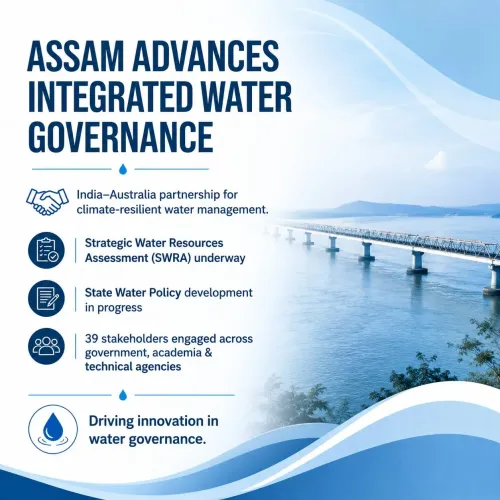
Assam Minister Borgohain outlines Water, Judicial roadmap
Synopsis
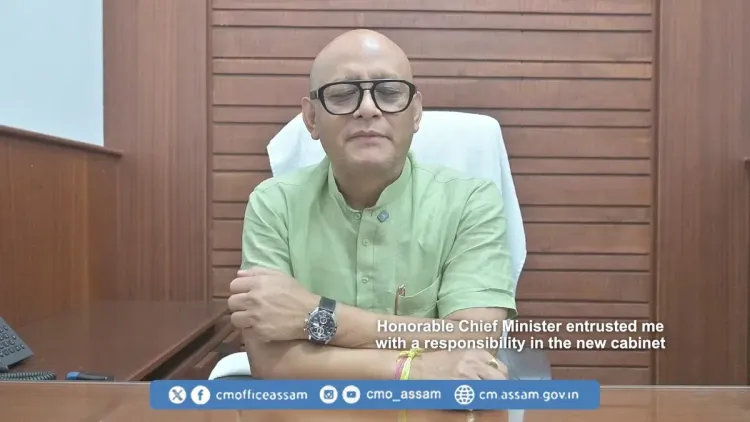
The Chief Minister's Office of Assam on 9 July 2026 released Minister Borgohain SBG's departmental roadmap covering Water Resources and Judicial portfolios, detailing immediate flood mitigation priorities and public welfare goals as the government marks its first two months in office.
Key Takeaways
The Chief Minister's Office of Assam released a ministerial roadmap video on 9 July 2026 as part of its 'Roadmap: Council of Ministers' series.
Minister Shri Borgohain SBG holds charge of both the Water Resources and Judicial Departments .
Key priorities outlined include flood mitigation measures and immediate steps for public welfare within the first two months of the government's term.
Assam's Flood Management Programme has pursued embankment modernisation and dredging along the Brahmaputra since 2016.
The Judicial Department's roadmap is expected to address court infrastructure and case pendency reduction.
Stakeholders watching for the 2026-27 flood management budget and tendering of embankment works before peak monsoon.
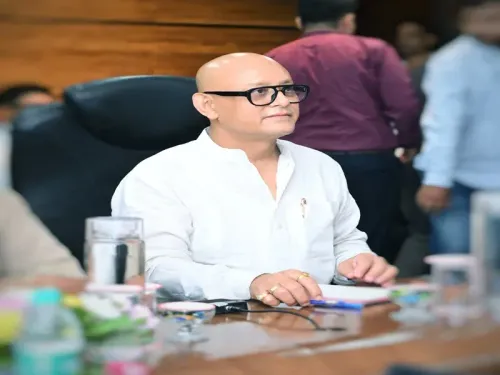
The Chief Minister's Office of Assam on 9 July 2026 shared a detailed ministerial roadmap video featuring Minister Shri Borgohain SBG, who holds charge of the Water Resources and Judicial Departments, laying out immediate priorities and flood mitigation measures as the government completes its first two months in office.
Context
The post is part of the Assam government's 'Roadmap: Council of Ministers' series, in which each cabinet minister publicly outlines departmental targets in the early weeks of a new term. Minister Borgohain addressed what lies ahead for two distinct but equally consequential portfolios — water resources and the judiciary — signalling the administration's intent to set measurable benchmarks from the outset.
Assam's recurring flood crisis, driven by the Brahmaputra and its tributaries, makes the Water Resources Department one of the most closely watched ministries in the state. Simultaneously, the Judicial Department's mandate — covering court infrastructure and administration of justice under the Gauhati High Court — affects millions of litigants across the state.
Policy Backdrop
The practice of releasing ministerial roadmaps within the first 100 days of a new government took shape in Assam after the 2016 and 2021 assembly elections, establishing a norm of public accountability from day one. Chief Minister Himanta Biswa Sarma, who has led the BJP-led government since May 2021, has consistently placed flood management at the centre of the state's governance agenda.
Since 2016, the state has pursued multi-year embankment modernisation and dredging projects under the Flood Management Programme and successive state flood action plans. These efforts have aimed to reduce the annual inundation that displaces and affects millions of residents across the Brahmaputra valley every monsoon season.
On the judicial side, the department's responsibilities span court infrastructure upgrades, coordination on judicial appointments, and programmes aimed at reducing case pendency — a long-standing concern in Assam's district and subordinate courts.
Stakeholders and Impact
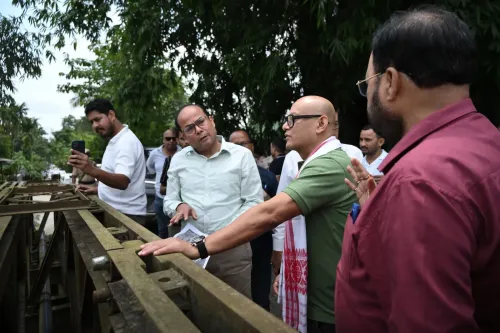
The most directly affected stakeholders for the Water Resources portfolio are residents of Assam's flood-prone districts, where embankment breaches and river erosion cause loss of life, displacement, and destruction of agricultural land year after year. Timely tendering of embankment and dredging works before the peak monsoon window is critical for these communities.
For the Judicial Department, the primary beneficiaries are litigants — particularly those dependent on legal aid — as well as judicial officers and court staff who require upgraded infrastructure to handle case loads efficiently. Any new legislative proposals or administrative reforms outlined in the roadmap will have a direct bearing on access to justice across the state.
The dual-portfolio roadmap also signals that the government views administrative efficiency and natural-disaster preparedness as complementary pillars of public welfare, not siloed concerns.
What's Next
Observers will watch closely for the release of the 2026-27 flood management budget and the tendering of embankment and dredging contracts, which typically need to be finalised before the monsoon intensifies. Progress on these fronts will be the first concrete test of the priorities Minister Borgohain has outlined.
On the judicial side, any legislative proposals addressing court infrastructure or case pendency reduction will indicate how seriously the department intends to operationalise its early-term commitments. The broader 'Roadmap: Council of Ministers' series is expected to continue with other departments, building a collective accountability framework for the government's first term milestones.
Point of View
Designed to shift the political narrative from electoral promises to measurable administrative targets. By leading with flood mitigation — the single most recurring crisis in Assam's governance calendar — Minister Borgohain is anchoring his tenure to an issue with direct, visible consequences for millions of voters. The pairing of Water Resources with the Judicial portfolio in one roadmap is notable, as it implicitly frames access to justice and disaster resilience as twin pillars of the government's welfare agenda. How quickly the department moves from roadmap rhetoric to tendered contracts and court upgrades will determine whether this transparency exercise translates into tangible outcomes.
NationPress
9 Jul 2026
Frequently Asked Questions
Who is Minister Borgohain SBG in Assam?
Shri Borgohain SBG is a minister in the Assam Council of Ministers holding charge of the Water Resources and Judicial Departments, as confirmed by the Chief Minister's Office of Assam in July 2026.
What is the Assam government's roadmap for flood mitigation in 2026?
Minister Borgohain SBG outlined immediate flood mitigation priorities for the Water Resources Department in a video shared by the CMO on 9 July 2026, with specific embankment and dredging measures expected to be detailed in the 2026-27 flood management budget.
What does the Assam Judicial Department roadmap include?
The roadmap covers court infrastructure development and administration of justice under the Gauhati High Court, with observers expecting proposals on case pendency reduction and judicial infrastructure upgrades.
Why does Assam prioritise flood management in early-term governance?
The Brahmaputra valley faces severe annual inundation affecting millions of residents, making flood mitigation a perennial political and administrative priority that every Assam government addresses within its first months in office.
What is the 'Roadmap: Council of Ministers' series in Assam?
It is a structured accountability exercise introduced by the Assam government in which each cabinet minister publicly outlines departmental priorities and targets within the first 100 days of a new term, a practice established after the 2016 and 2021 assembly elections.