CM Office Assam urges flood safety, cites ASDMA advisories
Synopsis
The Chief Minister's Office of Assam on 14 June 2026 called on residents to stay alert and follow ASDMA flood safety advisories as the monsoon season begins, emphasising that awareness and timely action save lives.
Key Takeaways
The Chief Minister's Office of Assam issued a flood safety advisory on 14 June 2026 via its official X account.
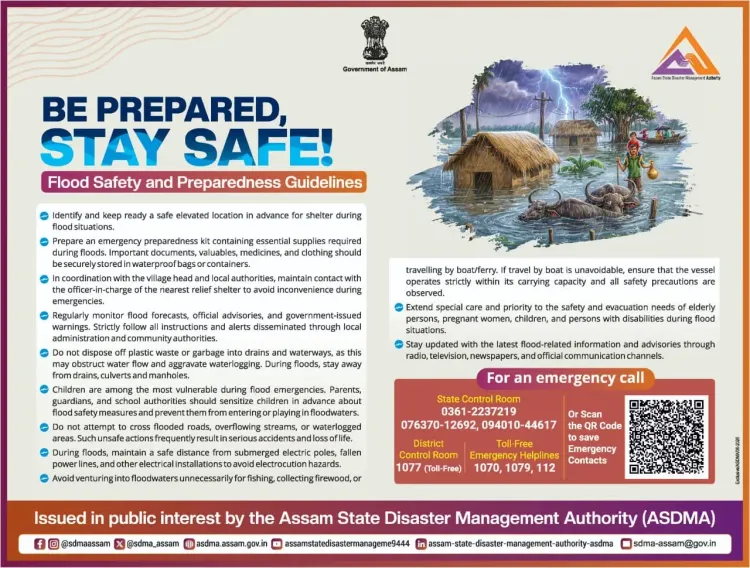
Citizens were directed to follow ASDMA (Assam State Disaster Management Authority) advisories and stay informed through official alerts.
The advisory coincides with the onset of the southwest monsoon , Assam's most flood-vulnerable period.
The Brahmaputra River and its tributaries are the primary source of annual inundation across the state's river valleys.
ASDMA operates under the Disaster Management Act, 2005 as Assam's nodal flood-response and public-awareness body.
Flood-prone rural communities and local administration are the key stakeholders expected to act on the advisory.
The Chief Minister's Office of Assam on Sunday, 14 June 2026 issued a public safety appeal urging residents across the state to stay alert during the monsoon season, directing citizens to follow flood safety advisories issued by the Assam State Disaster Management Authority (ASDMA).
The post, shared on the official CMO account, read: 'Stay Alert, Stay Safe. Follow ASDMA's flood safety advisories, stay informed through official alerts and be prepared — awareness and timely action save lives.'
Context
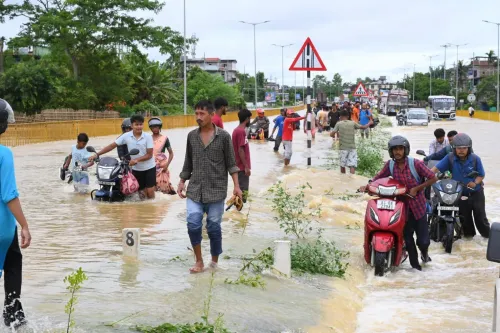
Assam enters its most vulnerable period each year as the southwest monsoon intensifies between June and September, causing rivers — chiefly the Brahmaputra and its tributaries — to swell and breach embankments. The advisory comes at the onset of the monsoon cycle, when early warnings are considered critical to minimising casualties in low-lying and riverbank communities.
The Brahmaputra, one of the world's largest transboundary rivers, drains much of Assam's Brahmaputra Valley, a region historically prone to severe inundation, crop loss, and displacement of rural households every monsoon season.
Policy Backdrop
ASDMA was established under the Disaster Management Act, 2005, which created the legal architecture for state-level disaster management bodies across India. As the nodal agency for Assam, ASDMA is mandated to issue standardised flood alerts, coordinate emergency response, and conduct public awareness campaigns aligned with the national framework of the National Disaster Management Authority (NDMA).
Successive state governments have relied on ASDMA's communication machinery as part of an annual pre-monsoon preparedness cycle. Issuing early public advisories through official social media channels has become a standard component of this cycle, aimed at reducing response time at the community level.
The broader pattern of climate variability and accelerating riverbank erosion along the Brahmaputra basin has made such preparedness messaging increasingly urgent in recent years, with flood risk compounding across multiple districts simultaneously during peak monsoon weeks.
Stakeholders and Impact
The primary audience for this advisory is flood-prone rural communities across Assam's river valleys, particularly households situated near embankments, wetlands, and low-lying agricultural zones. Timely awareness has historically been credited with reducing casualties when residents evacuate early or move livestock and essential supplies to higher ground.
Local administration, district disaster management authorities, and village-level response teams are expected to amplify ASDMA's advisories through grassroots channels, ensuring the message reaches communities with limited access to digital platforms.
What's Next
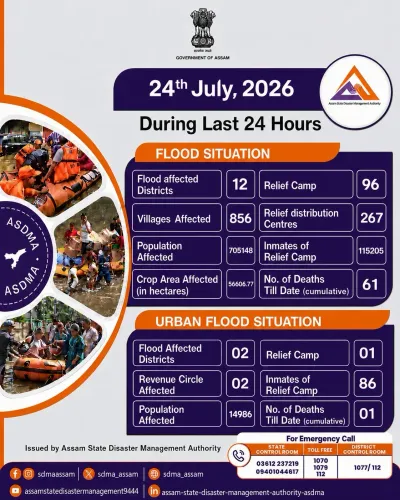
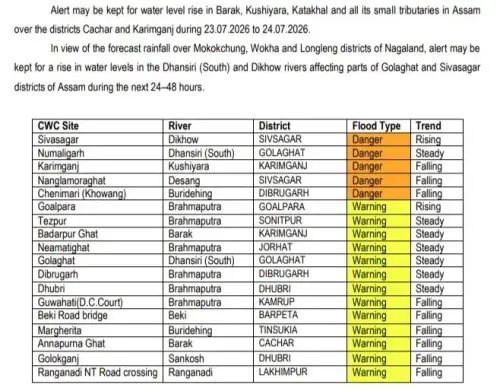
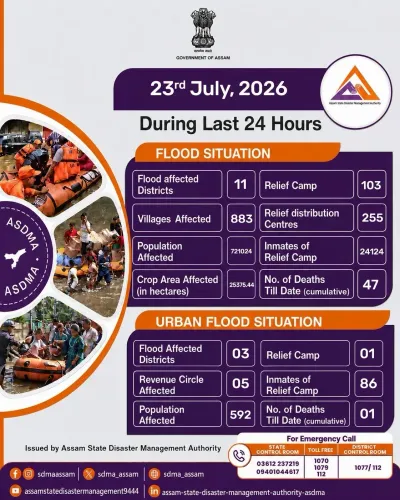
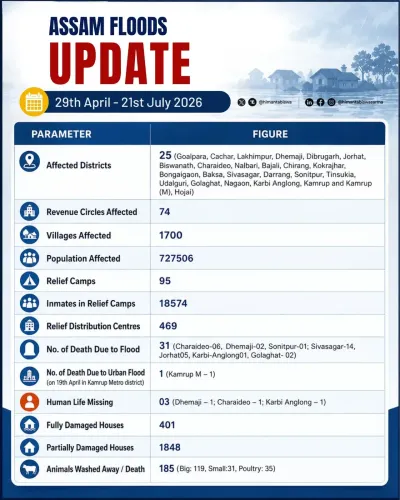
Observers will watch for river-level bulletins from the Central Water Commission in the coming weeks, which typically trigger graduated alert levels — from 'warning' to 'danger' — across Assam's monitored river gauges. Any activation of the state's flood-relief machinery, including deployment of NDRF teams, embankment inspection drives, or relief camp mobilisation, will indicate the scale of the season's impact.
The CMO's early public communication signals that the state apparatus is positioning itself for a proactive rather than reactive monsoon response — a posture that disaster management experts consider essential in a state where flooding is not an exception but an annual certainty.
Point of View
While routine in form, reflects a deliberate shift toward early-season public communication as part of Assam's disaster-risk-reduction posture. Issuing preparedness messaging at the very onset of the monsoon — rather than after the first flood event — aligns with the NDMA's doctrine of anticipatory governance. For a state that loses lives, crops, and infrastructure to flooding nearly every year, the political value of visible pre-emptive action is as significant as the operational one. The advisory also implicitly signals to district administrations that the state is watching, nudging local machinery into readiness before conditions deteriorate.
NationPress
13 Sept 2026
Frequently Asked Questions
What is ASDMA and what does it do during floods?
ASDMA, the Assam State Disaster Management Authority, is the state's nodal agency under the Disaster Management Act, 2005. It issues flood alerts, coordinates emergency response, and runs public awareness campaigns during the monsoon season.
Why does Assam flood every year?
Assam floods annually primarily because of the Brahmaputra River and its tributaries, which swell during the southwest monsoon. The problem is worsened by riverbank erosion, climate variability, and the geography of the Brahmaputra Valley.
What should Assam residents do during a flood advisory?
Residents should follow ASDMA's official safety guidelines, monitor official alert channels, avoid riverbanks and low-lying areas, and be ready to evacuate with essential supplies if local authorities issue warnings.
When is flood season in Assam?
Assam's flood season typically runs from June to September, coinciding with the southwest monsoon. June is considered a critical early-warning period when river levels begin to rise rapidly.
How can I get official flood alerts in Assam?
Official flood alerts are issued by ASDMA through its website and social media channels, and by the Central Water Commission through river-level bulletins. District administrations also relay warnings at the local level.