CM Himanta's Assam advances river basin water governance
Synopsis
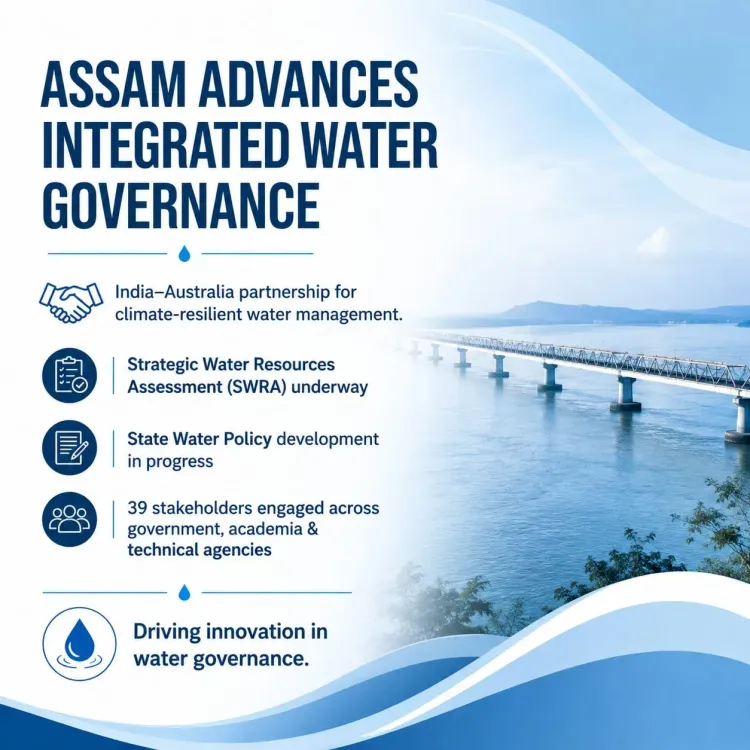
Assam is advancing integrated, climate-resilient water governance under the AIRBMP, with stakeholders at an Australia–Assam roundtable on 16 June 2026 highlighting progress on the Strategic Water Resources Assessment and the state's forthcoming Water Policy.
Key Takeaways
The Assam Integrated River Basin Management Project (AIRBMP) is the state's primary vehicle for integrated, climate-resilient water governance under CM Himanta Biswa Sarma .
An Australia–Assam Roundtable on Water and Climate Partnerships was co-hosted by FREMAA and the Australian Consulate General, Kolkata on 16 June 2026 .
Stakeholders at the roundtable highlighted progress on the Strategic Water Resources Assessment (SWRA) , a foundational data-gathering exercise for basin-scale planning.
The development of Assam's State Water Policy is underway, aiming to institutionalise sustainable and inclusive water resource management.
The initiative aligns with India's National Water Policy 2012 mandate for states to adopt climate-integrated, basin-scale water governance.
Flood-prone communities and the Assam agricultural sector are the primary beneficiaries of improved water resource management across the state.
The Chief Minister's Office of Assam announced on 18 June 2026 that the state is advancing integrated and climate-resilient water governance under the Assam Integrated River Basin Management Project (AIRBMP), led by Chief Minister Dr. Himanta Biswa Sarma. The announcement followed an Australia–Assam Roundtable on Water and Climate Partnerships, co-hosted by FREMAA (Flood and River Erosion Management Agency of Assam) and the Australian Consulate General, Kolkata, held on 16 June 2026.
Context
The roundtable brought together stakeholders who highlighted progress on two fronts: the Strategic Water Resources Assessment (SWRA) and the development of Assam's State Water Policy. Both initiatives are positioned as foundational steps toward sustainable and inclusive management of the state's water resources. The event reflects a growing trend of subnational climate partnerships between Indian states and foreign governments, particularly on issues tied to river management and climate adaptation.
Policy Backdrop
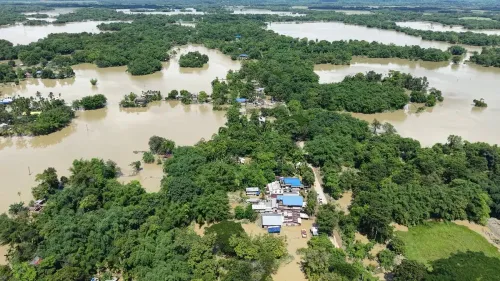
Assam's push for integrated river basin management is rooted in decades of vulnerability to the Brahmaputra basin's annual flooding and riverbank erosion cycles. India's National Water Policy of 2012 called on states to adopt basin-scale planning that incorporates climate considerations — a mandate that states in the Northeast have been slow to institutionalise. World Bank-supported flood and river erosion projects active in Assam from the mid-2000s onward built the institutional groundwork that FREMAA now builds upon.
The AIRBMP represents an attempt to move beyond reactive flood response toward a comprehensive, data-driven governance framework. The SWRA, a key component, is designed to generate the baseline hydrological and climate data needed to inform long-term policy decisions across the state.
Stakeholders and Impact
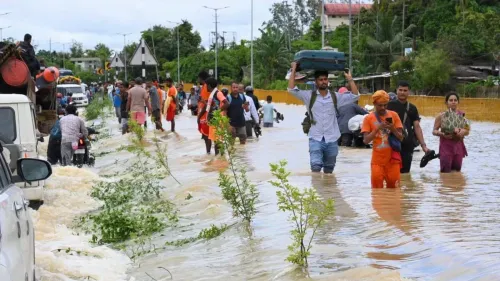
The communities most directly affected by this initiative are Assam's flood-prone populations, who face recurring displacement and agricultural losses along the Brahmaputra and its tributaries. The agricultural sector, which underpins livelihoods across the state, stands to benefit from more predictable water availability and reduced erosion-driven land loss.
The Australian partnership brings technical cooperation capacity to the table. The involvement of the Australian Consulate General in Kolkata signals that the engagement operates at a formal bilateral level, even if subnational in character. Such partnerships have become increasingly common across Northeast India as states seek specialised climate adaptation expertise that complements central government schemes.
What's Next
The immediate milestones to watch are the drafting and eventual legislative tabling of Assam's State Water Policy and the completion of the Strategic Water Resources Assessment. Both will determine the practical scope and enforceability of the integrated basin management framework. Any follow-on technical agreements or pilot projects emerging from the 16 June roundtable will indicate how quickly the Australia–Assam partnership moves from dialogue to implementation.
If the State Water Policy advances through the legislative process, Assam could become one of the first Northeast Indian states to operationalise a climate-integrated water governance framework — a model with potential implications for the wider Brahmaputra basin shared with neighbouring states and countries.
Point of View
As the Australian roundtable illustrates. For CM Himanta Biswa Sarma, visible progress on a State Water Policy addresses a long-standing institutional gap in one of India's most flood-vulnerable states, with clear electoral and developmental optics. The subnational foreign partnership model — bypassing the Centre on technical cooperation while staying within constitutional bounds — is becoming a template across Northeast India. The real test will be whether the SWRA and the Water Policy translate into enforceable, funded implementation rather than remaining framework documents.
NationPress
17 Sept 2026
Frequently Asked Questions
What is the Assam Integrated River Basin Management Project (AIRBMP)?
The AIRBMP is Assam's flagship initiative for integrated, climate-resilient water governance, aiming to manage the state's river basins — particularly in the Brahmaputra region — through data-driven planning and sustainable resource management.
What is the Strategic Water Resources Assessment (SWRA) in Assam?
The SWRA is a foundational study under the AIRBMP designed to generate comprehensive hydrological and climate data across Assam, which will inform the development of the state's Water Policy and long-term water management decisions.
What is FREMAA and what role does it play in Assam's water management?
FREMAA, the Flood and River Erosion Management Agency of Assam, is the state body responsible for flood control and riverbank protection. It co-hosted the Australia–Assam roundtable on 16 June 2026 and is a key implementing agency for water governance projects.
Why is Australia partnering with Assam on water and climate issues?
Australia, through its Consulate General in Kolkata, is providing technical cooperation on water governance and climate resilience. The partnership reflects a broader pattern of subnational climate adaptation agreements between Indian states and foreign governments.
What is Assam's State Water Policy and when will it be finalised?
Assam is in the process of developing a State Water Policy to institutionalise sustainable and inclusive water resource management. The policy is currently being drafted, with its legislative timeline yet to be officially confirmed.