CM Himanta Directs Flood Resilience Review in Assam

Synopsis
Assam's Chief Secretary met the Inter-Ministerial Central Team on 11 July 2026, as directed by CM Himanta Biswa Sarma, to review flood damage across the state. Talks covered riverbank erosion, embankment strengthening, and scientific water management to reduce future flood impact.
Key Takeaways
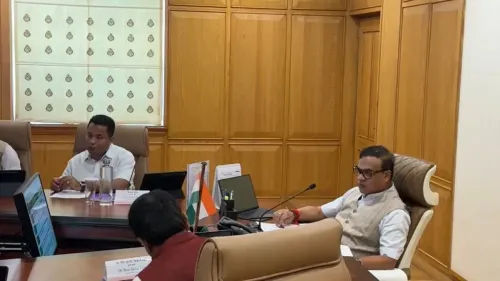
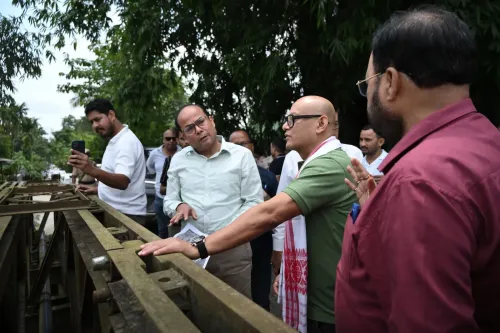
The Chief Secretary of Assam chaired a review meeting with the Inter-Ministerial Central Team (IMCT) on 11 July 2026 following its field assessment of flood-affected districts.
The meeting was convened on the directions of Chief Minister Dr.
Himanta Biswa Sarma .
Key agenda items included riverbank erosion control, embankment strengthening, and improved water management .
The IMCT is a central government body constituted by the Ministry of Home Affairs to assess disaster damage and recommend NDRF assistance.
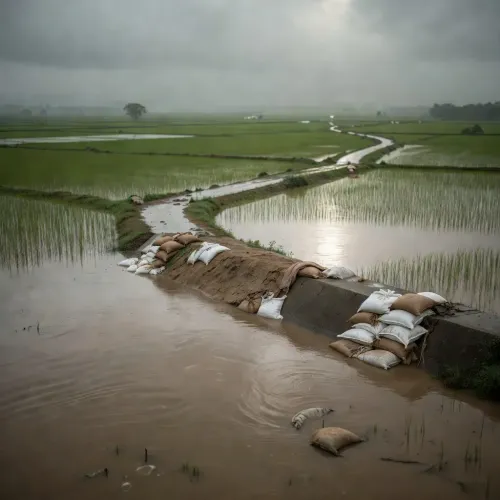
Assam faces annual severe flooding from the Brahmaputra and Barak river systems, making flood resilience a perennial policy priority.
The state is pushing for a shift from reactive relief toward scientific, engineering-led flood management solutions.
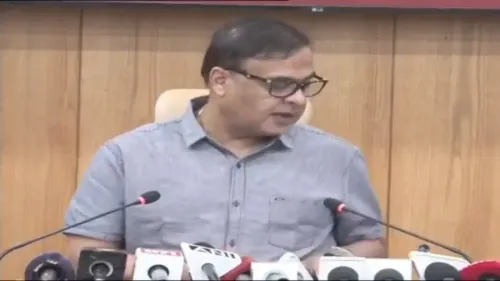
The Chief Minister's Office of Assam announced on Saturday, 11 July 2026 that Chief Secretary of Assam chaired a high-level review meeting with the Inter-Ministerial Central Team (IMCT) following the team's field assessment of flood-affected districts across the state, acting on directions from Chief Minister Dr. Himanta Biswa Sarma.
Context
The IMCT, constituted by the Ministry of Home Affairs, had conducted an on-ground assessment of flood-damaged districts in Assam before the review meeting was convened. The Chief Secretary's meeting with the central team represents a formal step in India's federal disaster-response architecture, through which states present damage assessments to secure assistance from the National Disaster Response Fund (NDRF). The discussions, according to the official post, centred on 'tackling riverbank erosion, strengthening embankments, improving water management and adopting scientific solutions to minimise the impact of future floods.'
Policy Backdrop
Assam's vulnerability to annual monsoon flooding stems primarily from the Brahmaputra and Barak river systems, which together inundate large swathes of the state each year, displacing communities and damaging agricultural land. The legal framework for central-state coordination on such disasters was established under the Disaster Management Act, 2005, which created the IMCT mechanism and defined the roles of both the National Disaster Management Authority (NDMA) and state equivalents. Successive central governments have channelled funding for flood protection in Assam through dedicated Flood Management Programmes since the mid-2000s, with embankment strengthening and erosion control as recurring priorities.
Dr. Himanta Biswa Sarma, who has served as Chief Minister since 2021, has consistently positioned scientific and engineering-led interventions — rather than purely reactive relief — as the long-term answer to Assam's flood crisis. The direction to the Chief Secretary to engage the IMCT at the review stage signals the state government's intent to influence the central team's recommendations before they are finalised.
Stakeholders and Impact
The most immediate stakeholders are the flood-affected residents and farming communities of Assam's riverine districts, who face annual losses of crops, livestock, and homes due to inundation and riverbank erosion. Stronger embankments and improved water management, if sanctioned and implemented, would directly reduce displacement and agricultural damage in these communities. Broader beneficiaries include state agencies responsible for infrastructure maintenance and the central ministries that coordinate disaster funding allocations.
The IMCT's assessment will feed into the central government's decision on whether to release additional funds beyond the state's own State Disaster Response Fund (SDRF) allocation. The outcome of this process determines how quickly and at what scale engineering interventions can be executed on the ground.
What's Next
The next critical milestone is the formal submission of the IMCT's assessment report to the Ministry of Home Affairs, which will then decide on any additional central assistance. Stakeholders will watch for announcements of sanctioned funds for embankment repair and erosion-control works, as well as any state-level monsoon preparedness orders that may follow from the review's findings. A move toward 'scientific solutions,' as referenced in the official post, could also signal fresh procurement or technical partnerships for water-management infrastructure in Assam.
Point of View
A tactically important step in India's federal disaster-finance process. CM Himanta Biswa Sarma's emphasis on 'scientific solutions' reflects a broader political narrative his administration has cultivated since 2021: moving Assam away from the image of a perennially flood-battered state toward one investing in durable infrastructure. The focus on embankments and erosion control aligns with longstanding demands from Brahmaputra-basin states for upgraded Flood Management Programme funding from the Centre. How much central assistance the IMCT report ultimately unlocks will be the real test of whether this review translates into on-ground change.
NationPress
9 Oct 2026
Frequently Asked Questions
What is the IMCT and why did it visit Assam in 2026?
The Inter-Ministerial Central Team (IMCT) is constituted by India's Ministry of Home Affairs to conduct field assessments of disaster-affected areas and recommend financial assistance from the National Disaster Response Fund. It visited Assam in July 2026 to assess damage caused by the monsoon floods across multiple districts.
What did the Assam flood review meeting on 11 July 2026 discuss?
The review meeting chaired by the Chief Secretary of Assam focused on tackling riverbank erosion, strengthening embankments, improving water management, and adopting scientific approaches to reduce the impact of future floods.
Why does Assam flood every year?
Assam experiences severe annual flooding primarily because of the Brahmaputra and Barak river systems, which swell dramatically during the monsoon season. The state's flat floodplains, high rainfall, and inadequate embankment infrastructure amplify the damage each year.
What funds are available for flood relief in Assam?
Assam can draw on its State Disaster Response Fund (SDRF) for immediate relief. For larger interventions, the state requests central assistance from the National Disaster Response Fund (NDRF), which is released based on IMCT assessment reports submitted to the Ministry of Home Affairs.
What is CM Himanta Biswa Sarma's approach to flood management in Assam?
Chief Minister Dr. Himanta Biswa Sarma, in office since 2021, has advocated shifting from reactive flood relief toward long-term scientific and engineering solutions, including embankment strengthening, erosion control, and improved water management infrastructure along the Brahmaputra basin.