CM Fadnavis Seeks Blessings of Sant Dnyaneshwar Mauli's Padukas
Synopsis
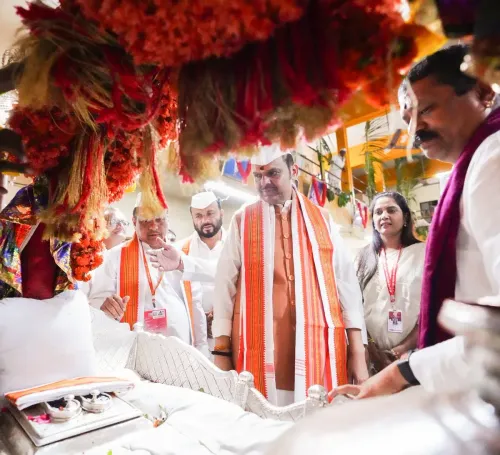
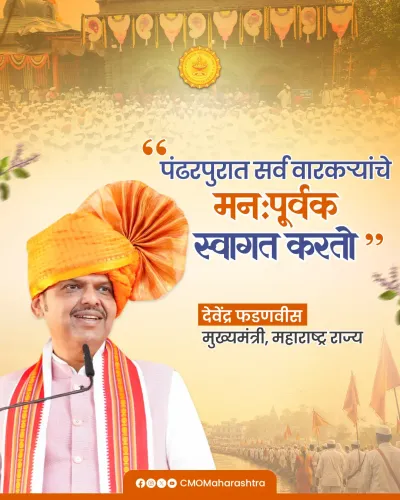
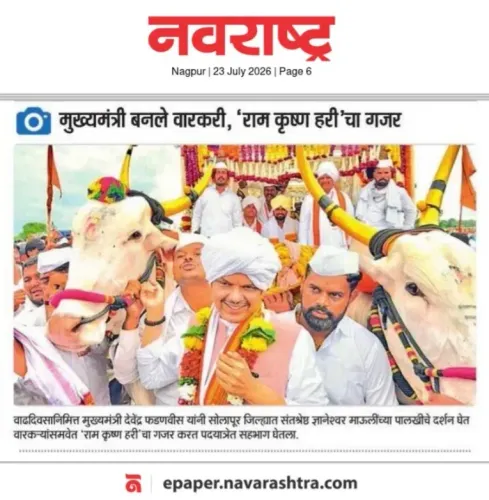
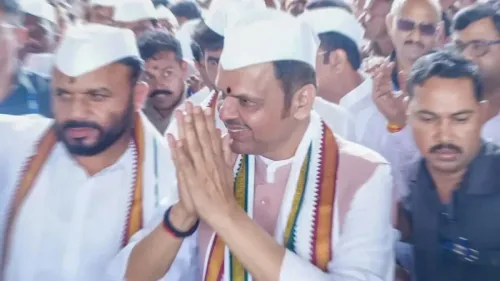
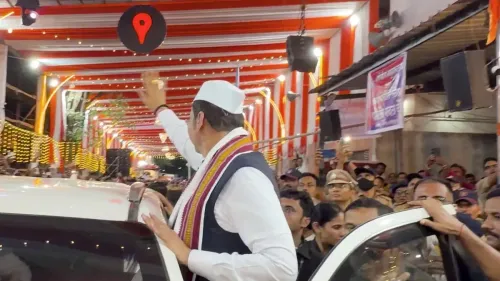
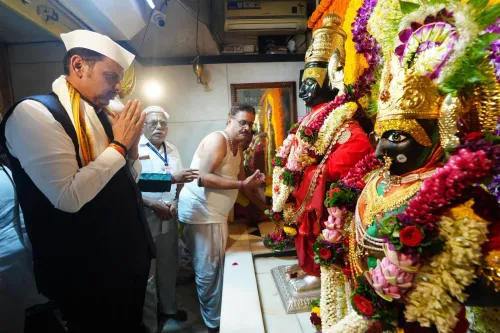
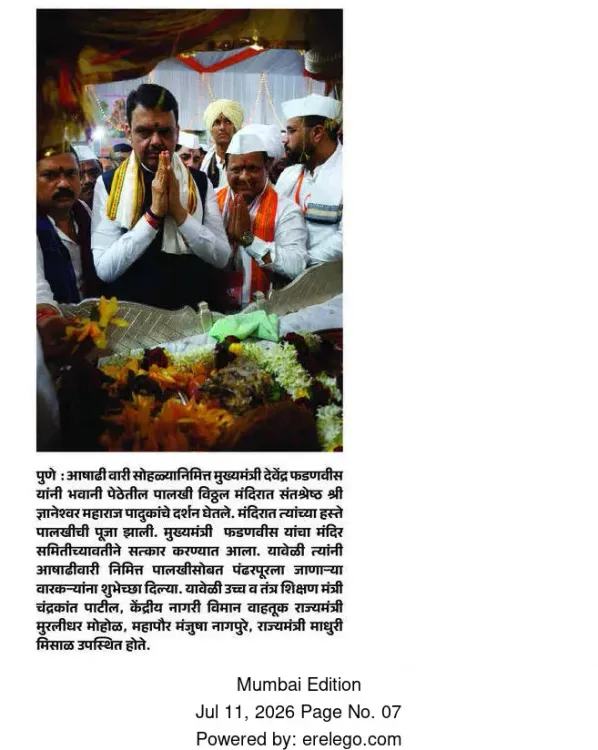
Chief Minister Devendra Fadnavis paid his respects at the padukas of 13th-century saint-poet Dnyaneshwar Mauli on 11 July 2026, marking the Maharashtra government's engagement with the annual Wari pilgrimage season ahead of Ashadhi Ekadashi.
Key Takeaways
CM Devendra Fadnavis sought the darshan of the padukas of Sant Dnyaneshwar Mauli on 11 July 2026 .
The visit is linked to the Wari 2026 pilgrimage season, which culminates at Pandharpur on Ashadhi Ekadashi .
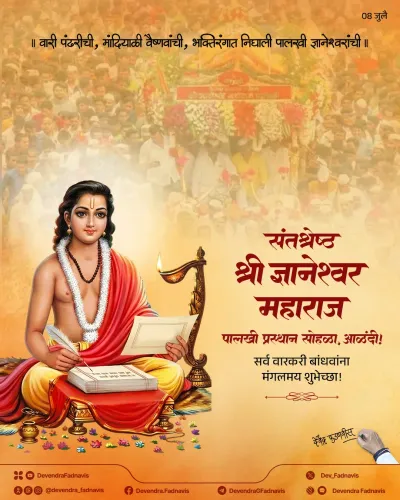
Sant Dnyaneshwar was a 13th-century Marathi saint-poet and composer of the Dnyaneshwari , a foundational text of the Bhakti movement.
The Wari draws millions of Warkari devotees who walk in procession carrying the saint's padukas across Maharashtra.
Maharashtra governments have provided logistical support for the Wari pilgrimage since state formation in 1960 .
Government announcements on pilgrim facilities and security arrangements for Wari 2026 are expected in the coming days.
The Chief Minister's Office of Maharashtra on Saturday, 11 July 2026 shared that Chief Minister Devendra Fadnavis paid his respects at the sacred padukas (sandals) of Santshreshtha Shri Dnyaneshwar Mauli, the revered 13th-century Warkari saint-poet, ahead of the Wari 2026 pilgrimage season.
The CMO's post in Marathi read: 'मुख्यमंत्री देवेंद्र फडणवीस यांनी घेतले संतश्रेष्ठ श्री ज्ञानेश्वर माऊली यांच्या पादुकांचे दर्शन' — meaning 'Chief Minister Devendra Fadnavis sought the darshan of the padukas of Santshreshtha Shri Dnyaneshwar Mauli.'
Context
The Wari is one of Maharashtra's most significant annual religious events, drawing millions of Warkari devotees who walk in procession carrying the padukas of saints Dnyaneshwar and Tukaram to the temple town of Pandharpur. The culmination of the pilgrimage coincides with Ashadhi Ekadashi, the eleventh day of the bright fortnight in the Hindu month of Ashadha. The padukas are treated as the living presence of the saints and are venerated at every stop along the route.
Sant Dnyaneshwar, born in the 13th century in the Nashik region of Maharashtra, is celebrated for composing the Dnyaneshwari, a Marathi-language commentary on the Bhagavad Gita that became a cornerstone of the Bhakti movement in the Deccan. His legacy is central to Marathi cultural and spiritual identity.
Policy Backdrop
Since Maharashtra's formation in 1960, successive state governments have provided logistical support for the Wari, including security arrangements, transport facilities, medical camps, and infrastructure along the pilgrimage route. The event, which involves lakhs of pilgrims walking hundreds of kilometres on foot, requires extensive coordination across multiple districts.
Chief Ministers and senior political leaders across party lines have regularly participated in Wari-related events, reflecting the pilgrimage's deep cultural resonance with Marathi-speaking voters and rural communities. Such participation is understood as both a devotional gesture and an expression of the state's commitment to preserving Marathi bhakti traditions.
Stakeholders and Impact
The primary stakeholders are the millions of Warkari devotees across Maharashtra and beyond who undertake the annual pilgrimage. For these communities, the Chief Minister's darshan carries symbolic weight — signalling that the state government respects and supports the living tradition of the Warkari sampradaya.
The event also has implications for religious tourism in Maharashtra, with Pandharpur in Solapur district serving as the spiritual epicentre. Local economies along the pilgrimage route benefit from the annual influx of pilgrims, making the government's engagement with the Wari a matter of both cultural policy and economic significance.
What's Next
With the Wari 2026 season underway, attention will turn to government announcements on pilgrim facilities, security deployment, and any infrastructure upgrades planned for this year's procession. The state administration is expected to outline arrangements for managing the large crowds that converge on Pandharpur for Ashadhi Ekadashi. CM Fadnavis's public participation at this stage signals that the government intends to remain visibly engaged with the pilgrimage through its conclusion.
Point of View
Where engagement with the Warkari tradition serves as a visible bridge between the state and its large rural, devotional electorate. The Wari is not merely a religious event but a social institution that cuts across caste and class lines, making it politically significant for any sitting Chief Minister. By participating at this stage of the pilgrimage season, Fadnavis signals continuity with the state's long-standing policy of institutional support for the Wari. The move also reinforces the government's positioning on Marathi cultural identity at a time when such symbolism carries electoral weight.
NationPress
9 Oct 2026
Frequently Asked Questions
What is the Wari pilgrimage in Maharashtra?
The Wari is an annual pilgrimage in Maharashtra in which millions of Warkari devotees walk in procession carrying the padukas of saints Dnyaneshwar and Tukaram to the temple town of Pandharpur, culminating on Ashadhi Ekadashi.
Who is Sant Dnyaneshwar Mauli?
Sant Dnyaneshwar was a 13th-century Marathi saint-poet who composed the Dnyaneshwari, a Marathi commentary on the Bhagavad Gita. He is a central figure in the Warkari bhakti tradition and his padukas are carried during the annual Wari pilgrimage.
Why did CM Devendra Fadnavis visit the padukas of Dnyaneshwar Mauli?
CM Devendra Fadnavis sought the darshan of Sant Dnyaneshwar Mauli's padukas as part of his participation in the Wari 2026 pilgrimage season, in keeping with the tradition of Maharashtra Chief Ministers engaging with this major annual religious event.
What are padukas in the Warkari tradition?
Padukas are sacred sandals of a saint, venerated as the living presence of that saint. In the Warkari tradition, the padukas of Dnyaneshwar and Tukaram are carried in a ceremonial procession to Pandharpur during the annual Wari pilgrimage.
What government support does Maharashtra provide for the Wari pilgrimage?
Since Maharashtra's formation in 1960, successive state governments have provided security, transport, medical camps, and infrastructure along the pilgrimage route to facilitate the lakhs of Warkari pilgrims who participate in the Wari each year.