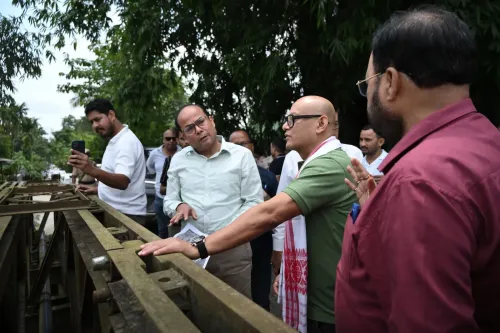
CM Himanta Flags Upper Assam Floods After Scindia Call

Synopsis
Assam Chief Minister Himanta Biswa Sarma confirmed on June 30, 2026, that floods have caused widespread damage in Upper Assam. He acknowledged a call from Union Minister Jyotiraditya Scindia and stated that state teams are on the ground for relief and rehabilitation, invoking PM Modi's leadership.
Key Takeaways
Assam CM Himanta Biswa Sarma confirmed widespread flood damage in the Upper Assam region on June 30, 2026 .
Union Minister Jyotiraditya Scindia called CM Sarma to inquire about the flood situation, signalling early central government engagement.
State disaster management teams have been deployed on the ground to review the situation and provide relief and rehabilitation support.
CM Sarma invoked the 'Double Engine Government' framework, reaffirming expected coordination between the Assam state government and the Union Government under PM Narendra Modi .
Upper Assam , covering districts such as Dibrugarh , Tinsukia , and Jorhat , is among the most flood-prone zones in India, particularly during the monsoon season.
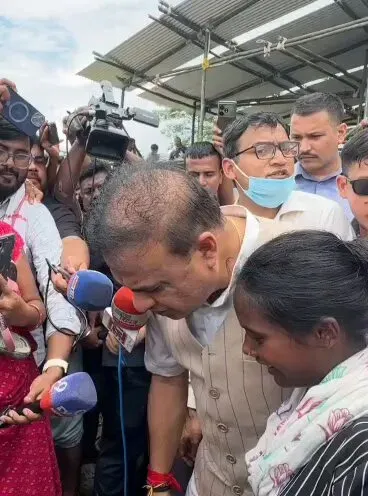
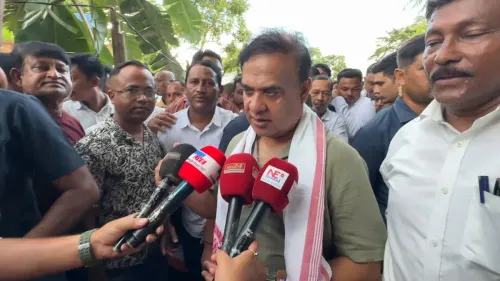
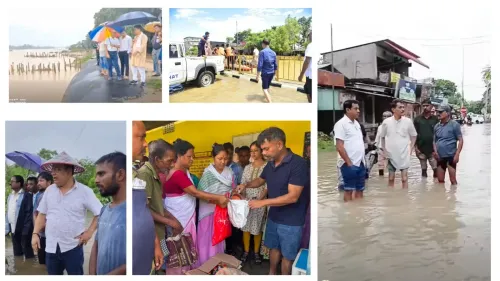
Assam Chief Minister Himanta Biswa Sarma on Tuesday, June 30, 2026, acknowledged a call from Union Minister Jyotiraditya Scindia and confirmed that a recent spate of floods has caused widespread damage across the Upper Assam region, with state teams deployed on the ground to assess the situation and extend relief.
Context
In his post on X, CM Sarma wrote: 'The recent spate of floods have caused widespread damage in the Upper Assam region. Our teams are on ground to review the situation and provide all relief and rehabilitation support.' The statement came in direct response to a call from Scindia, indicating that the Centre has taken note of the deteriorating situation in the state's upper belt.
Upper Assam — a stretch encompassing districts such as Dibrugarh, Tinsukia, Sibsagar, and Jorhat — is among the most flood-prone zones in the country. The Brahmaputra and its tributaries regularly breach embankments during the monsoon season, displacing communities and damaging agricultural land and infrastructure.
Policy Backdrop
Flood management in Assam has long been a shared responsibility between the state government and the Union Government, with funding channelled through the National Disaster Response Fund (NDRF) and the State Disaster Response Fund (SDRF). The BJP-led 'Double Engine Government' framework — referring to the alignment of the state and central administrations under the same party — has been a recurring political talking point for faster resource mobilisation during disasters.
CM Sarma specifically invoked the leadership of Prime Minister Narendra Modi, reaffirming the state's expectation of central support. Such direct ministerial outreach from the Centre — in this case from Union Minister Scindia — typically precedes or accompanies the deployment of NDRF teams and the release of emergency funds.
Stakeholders and Impact
Residents of flood-affected districts in Upper Assam are the most immediate stakeholders, facing displacement, crop loss, and disruption to livelihoods. State disaster management teams, district administrations, and NDRF units are among the first responders on the ground.
Farmers in the region are particularly vulnerable, as the floods coincide with the kharif (summer crop) season, risking damage to paddy and other agricultural output. Infrastructure such as roads, bridges, and embankments in the upper belt also faces significant strain during high-water events.
What's Next
The deployment of state teams for ground assessment is typically a precursor to a formal request for central assistance, including additional NDRF personnel and financial relief packages. The Centre's early engagement — signalled by Minister Scindia's call — suggests that coordination between Dispur and New Delhi is already under way.
As the monsoon season intensifies through July and August, the situation in Upper Assam is likely to remain under close watch. The state government's ability to deliver swift relief and rehabilitation will be a key test of its disaster-response machinery in the weeks ahead.
Point of View
A pattern the BJP has consistently deployed to reinforce the 'Double Engine Government' narrative ahead of potential relief announcements. For Assam, annual flooding is not merely a humanitarian crisis but a perennial political pressure point, and the speed of the Centre-state communication loop will be scrutinised by opposition parties. CM Sarma's framing — crediting PM Modi's leadership even in a crisis acknowledgement — also underlines how disaster management has become inseparable from electoral positioning in the state. Whether the on-ground relief delivery matches the speed of the political signalling will ultimately determine public perception.
NationPress
29 Sept 2026
Frequently Asked Questions
Which areas of Assam were affected by floods in June 2026?
The Upper Assam region was affected, which includes flood-prone districts such as Dibrugarh , Tinsukia , Sibsagar , and Jorhat along the Brahmaputra basin.
Why did Jyotiraditya Scindia call Assam CM Himanta Biswa Sarma?
Union Minister Jyotiraditya Scindia called CM Himanta Biswa Sarma to inquire about the flood situation in Upper Assam , reflecting the central government's early engagement with the crisis.
What relief measures has the Assam government announced for flood victims?
CM Sarma stated that state teams have been deployed on the ground to review the situation and provide relief and rehabilitation support, though specific financial packages had not been announced at the time of the post.
What is the 'Double Engine Government' that CM Sarma referred to?
The 'Double Engine Government' is a BJP political phrase referring to the alignment of both the state and central governments under the same party, implying faster policy implementation and resource mobilisation.
How often does Upper Assam face floods?
Upper Assam faces floods almost every monsoon season, driven by the Brahmaputra river and its tributaries breaching embankments, making it one of the most flood-prone regions in India.