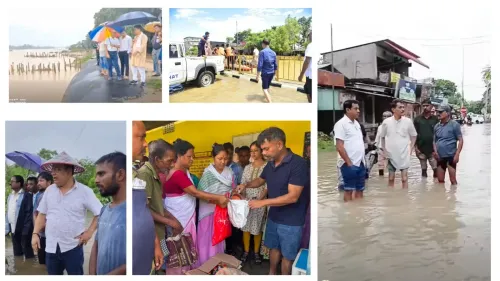
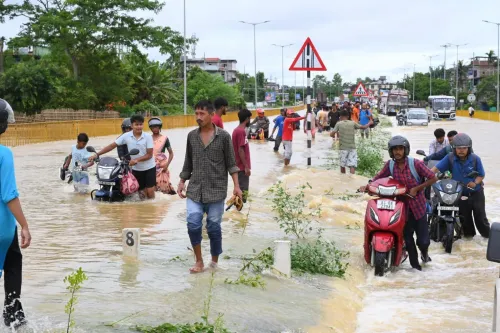
CM Himanta Reviews Assam Flood Situation with State MPs
Synopsis
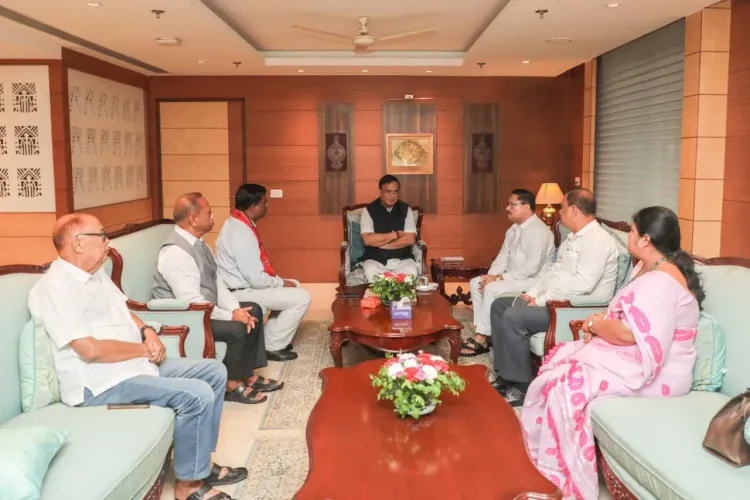
Chief Minister Himanta Biswa Sarma convened a meeting with Assam's Members of Parliament on 21 July 2026 to review the state's flood situation, directing MPs to personally oversee relief, rescue, and rehabilitation efforts in their constituencies to ensure no affected family is left without timely assistance.
Key Takeaways
CM Himanta Biswa Sarma chaired a review meeting with Assam's MPs on 21 July 2026 to assess the prevailing flood situation.
MPs were directed to closely monitor relief, rescue, and rehabilitation operations in their respective constituencies.
The meeting's core objective was to ensure timely assistance reaches every flood-affected family across the state.
Assam faces annual monsoon flooding from the Brahmaputra river and its tributaries, routinely displacing lakhs of residents.
The engagement of MPs in disaster oversight is consistent with the multi-tier coordination framework under the Disaster Management Act, 2005 .
Deployment of additional NDRF teams and central relief funds remain key developments to watch in coming weeks.
The Chief Minister's Office of Assam announced on Tuesday, 21 July 2026, that Chief Minister Dr. Himanta Biswa Sarma convened a meeting with the state's Members of Parliament to review the ongoing flood situation across Assam. The CM urged legislators to personally monitor relief, rescue, and rehabilitation operations in their respective constituencies to ensure timely assistance reaches every affected family.
Context
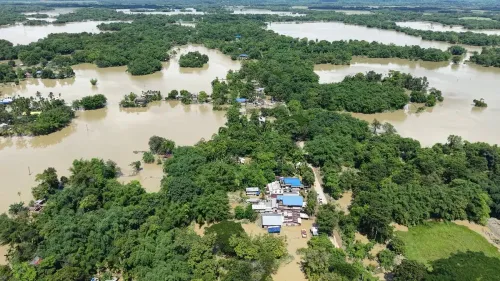
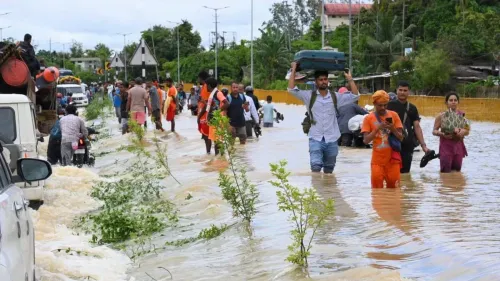
Assam faces severe, recurrent flooding every monsoon season, driven primarily by the Brahmaputra river and its tributaries, which swell dramatically with Himalayan runoff. The floods routinely displace lakhs of residents, damage agricultural land, and strain district-level administration. The 21 July meeting signals an escalation in the state government's coordination posture as flood conditions persist.
During the meeting, CM Himanta Biswa Sarma specifically called on MPs to remain on the ground in their constituencies, ensuring that relief materials and rehabilitation support are not delayed at any administrative level. The directive places elected representatives in an active monitoring role alongside the state machinery.
Policy Backdrop
India's Disaster Management Act, 2005 established the framework for multi-tier coordination between state governments, central agencies, and elected representatives during natural disasters. Under this framework, state governments are empowered to mobilise the National Disaster Response Force (NDRF), draw from the State Disaster Response Fund (SDRF), and seek additional central assistance when the scale of damage exceeds state capacity.
Assam has historically been one of the most flood-prone states in India, and successive governments have relied on MP-level engagement to bridge the gap between district administration and affected communities. The practice of convening MPs during peak flood periods is an established part of the state's disaster-response playbook.
Chief Minister Himanta Biswa Sarma, who has led the BJP government in Assam since 2021, has previously emphasised technology-driven flood monitoring and inter-agency coordination as pillars of the state's disaster management approach.
Stakeholders and Impact
The most immediate stakeholders are the flood-affected families spread across multiple constituencies in Assam. Access to timely relief — including food, clean water, shelter, and medical assistance — depends heavily on how efficiently information flows from the ground to the state command and back.
Members of Parliament from both the Lok Sabha and Rajya Sabha representing Assam constituencies now carry a formal mandate from the Chief Minister to track relief progress and flag gaps. Their proximity to constituency-level networks makes them critical conduits between affected communities and the state administration.
District administrations, NDRF teams, and civil society organisations operating in flood-hit areas are also key actors whose work will be monitored through this MP-level oversight mechanism.
What's Next
Attention will now turn to whether the state government requests additional central funds or fresh NDRF deployments based on the ground reports MPs bring back from their constituencies. Constituency-level rehabilitation progress — including restoration of damaged roads, bridges, and homes — will be a key benchmark in the weeks ahead.
The monsoon season in Assam typically extends through September, meaning the state's flood management machinery will need to sustain this elevated coordination posture for several more weeks. Any escalation in flood severity or a formal appeal to the Centre for additional disaster relief funding would mark the next significant development to watch.
Point of View
A move that signals both urgency and an awareness of public scrutiny during a prolonged flood season. Placing elected representatives in an active monitoring role creates a visible feedback loop between the ground and the state government, which can accelerate relief delivery but also distributes responsibility for any failures. This approach fits a broader pattern in Indian disaster governance where chief ministers use high-visibility coordination meetings to demonstrate command during crises. The real test will be whether the MP-level oversight translates into faster rehabilitation on the ground or remains largely a signalling exercise.
NationPress
20 Oct 2026
Frequently Asked Questions
Why did CM Himanta Biswa Sarma call a meeting with Assam MPs about floods?
CM Himanta Biswa Sarma convened the meeting on 21 July 2026 to review the ongoing flood situation across Assam and to direct MPs to personally monitor relief, rescue, and rehabilitation efforts in their constituencies, ensuring no affected family is left without timely assistance.
How bad are the floods in Assam in 2026?
The Chief Minister's Office described the flood situation as 'prevailing' across the state as of 21 July 2026, prompting a high-level review meeting with MPs. Specific statistics on affected districts or displaced persons have not been officially confirmed in this communication.
What role do MPs play in Assam's flood relief operations?
Members of Parliament from Assam's Lok Sabha and Rajya Sabha constituencies serve as a bridge between affected communities and the state administration. CM Himanta Biswa Sarma has formally urged them to monitor ongoing relief and rehabilitation efforts in their respective constituencies.
Which river causes flooding in Assam every year?
The Brahmaputra river and its tributaries are the primary cause of Assam's recurrent annual flooding. The river swells significantly during the monsoon season, displacing lakhs of residents and damaging infrastructure across the state.
What is the Disaster Management Act 2005 and how does it apply to Assam floods?
The Disaster Management Act, 2005 established India's framework for coordinated disaster response involving state governments, central agencies like the NDRF, and elected representatives. It governs how states like Assam access the State Disaster Response Fund and request central assistance during severe flood events.