Kishan Reddy: Modi Govt Road Push Transforming Telangana
Synopsis
Union Minister G. Kishan Reddy credited the Modi government's road infrastructure investments with transforming mobility across Telangana, citing gains in inter-state connectivity, logistics efficiency, trade, tourism, and employability as part of the Viksit Bharat vision.
Key Takeaways
Kishan Reddy , Union Coal and Mines Minister and BJP Telangana president, on 9 July 2026 highlighted central road investments benefiting Telangana .
The minister cited improved inter-state connectivity, reduced travel time, and enhanced logistics efficiency as direct outcomes of ongoing projects.
Bharatmala Pariyojana , launched in 2015 , targets over 34,000 km of highways and forms the policy backbone of the current road push.
The PM Gati Shakti National Master Plan ( 2021 ) integrates road, rail, port, and aviation planning to amplify connectivity gains.
Key beneficiaries include logistics companies, tourism operators, industrial units, and workers seeking employment mobility across Telangana .
Completion timelines of highway corridors and subsequent Union Budget allocations will determine whether stated goals translate into measurable outcomes.
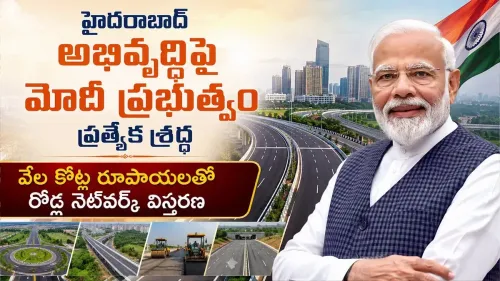
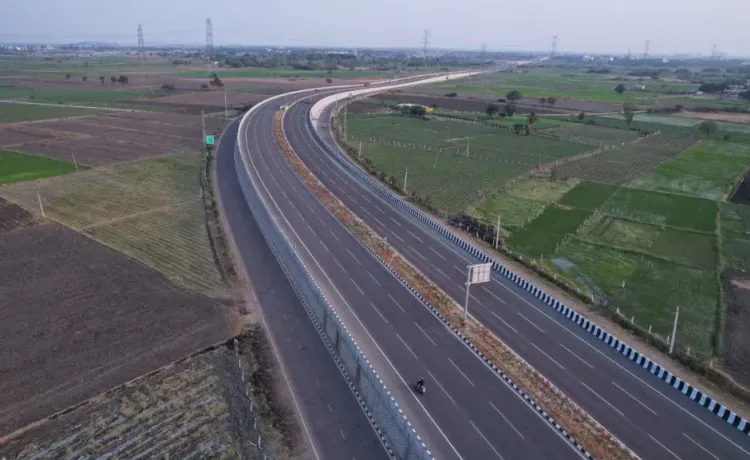
Union Coal and Mines Minister and BJP Telangana state president G. Kishan Reddy on Thursday, 9 July 2026, highlighted the Modi government's sustained investment in road infrastructure, asserting that ongoing highway projects are transforming mobility across Telangana and unlocking new avenues for trade, tourism, industry, and regional development.
Context
In his post on X, Kishan Reddy stated that the central government's road projects are 'improving inter-state connectivity, reducing travel time and enhancing logistics efficiency' across the state. He linked these outcomes directly to the broader national goal of a Viksit Bharat — the government's vision for a developed India by 2047 — and cited inclusive growth and employability as key dividends of the infrastructure push.
The minister's remarks come as the Ministry of Road Transport and Highways continues to expand the national highway grid across southern India, with Telangana featuring in multiple corridor alignments under centrally sponsored programmes.
Policy Backdrop
The post situates the current drive within a policy lineage that dates to 2015, when the Bharatmala Pariyojana was launched with a mandate to develop over 34,000 km of highways and expressways across India. The programme was designed to close critical connectivity gaps, reduce logistics costs, and integrate economic corridors.
In 2021, the PM Gati Shakti National Master Plan added a multimodal dimension to this framework, seeking to synchronise road, rail, port, and aviation infrastructure under a unified planning architecture. Together, these two initiatives form the principal policy spine behind the central government's capital expenditure in road infrastructure.
Since 2014, successive Union Budgets have prioritised highway construction as a core lever of economic growth, with annual capital outlay for roads rising substantially over the decade. Telangana has been incrementally incorporated into the national highway grid regardless of the party in power at the state level.
Stakeholders and Impact
The minister's statement identifies four primary beneficiary groups: Telangana residents who gain faster inter-city and inter-state travel; logistics companies that benefit from reduced freight time and lower operating costs; tourism operators who can access previously poorly connected heritage and nature sites; and industrial units that depend on reliable supply-chain links.
Better road connectivity in the state is also expected to improve labour mobility, with workers from smaller towns and rural districts gaining easier access to employment hubs — a dimension Kishan Reddy specifically flagged under the 'employability' rubric.
What's Next
The completion timelines and utilisation rates of ongoing national highway stretches in Telangana will be closely tracked through Ministry of Road Transport and Highways periodic reports. Upcoming Union Budget allocations for road projects in the state and the functioning of any state-centre coordination mechanisms will serve as key indicators of whether the momentum described by the minister translates into measurable on-ground outcomes.
If the Bharatmala and Gati Shakti corridors touching Telangana are completed on schedule, the state could emerge as a significant logistics and manufacturing transit hub in peninsular India — a prospect that lends political as well as economic weight to the minister's assertions.
Point of View
Even as a rival party governs in Hyderabad. The explicit invocation of Viksit Bharat is consistent with the BJP's broader strategy of anchoring sectoral achievements to a single overarching national vision ahead of electoral cycles. The emphasis on employability alongside logistics and trade suggests an attempt to broaden the appeal of infrastructure messaging beyond industry to ordinary workers. Sustained highway investment, if it delivers on connectivity promises, could reshape the political economy of the state by making the Centre's role more visible and tangible to voters.
NationPress
8 Oct 2026
Frequently Asked Questions
What road projects is the Modi government building in Telangana?
The central government is expanding national highway corridors in Telangana under the Bharatmala Pariyojana , which targets over 34,000 km of highways nationwide, and the PM Gati Shakti multimodal framework. Specific project names and completion statistics for post-2023 stretches are subject to official Ministry of Road Transport and Highways updates.
What is Viksit Bharat and how does it relate to road infrastructure?
Viksit Bharat is the Indian government's vision for a fully developed nation by 2047 . Road and multimodal infrastructure investment is positioned as a foundational pillar of this goal, enabling economic growth, trade efficiency, and regional integration.
What is Bharatmala Pariyojana?
Bharatmala Pariyojana is a central government highway development programme launched in 2015 to build over 34,000 km of national highways and expressways, with a focus on closing connectivity gaps and reducing logistics costs across India.
Who is G. Kishan Reddy?
G. Kishan Reddy is the Union Minister of Coal and Mines in the Modi government and serves as the BJP's Telangana state president. He is a senior BJP leader from Hyderabad with a background in state and central politics.
How does better road connectivity help Telangana's economy?
Improved highways reduce freight costs for logistics companies, open new tourism corridors, improve supply chains for industrial units, and enhance labour mobility — allowing workers from smaller towns to access employment hubs more easily, as highlighted by Minister Kishan Reddy .