Kishan Reddy Hails 12 Years of India Infrastructure Milestones
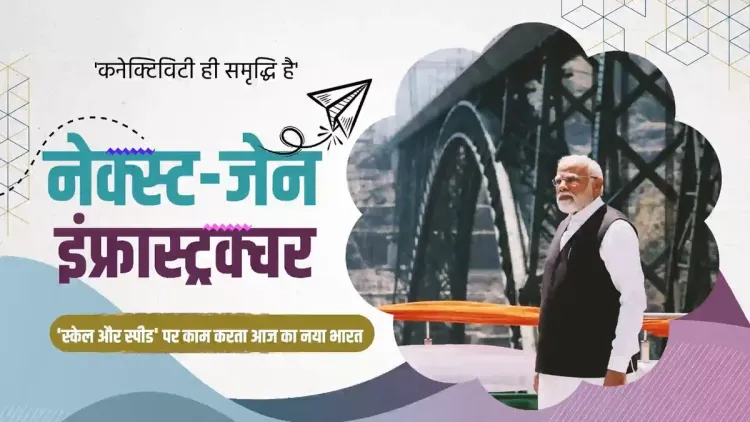
Synopsis
Union Minister G. Kishan Reddy has lauded 12 years of infrastructure milestones under PM Modi, citing highways, high-speed rail, metro, airports, and digital connectivity as pillars of the Viksit Bharat vision for a developed India by 2047.
Key Takeaways
Kishan Reddy , Union Coal and Mines Minister and BJP Telangana president, posted on June 16, 2026 highlighting 12 years of infrastructure records under PM Modi.
The post invokes the Viksit Bharat vision, framing infrastructure growth as central to India's goal of becoming a developed economy by 2047 .
The National Infrastructure Pipeline announced in 2019 committed Rs 111 lakh crore to five-year infrastructure investment.
The PM Gati Shakti National Master Plan (2021) coordinates multimodal infrastructure planning across central ministries.
Schemes such as UDAN (2016) and Digital India (2015) extended connectivity to smaller towns and rural regions.
Reddy's post reaches 140 crore Indians as the stated beneficiary constituency of this infrastructure transformation.
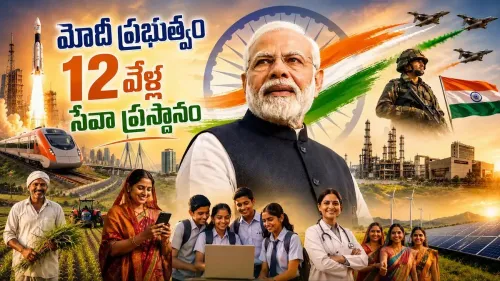
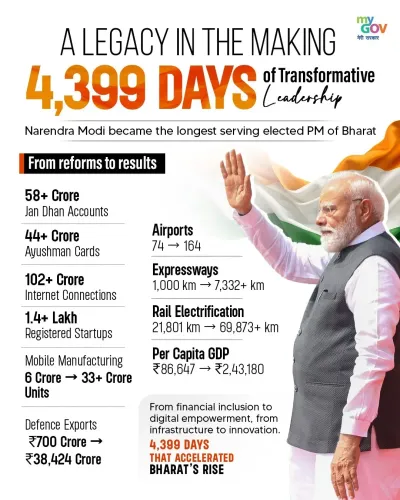
Union Coal and Mines Minister G. Kishan Reddy on Tuesday, June 16, 2026, credited Prime Minister Narendra Modi's leadership for what he described as record-setting infrastructure development across India over the past 12 years, spanning highways, high-speed rail, metro networks, airports, digital connectivity, and rural last-mile links.
Posting in Hindi on X, Reddy wrote: 'हर निर्माण, विकसित भारत के संकल्प का विस्तार है' — 'Every construction is an extension of the resolve of a Viksit Bharat.' He added that the pace, scale, and transformation represent 'a firm step towards realising the aspirations of 140 crore Indians.'
Context
Reddy's post invokes the Viksit Bharat vision — the government's long-term goal of transforming India into a developed economy by 2047. The hashtags #ViksitBharat and #12YearsOfNayaBharatNirman frame the message as a milestone marker, positioning the last 12 years of the Modi government as a foundational chapter in that larger national project. As BJP Telangana state president, Reddy occupies a dual role that gives his messaging both a national policy dimension and a regional political resonance.
Policy Backdrop
The infrastructure push Reddy references has been anchored by several major policy instruments. The National Infrastructure Pipeline, announced in 2019, committed Rs 111 lakh crore to infrastructure investment over five years. The PM Gati Shakti National Master Plan, launched in 2021, introduced a multimodal planning framework to coordinate projects across ministries and eliminate inter-departmental bottlenecks.
Complementing physical infrastructure, the Digital India programme — initiated in 2015 — has sought to build out broadband and digital public infrastructure to connect underserved regions. The UDAN regional airport connectivity scheme, started in 2016, aimed to extend air travel access beyond large metro cities to smaller towns and tier-2 centres.
Stakeholders and Impact
The constituencies most directly affected by this infrastructure narrative are Indian citizens in rural and semi-urban areas, where connectivity gaps have historically constrained economic mobility. Infrastructure developers, both public-sector undertakings and private contractors, have been primary implementation partners across road, rail, and digital corridors.
Successive Union Budgets have progressively raised capital expenditure allocations, reflecting a strategic bet that higher public investment in infrastructure can lift the investment-to-GDP ratio and stimulate private-sector activity. The political framing of these outlays — tying them to a 2047 developed-India horizon — has become a consistent feature of BJP communications at both the central and state levels.
What's Next
Attention will focus on the next Union Budget's infrastructure capital expenditure targets and quarterly progress disclosures on flagship corridors, including the high-speed rail project and ongoing PM Gati Shakti alignments. Whether the pace of project completions matches the political messaging will be a key test as India moves deeper into its 2047 development timeline.
Point of View
Signalling that infrastructure delivery will remain a central re-election argument. The dual invocation of physical connectivity — highways, rail, metro, airports — and digital infrastructure reflects the party's strategy of appealing simultaneously to urban aspirational voters and rural communities seeking last-mile access. As BJP's Telangana state president, Reddy's amplification of this national narrative also serves a local purpose: positioning the party as the credible agent of development in a state it does not currently govern. The emphasis on scale and pace, rather than specific project completions, suggests the communication is calibrated for broad sentiment rather than granular accountability.
NationPress
23 Sept 2026
Frequently Asked Questions
What did G. Kishan Reddy say about India's infrastructure development?
Kishan Reddy posted on June 16, 2026, stating that every construction is an extension of the Viksit Bharat resolve, and credited PM Modi's leadership for record infrastructure milestones over 12 years across highways, high-speed rail, metro, airports, and digital networks.
What is Viksit Bharat and how does it relate to infrastructure?
Viksit Bharat is the Indian government's vision to make India a developed economy by 2047. Infrastructure expansion — physical and digital — is positioned as a core driver of this long-term goal.
What is the National Infrastructure Pipeline?
The National Infrastructure Pipeline was announced in 2019 and committed Rs 111 lakh crore to infrastructure investment over five years, covering roads, railways, ports, airports, and urban projects.
What is PM Gati Shakti?
PM Gati Shakti is a National Master Plan launched in 2021 to coordinate multimodal infrastructure planning across central ministries, aiming to reduce project delays caused by inter-departmental gaps.
What is the UDAN scheme?
UDAN, launched in 2016, is a regional airport connectivity scheme designed to make air travel affordable and accessible beyond major metro cities, connecting smaller towns and tier-2 centres.