Kishan Reddy marks 12 years of Modi govt, cites Viksit Bharat vision
Synopsis
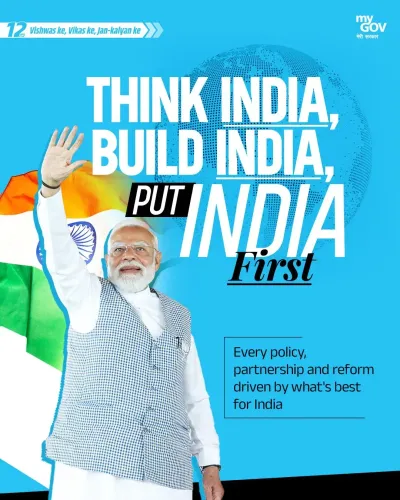
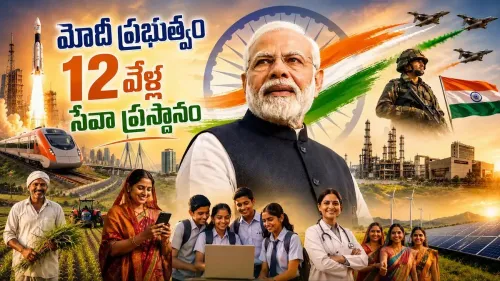
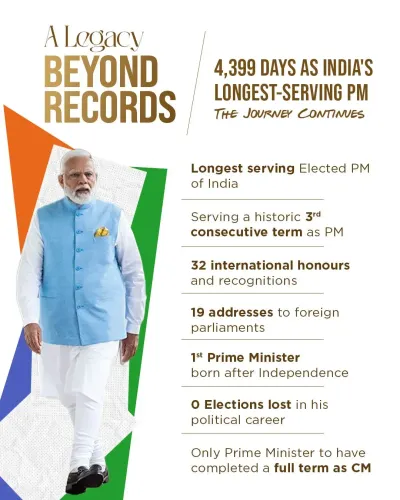
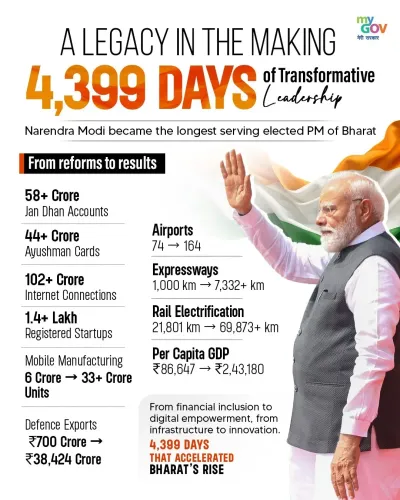
Union Minister G. Kishan Reddy marked twelve years of the Narendra Modi government on 26 May 2026, citing decisive leadership, digital innovation, infrastructure growth, and India's rising global standing, while reaffirming the Atmanirbhar and Viksit Bharat vision for 2047.
Key Takeaways
Kishan Reddy , Union Minister of Coal and Mines and BJP Telangana president, posted on 26 May 2026 marking twelve years of the Modi government.
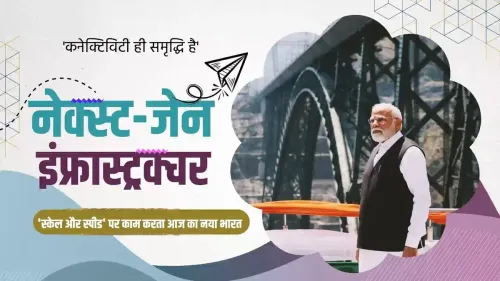
Reddy cited transparent governance, digital innovation, infrastructure development , and a 'firm resolve against terrorism' as defining features of the decade.
He described India as having 'emerged as a force to be reckoned with' on the global stage over this period.
The post reaffirms the twin national goals of Atmanirbhar Bharat (self-reliance, announced 2020) and Viksit Bharat (developed-economy status by 2047).
Key policy milestones referenced include Digital India (2015) , Make in India (2014) , Swachh Bharat Mission (2014) , and large-scale infrastructure programmes such as Bharatmala .
As BJP's Telangana state president, Reddy's remarks carry electoral significance in a state where the party is working to expand its base.
Union Coal and Mines Minister and BJP Telangana president G. Kishan Reddy on Tuesday, 26 May 2026 marked twelve years of the Narendra Modi-led government, citing transformative shifts in governance, infrastructure, digital innovation, and India's global standing, while reaffirming the national goal of an Atmanirbhar and Viksit Bharat.
Context
Narendra Modi was sworn in as Prime Minister on 26 May 2014, marking the beginning of a BJP-led government that has since won successive general elections. The anniversary has become an annual occasion for senior party leaders and cabinet ministers to assess the government's record and restate its long-term vision. Reddy's post frames the twelve-year mark as a moment of consolidation rather than a milestone, emphasising continuity of direction.
In his post, Reddy wrote that 'the nation has witnessed a transformative shift marked by decisive leadership, transparent governance, infrastructure development, digital innovation, a strong commitment to welfare and inclusive development, and a firm resolve against terrorism.' He added that 'India has truly emerged as a force to be reckoned with — strengthening its global standing and steadily positioning itself as a leading voice on the world stage.'
Policy backdrop
The governance arc Reddy references spans a wide range of central initiatives. The Digital India programme, launched in 2015, expanded e-governance and digital public infrastructure across the country. The Make in India initiative, announced in September 2014, sought to attract foreign investment and grow domestic manufacturing capacity.
The Swachh Bharat Mission, begun in October 2014, focused on sanitation coverage and public health outcomes. Large-scale infrastructure programmes including Bharatmala and dedicated freight corridors were scaled up to modernise transport networks. The Atmanirbhar Bharat vision, announced in 2020, added a strategic dimension by targeting supply-chain resilience and reduced import dependence through production-linked incentive schemes.
The Viksit Bharat framework — the goal of achieving developed-economy status by 2047 — has since become a unifying reference point in official government communications, linking near-term policy delivery to a longer civilisational ambition.
Stakeholders and impact
The constituencies invoked in Reddy's post are broad: Indian citizens at large, the manufacturing sector, and India's international partners. As BJP's Telangana state president, Reddy's voice carries regional significance in a state where the party is seeking to expand its footprint after years in opposition.
His ministerial portfolio in Coal and Mines places him at the centre of India's energy transition debate, where domestic production targets and the shift toward cleaner fuels are both live policy questions. The emphasis on 'inclusive development' in the post signals a continued focus on welfare delivery as a political as well as developmental priority.
What's next
Parliamentary discussions on the next Union Budget and any new production-linked incentive expansions are expected to test the continuity of the priorities Reddy has outlined. With the 2047 Viksit Bharat deadline serving as a long-range anchor, successive annual milestones of the Modi government are likely to be framed against measurable progress on economic self-reliance, infrastructure delivery, and India's multilateral standing. How the BJP communicates these achievements in states like Telangana — where it is in direct electoral competition — will be an indicator of how the national narrative is localised ahead of future state polls.
Point of View
Security, and global ambition, the message is calibrated to appeal simultaneously to urban aspirational voters and rural welfare beneficiaries. The explicit invocation of Viksit Bharat 2047 signals that the party intends to keep a long-horizon frame in public discourse, making near-term policy shortfalls harder to measure against an endpoint three decades away. For Reddy personally, the dual role of cabinet minister and Telangana state president means this national messaging also serves a local political purpose in a state the BJP is actively contesting.
NationPress
23 Sept 2026
Frequently Asked Questions
When did the Modi government complete 12 years?
The Narendra Modi government completed twelve years in office on 26 May 2026, having first been sworn in on 26 May 2014.
What is Viksit Bharat and when is its target year?
Viksit Bharat is India's national goal of achieving developed-economy status by 2047, the centenary of independence, and is a central reference point in government policy communications.
What is Atmanirbhar Bharat?
Atmanirbhar Bharat, meaning 'self-reliant India', is a vision announced in 2020 aimed at strengthening domestic manufacturing, building resilient supply chains, and reducing India's dependence on imports.
Who is G. Kishan Reddy?
G. Kishan Reddy is the Union Minister of Coal and Mines in the Modi government and serves as the BJP's Telangana state president, making him a key figure in both central policy and the party's southern expansion.
What major schemes were launched in the first year of the Modi government?
In its first year, the Modi government launched Make in India in September 2014 to boost domestic manufacturing, and the Swachh Bharat Mission in October 2014 to improve sanitation, with Digital India following in 2015.