Punjab's 'Yudh Nashian Virudh' Hits Day 615: 131 Arrested
Synopsis
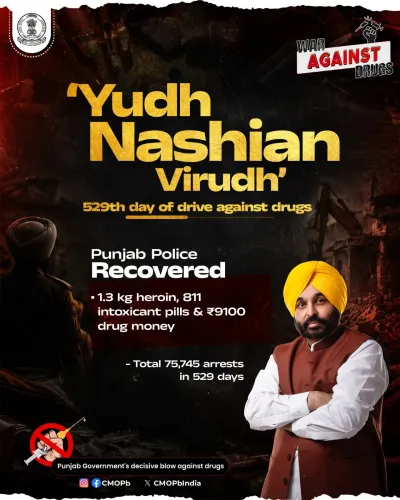
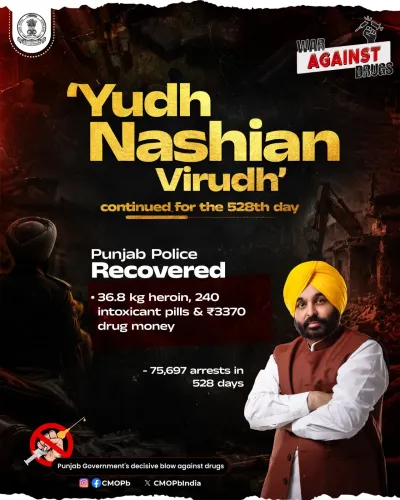
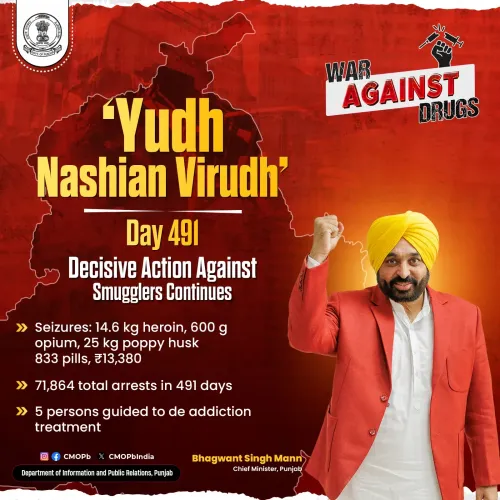
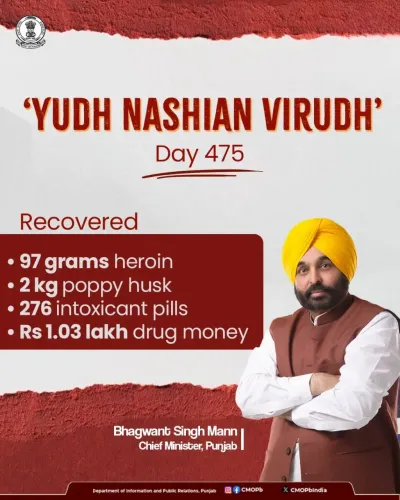
On day 615 of Punjab's 'Yudh Nashian Virudh' campaign, police arrested 131 drug smugglers and seized 36.5 kg of heroin, pushing the total arrests since the campaign's 2022 launch to 91,432.
Key Takeaways
131 drug smugglers were arrested on day 615 of the 'Yudh Nashian Virudh' campaign on 7 November 2026 .
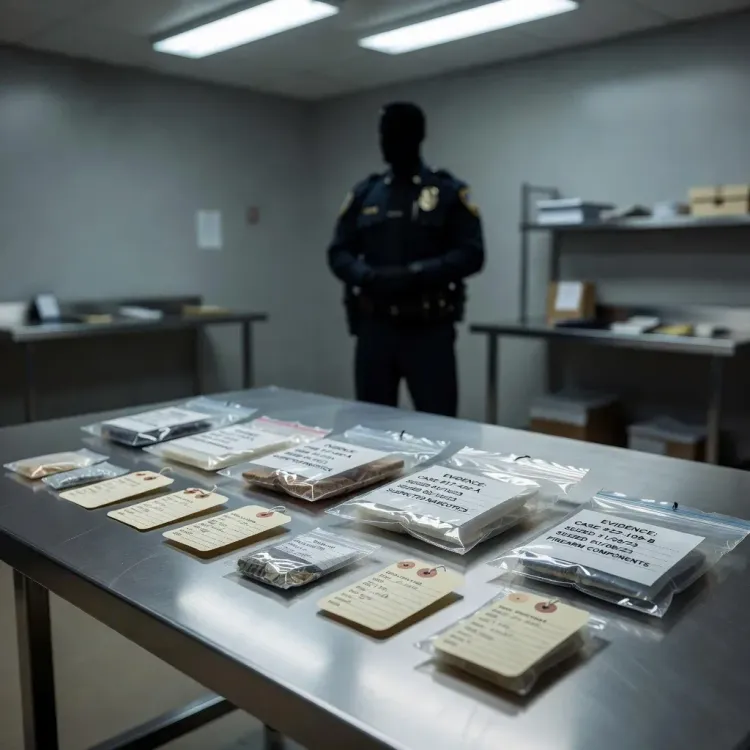
Recoveries included 36.5 kg of heroin , 500 grams of opium , 121 kg of poppy husk , 4,206 intoxicant pills , and ₹17,700 in drug money .
Cumulative arrests since the campaign began have reached 91,432 over 615 consecutive days .
The campaign was launched by the Aam Aadmi Party government under Chief Minister Bhagwant Mann in 2022 .
Punjab's proximity to the Golden Crescent narcotics corridor makes it a key battleground in India's anti-drug enforcement.
The campaign averages roughly 148 arrests per day , raising parallel questions about rehabilitation infrastructure capacity.
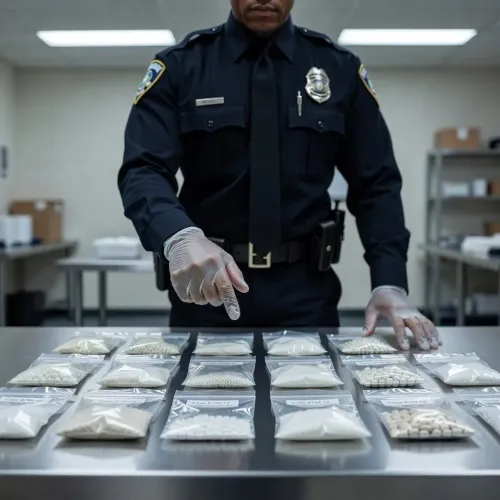
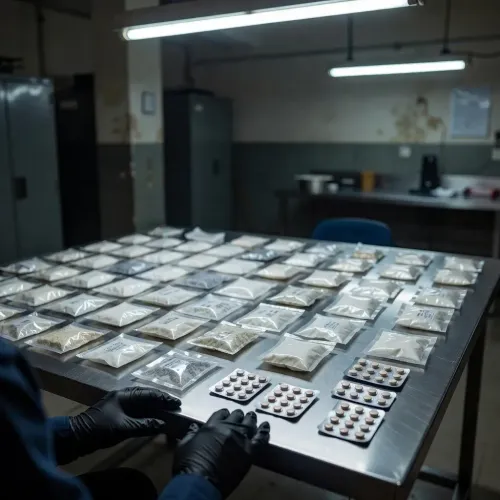
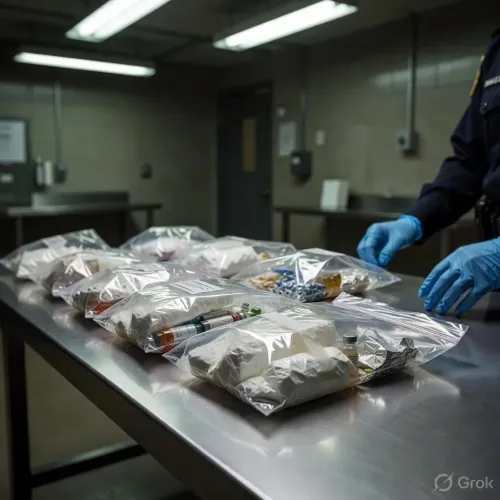
Six hundred and fifteen consecutive days. That is how long Punjab Police has maintained daily anti-narcotics operations under the 'Yudh Nashian Virudh' campaign — and on Saturday, 7 November 2026, the Chief Minister's Office of Punjab reported another significant haul: 131 drug smugglers arrested in a single day, with 36.5 kg of heroin, 500 grams of opium, 121 kg of poppy husk, 4,206 intoxicant pills, and ₹17,700 in drug money recovered from their possession.
What the Day-615 numbers mean
The single-day operation is striking on its own — 36.5 kg of heroin alone represents a street-level value that runs into crores. But the cumulative figure is what commands attention: since the campaign launched under Chief Minister Bhagwant Mann's government, the total number of drug smugglers arrested has climbed to 91,432 across 615 days. That averages to roughly 148 arrests every single day for nearly twenty months without a break.
The 'Yudh Nashian Virudh' — literally 'War Against Drugs' in Punjabi — was launched by the Aam Aadmi Party government in 2022 as a centrepiece promise to a state that has watched drug trafficking hollow out communities, particularly among its youth. The daily public reporting of arrests and seizures is itself deliberate: a signal to both traffickers and voters that the pressure is unrelenting.
Punjab's geography and the Golden Crescent shadow
Punjab shares a border with Pakistan and sits at the edge of the Golden Crescent — the Afghanistan-Iran-Pakistan narcotics corridor that has supplied heroin into South Asia for decades. That geography has made the state a transit and consumption point, and successive state governments have grappled with the consequences. What sets the current campaign apart is the declared continuity: not a periodic crackdown, but an unbroken daily enforcement rhythm now stretching past 600 days.
Poppy husk — bhukki — and pharmaceutical pills feature alongside heroin in almost every daily report, reflecting a layered drug economy that cuts across income groups and rural-urban divides. The 121 kg of poppy husk seized on day 615 alone underscores how deeply that economy is embedded in local supply chains.
The enforcement-rehabilitation balance ahead
Arrests and seizures are the visible metric. The harder question — whether Punjab's rehabilitation infrastructure is scaling to match the enforcement intensity — remains the campaign's open challenge. With 91,432 people arrested, the pressure on courts, jails, and de-addiction facilities is real and growing. The state government has flagged rehabilitation investments alongside policing, but the daily numbers make clear that enforcement, for now, is running far ahead of the recovery ecosystem.
At this pace, the campaign is on track to cross 100,000 cumulative arrests well before its second anniversary — a milestone that will test whether the numbers translate into lasting change on Punjab's streets.
Point of View
Which came to power partly on an anti-drug promise, sustaining the arrest count above six figures is essential brand management ahead of any future electoral cycle. The deeper policy question is whether Punjab is building the rehabilitation and judicial infrastructure to convert mass arrests into durable harm reduction, or whether the campaign risks becoming a number that grows faster than the system can absorb. Regional security watchers will also note that consistent seizure volumes suggest Golden Crescent supply routes remain robust despite 615 days of pressure.
NationPress
7 Nov 2026
Frequently Asked Questions
What is the 'Yudh Nashian Virudh' campaign in Punjab?
'Yudh Nashian Virudh' — meaning 'War Against Drugs' in Punjabi — is an anti-narcotics enforcement campaign launched by the Aam Aadmi Party government under Chief Minister Bhagwant Mann in 2022, involving daily arrests of drug smugglers and public reporting of seizures.
How many drug smugglers have been arrested in Punjab's anti-drug drive so far?
As of day 615 on 7 November 2026, the total number of drug smugglers arrested under the campaign has reached 91,432, according to the Chief Minister's Office of Punjab.
What drugs were seized on day 615 of Yudh Nashian Virudh?
On day 615, Punjab Police recovered 36.5 kg of heroin, 500 grams of opium, 121 kg of poppy husk, 4,206 intoxicant pills, and ₹17,700 in drug money.
Why is Punjab particularly vulnerable to drug trafficking?
Punjab shares a border with Pakistan and sits at the edge of the Golden Crescent — the Afghanistan-Iran-Pakistan narcotics corridor — making it a key transit and consumption point for heroin and other narcotics entering India.
Who launched the Yudh Nashian Virudh campaign?
The campaign was launched by the Aam Aadmi Party state government under Chief Minister Bhagwant Mann, who has been in office since March 2022.