Modi meets von der Leyen in Gothenburg, backs India-EU FTA as 'new era' begins
Synopsis
Von der Leyen called it the 'mother of all deals' — and in Gothenburg, Modi agreed. The India-EU FTA covering 2 billion people and 90% tariff cuts now has a year-end implementation target, backed by new defence, AI, space, and climate pacts with Sweden. The trilateral summit signals a decisive pivot in India's engagement with Europe.
Key Takeaways
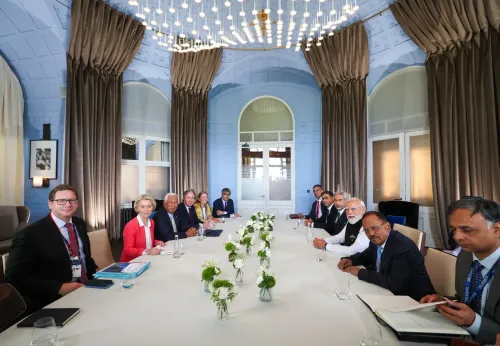
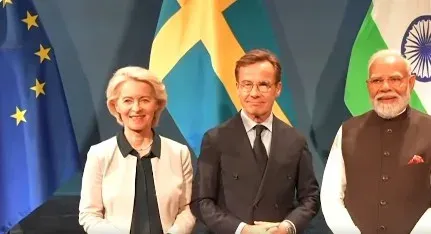
PM Modi met European Commission President Ursula von der Leyen and Swedish PM Ulf Kristersson in Gothenburg on 18 May .
The India-EU FTA , described as the 'mother of all deals,' covers over 2 billion people , nearly one quarter of global GDP , and over 90% tariff cuts ; both sides aim to apply it by year-end.
India and Sweden launched a strategic partnership , Joint Innovation Partnership 2.0 , and an India-Sweden Science and Technology Centre .
The FTA is estimated to create 23,000 new jobs in Sweden , including 6,000+ in the Gothenburg region.
ISRO and Sweden's space agency signed an MOU for a joint instrument on a Venus orbiter mission .
Modi received the Royal Order of the Polar Star , Sweden's highest honour, and reiterated India's commitment to fighting terrorism following the Pahalgam attack .
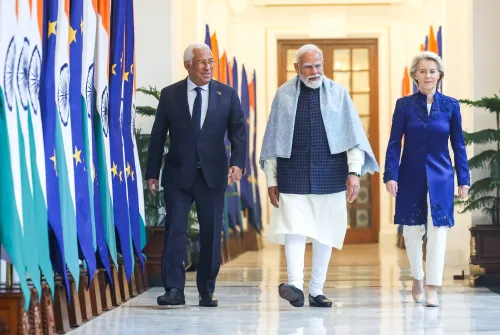
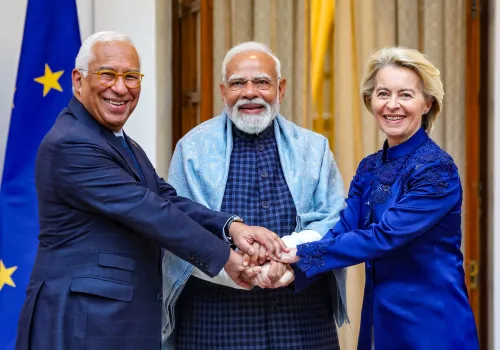
Prime Minister Narendra Modi on 18 May met European Commission President Ursula von der Leyen and Swedish Prime Minister Ulf Kristersson in Gothenburg, Sweden, expressing full agreement on the 'strong potential of India-Europe ties' — particularly in the wake of the landmark India-EU Free Trade Agreement (FTA). The trilateral meeting, held during Modi's ongoing six-nation Europe-West Asia tour, produced a raft of agreements spanning trade, defence, artificial intelligence, space, and clean energy.
The India-EU FTA: 'Mother of All Deals'
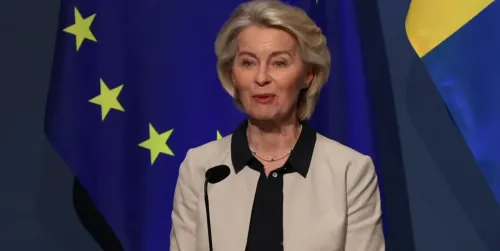
Addressing the European Round Table for Industry, von der Leyen described the India-EU trade pact as the 'mother of all deals' and reaffirmed both sides' commitment to having it applied by the end of the year. She cited a combined market of over 2 billion people accounting for close to one quarter of global GDP, with over 90 per cent tariff cuts and 'enormous opportunities to grow trade and investment.' Modi, responding on his official X account, said he 'fully agreed' with von der Leyen on the strong potential of the partnership.
Von der Leyen noted that the agreement, concluded at the EU-India Summit in New Delhi earlier this year, also advances cooperation on security, defence, maritime exercises, cyber threat countermeasures, and critical infrastructure protection.
What India and Sweden Agreed
Swedish Prime Minister Kristersson said the FTA alone is estimated to create 23,000 new jobs in Sweden, with more than 6,000 in the Gothenburg region. Both countries launched a strategic partnership and a joint action plan, along with a Joint Innovation Partnership 2.0 and a India-Sweden Science and Technology Centre to link academic institutions.
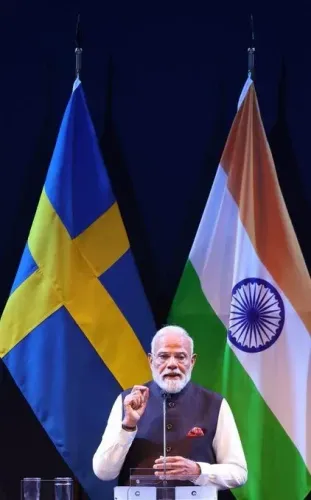
Modi highlighted growing defence ties, noting that Swedish companies are building production facilities in India — a sign of long-term industrial commitment. He also announced plans to strengthen the Sweden-India Technology and AI Corridor and pointed to Sweden's participation in India's AI Impact Summit earlier this year as evidence of deepening tech collaboration.
Space, Climate and the Bilateral Roadmap
On space cooperation, Kristersson noted that India's Space Research Organisation (ISRO) and Sweden's National Space Agency have collaborated since the 1980s, and announced a new MOU to jointly develop an instrument for a Venus orbiter mission. Sweden's government is also investing in orbital launch capability for defence purposes at S-Range.
Both nations reaffirmed convergence on climate change and sustainability. Kristersson said Sweden, India, and the EU are working towards doubling bilateral trade and investments within five years, while backing India's Viksit Bharat vision through 2047. Approximately 300 Swedish companies currently operate in India, many with their own production facilities.
Modi on Terrorism and Global Democracies
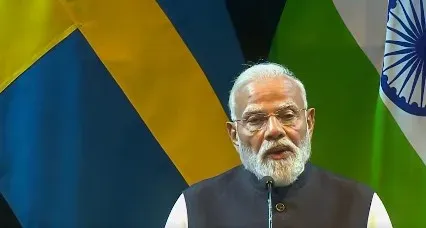
Modi used the occasion to address terrorism, calling it 'a serious challenge for all of humanity' and thanking Prime Minister Kristersson for Sweden's support following the Pahalgam terrorist attack last year. He emphasised that 'close cooperation between democracies like India and Sweden is of particular importance' given the current global situation, and pledged to continue fighting terrorism and its supporters.
Modi was also conferred the Royal Order of the Polar Star — Sweden's highest honour — which he described as 'not just my honour, it is the honour of 140 crore Indians.' The Gothenburg leg follows his earlier stop in the Netherlands, where he held talks with Dutch Prime Minister Rob Jetten on water management and sustainable infrastructure. The full forward agenda — including FTA implementation timelines and the first joint EU-India naval exercises — is expected to take shape in the months ahead.
Point of View
And a year-end deadline is ambitious given the political calendars on both sides. What is new here is the security and defence layer: joint naval exercises, cyber cooperation, and critical infrastructure sharing mark a qualitative shift from a purely commercial relationship. Sweden's role as a bridge — with its defence industrial presence in India and long-standing ISRO ties — is underappreciated. If the FTA holds its timeline, it would be the most consequential trade agreement India has signed since the ASEAN deal, and a direct answer to the China-plus-one supply chain reshuffling underway globally.
NationPress
20 Sept 2026
Frequently Asked Questions
What is the India-EU Free Trade Agreement?
The India-EU FTA is a landmark trade agreement concluded at the EU-India Summit in New Delhi earlier in 2025, covering a combined market of over 2 billion people and nearly one quarter of global GDP, with over 90% tariff cuts. European Commission President von der Leyen has called it the 'mother of all deals,' with both sides targeting its application by the end of 2025.
What did PM Modi and Swedish PM Kristersson agree to in Gothenburg?
The two leaders launched a strategic partnership and joint action plan covering innovation, AI, space, defence, and the green transition. Key outcomes include a Joint Innovation Partnership 2.0, an India-Sweden Science and Technology Centre, and an MOU between ISRO and Sweden's National Space Agency for a Venus orbiter mission instrument.
What is the Royal Order of the Polar Star that Modi received?
The Royal Order of the Polar Star is Sweden's highest state honour. PM Modi was conferred the award by Swedish PM Kristersson during the Gothenburg visit, calling it 'the honour of 140 crore Indians.'
What did Modi say about the Pahalgam terrorist attack at the Gothenburg summit?
Modi called terrorism 'a serious challenge for all of humanity' and specifically thanked Swedish PM Kristersson for Sweden's support following the Pahalgam terrorist attack last year. He pledged that India would continue to fight terrorism and its supporters.
How does the India-EU FTA affect Sweden specifically?
Swedish PM Kristersson said the FTA is estimated to create 23,000 new jobs in Sweden, with more than 6,000 in the Gothenburg region alone. Sweden and India are also working to double bilateral trade and investment within five years, with approximately 300 Swedish companies already operating in India.