Is This a Turning Point in the India-EU Strategic Partnership? PM Modi and EU Leaders Celebrate Historic FTA
Synopsis
The leaders of India and the EU have marked a significant milestone by concluding the historic Free Trade Agreement. This deal is expected to enhance trade relations, foster economic growth, and strengthen their strategic partnership amidst global challenges.
Key Takeaways
Historic FTA Signed : India and EU leaders celebrate the completion of landmark trade negotiations.
Strengthening Ties : The agreement aims to enhance bilateral trade and investment relations.
Collaboration on Technology : Both sides will boost cooperation in emerging technologies and innovation.
Commitment to Sustainability : The agreement supports clean energy transition and climate resilience.
Regional Connectivity : Joint projects are set to improve connectivity and commercial prospects.
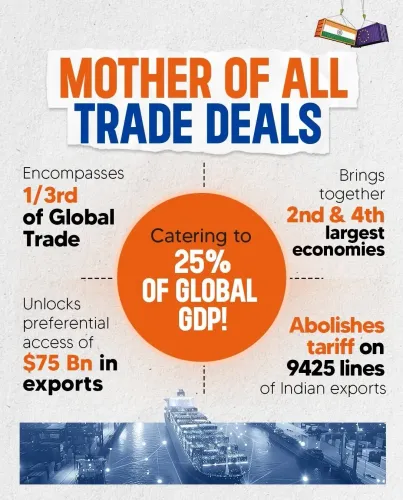
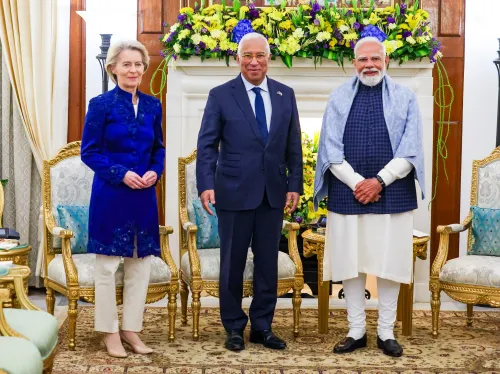
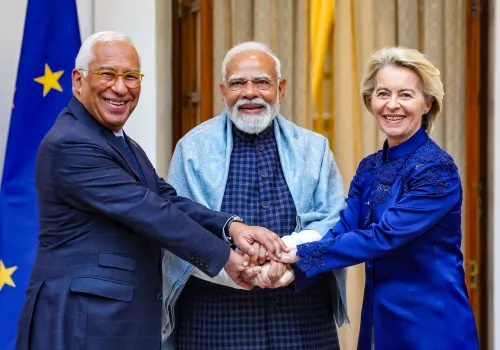
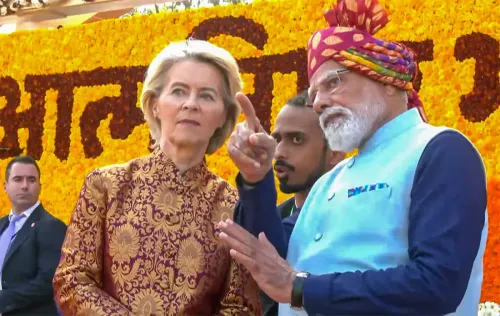
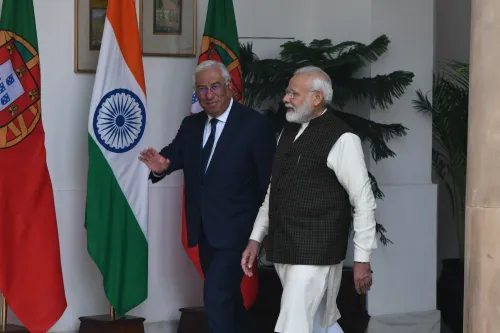
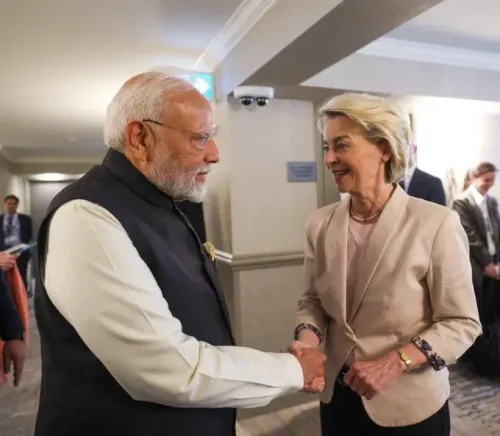
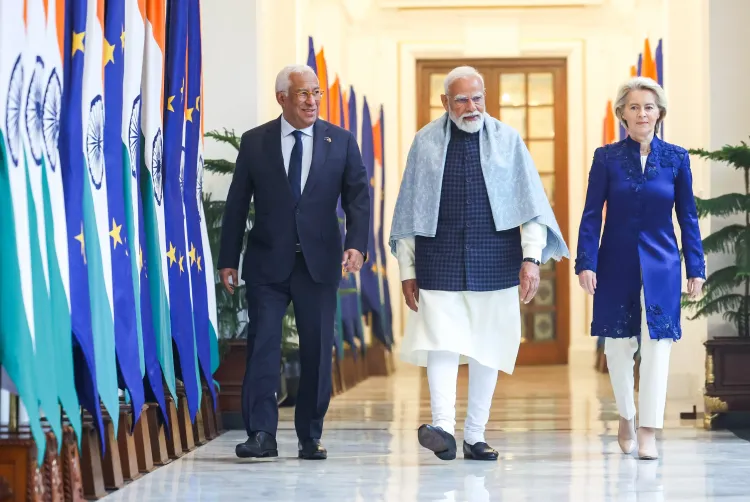
New Delhi, Jan 27 (NationPress) Prime Minister Narendra Modi, together with European Council President Antonio Costa and European Commission President Ursula von der Leyen, praised the successful conclusion of discussions regarding the groundbreaking India–EU Free Trade Agreement (FTA) on Tuesday.
According to a joint statement released after the 16th India–EU Summit, co-chaired by the three leaders, "This monumental agreement marks a significant achievement in the India–EU Strategic Partnership, which will greatly strengthen bilateral trade and investment relations, promote shared prosperity, bolster resilient and diversified supply chains, and facilitate sustainable and inclusive growth."
The leaders highlighted the pivotal role of the World Trade Organisation (WTO) in the multilateral trading framework and emphasized the necessity for substantial reforms to enhance its operations, ensuring alignment with the objectives of all member states.
In light of global uncertainties and disruptions, the strengthening of economic ties between India and the EU is more crucial than ever to foster growth, job creation, environmental transition, industrial progress, and the development of reliable and sustainable supply chains, as stated in the joint announcement.
The leaders of India and the EU expressed their commitment to the full execution of the FTA. They also instructed their teams to expedite negotiations on an Investment Protection Agreement (IPA) and an Agreement on Geographical Indications (GIs). They agreed to enhance bilateral investments and explore discussions on Blue Valleys to accelerate private sector involvement in fortifying specific value chains.
Recognizing the complementary strengths of India and the EU in technology, the statement indicated that both sides will strengthen collaboration across the entire value chain by linking enhanced research and innovation with business engagement and market operationalization. In the current geopolitical climate, they reaffirmed the significance of the India-EU Trade and Technology Council (TTC) as a vital platform to tackle key trade, technology, and economic security issues, aiming to further enhance its initiatives. The two sides will continue to collaborate on promoting Digital Public Infrastructure.
Additionally, efforts will be made to boost cooperation in emerging technologies, innovation, and research through the establishment of EU–India Innovation Hubs and the initiation of an EU–India Startup Partnership. The leaders also welcomed the extension of the India–EU Agreement for Scientific and Technological Cooperation until 2030 and agreed to start preliminary discussions on India's association with Horizon Europe, the EU’s research and innovation program.
The leaders committed to enhancing cooperation in clean transition and energy resilience within the framework of the EU-India Clean Energy and Climate Partnership. They welcomed the formation of the India–EU Task Force on Green Hydrogen and announced the organization of an India-EU Wind Business Summit slated for 2026.
Furthermore, both parties will collaborate to improve regional connectivity and unlock new commercial prospects for businesses in the EU and India. The leaders pointed out the initiation of joint projects under the India-EU Connectivity Partnership, supported by Global Gateway and India’s MAHASAGAR, the establishment of a regular Aviation Dialogue, and cooperation in the maritime transport sector. They acknowledged the progress made in the India-Middle East-Europe Economic Corridor (IMEC), launched during the 2023 G20 New Delhi Summit.
President Costa and President von der Leyen expressed their anticipation for the AI Impact Summit to be held in New Delhi on February 19-20, emphasizing their commitment to outcome-oriented collaboration, as stated.
The leaders also addressed the India–EU Business Forum, attended by CEOs and industry leaders from both regions, urging ambitious private sector investments to harness synergies in critical sectors and to initiate new business ventures that will deepen trade and investment connections.
Point of View
This partnership holds promise for sustainable growth and innovation.
NationPress
17 Sept 2026
Frequently Asked Questions
What is the India-EU Free Trade Agreement?
The India-EU Free Trade Agreement is a landmark deal aimed at enhancing bilateral trade and investment relations between India and the European Union, marking a significant milestone in their strategic partnership.
What are the benefits of this agreement?
This agreement is expected to boost trade, drive economic growth, strengthen supply chains, and support sustainable development between India and the EU.
Who are the key leaders involved?
The key leaders involved in this agreement include Prime Minister Narendra Modi, European Council President Antonio Costa, and European Commission President Ursula von der Leyen.
What are the next steps following this agreement?
Following this agreement, both parties will work on the implementation of the FTA and negotiate additional agreements such as the Investment Protection Agreement and Agreement on Geographical Indications.
How does this agreement impact global trade?
This agreement reinforces the role of the WTO and promotes a stable trading environment, which is crucial for addressing global economic uncertainties.