Modi at ERT Gothenburg: India-EU ties built on values, democracy and landmark FTA
Synopsis
Modi’s Gothenburg address was more than a diplomatic courtesy call — it was a structured investment pitch at a pivotal moment. With the India-EU Free Trade Agreement freshly concluded and European industry actively diversifying supply chains, Modi arrived with concrete proposals: an annual CEO Round-table, sector-specific working groups, and an India Desk at the ERT. The framing of India as a partner of ‘values, democracy and diversity’ is a deliberate contrast to authoritarian alternatives competing for the same European capital.
Key Takeaways
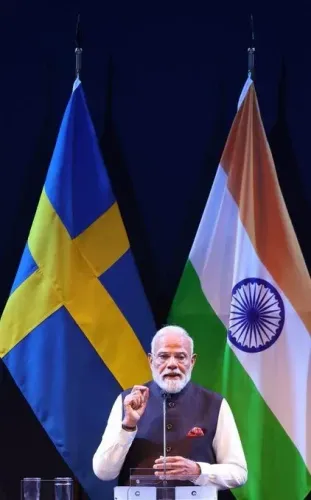
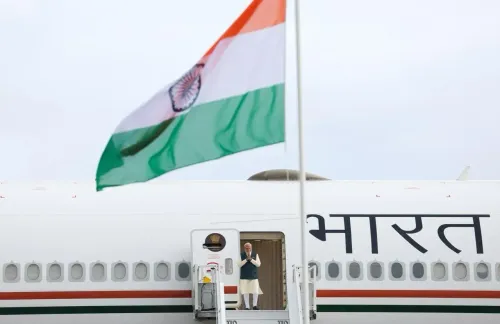
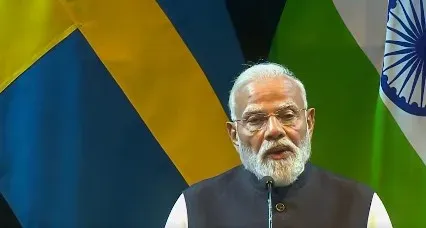
PM Narendra Modi addressed the European Round Table for Industry (ERT) in Gothenburg, Sweden on 18 May , hosted by the Volvo Group .
Modi welcomed the conclusion of negotiations on the India–EU Free Trade Agreement , calling it a transformative partnership in trade, technology, and supply chains.
He proposed an annual India-Europe CEO Round-table and an India Desk at the ERT to institutionalise engagement.
Five priority partnership areas identified: telecom and digital infrastructure , AI and semiconductors , clean energy , infrastructure and mobility , and healthcare and life sciences .
India was presented as the third largest startup ecosystem globally, with PLI schemes and FDI reforms cited as investment enablers.
The India-Middle East-Europe Economic Corridor (IMEC) was highlighted as a connectivity bridge adding value to the bilateral business relationship.
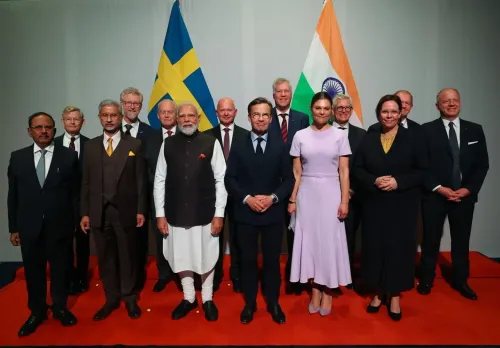
Prime Minister Narendra Modi on 18 May addressed the European Round Table for Industry (ERT) in Gothenburg, Sweden, declaring that the partnership between India and Europe “is not limited to economic figures only” but is “guided by common values, democracy and diversity.” The address, delivered at an event hosted by the Volvo Group, brought together senior European industry leaders alongside representatives from leading European and Indian companies.
Key Developments at the Gothenburg Summit
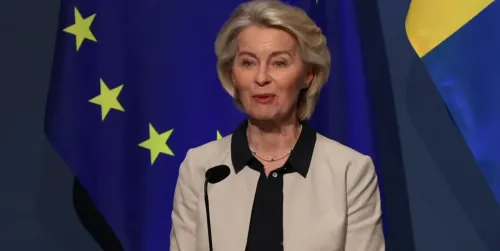
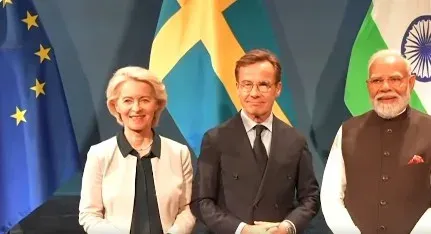
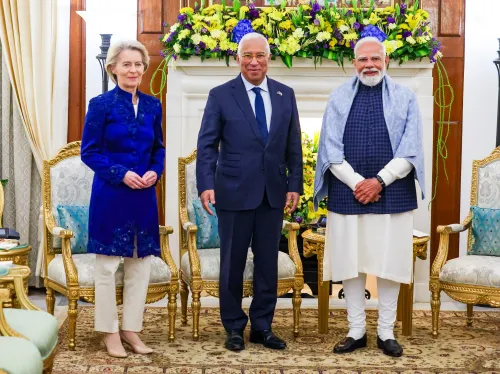
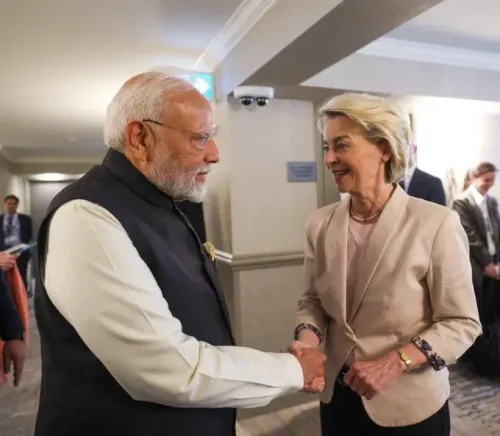
Swedish Prime Minister Ulf Kristersson and European Commission President Ursula von der Leyen were present at the interaction. Prime Minister Modi also held a bilateral meeting with both leaders on the sidelines. The forum served as a platform to reinforce India’s case as a preferred destination for investment, manufacturing, and technological collaboration.
Notably, Modi welcomed the conclusion of negotiations on the landmark India–EU Free Trade Agreement, describing it as “a transformative economic partnership that would create new opportunities in trade, technology, manufacturing, services and resilient supply chains.” Von der Leyen has previously called the agreement the ‘mother of all deals’ — a characterisation Modi cited approvingly from the podium.
What Modi Proposed to European Industry
In his keynote, the Prime Minister put forward a series of concrete proposals for deepening India-Europe industrial ties. He suggested holding an India-Europe CEO Round-table annually, forming sector-specific working groups, and establishing an India Desk at the ERT to streamline engagement. He also proposed creating an institutional review mechanism to ensure timely completion of jointly identified projects.
Modi outlined five priority areas for partnership: telecom and digital infrastructure (spanning 5G to 6G and AI-enabled networks); AI, semiconductors, electronics, and deep tech manufacturing; green transition and clean energy including green hydrogen and nuclear power; infrastructure, mobility and urban transformation; and healthcare and life sciences, covering vaccines, cancer care, digital health, and medical devices. Companies including ASML, NXP, SAP, Capgemini, Philips, Nestle, and Unilever were directly referenced as partners with existing or growing India ties.
India’s Investment Pitch
Prime Minister Modi reiterated India’s “Design for India, Make in India and Export from India” vision, underscoring the country’s status as the third largest startup ecosystem in the world. He pointed to FDI reforms, Production-Linked Incentive (PLI) schemes across electronics, pharma, auto components, solar modules, telecom, and textiles, and improvements in ease of doing business as structural enablers for European capital.
“India has talent, scale, demand and stability,” Modi said, adding that India’s rapidly expanding digital public infrastructure, young workforce, and next-generation economic reforms make it one of the world’s most attractive investment destinations. He also flagged the India-Middle East-Europe Economic Corridor (IMEC) as a connectivity project that adds fresh value to the India-Europe business relationship.
Strategic Context: Why This Moment Matters
The Gothenburg address comes amid a broader recalibration of global supply chains, with European industry actively seeking trusted alternatives to over-concentration in any single geography. India’s pitch — anchored in democratic governance, a large domestic market, and improving regulatory predictability — is calibrated precisely for that moment. This is the first major India-EU industry engagement following the conclusion of FTA negotiations, lending the forum added diplomatic weight.
Modi emphasised that talent mobility, education, and skill partnerships must accompany economic cooperation. “The government can only provide framework support and policy direction,” he said. “Real change on the ground level will be possible only through your efforts.”
What Comes Next
The immediate priority, according to the Prime Minister, is the swift conclusion of the India-EU Free Trade Agreement. Sector-specific working groups and the proposed annual CEO Round-table, if formalised, would mark a structural upgrade in how India and Europe coordinate at the industry level. With both sides having set what Modi called “an ambitious and strategic agenda” at the government level, the pressure now shifts to implementation.
Point of View
And it is backed by a freshly concluded FTA — not a promise of one. The ‘values and democracy’ framing is doing real diplomatic work here, positioning India as the ideologically safe alternative to authoritarian manufacturing hubs. The harder question is execution: PLI schemes have generated momentum in some sectors but have also seen disbursement delays and eligibility disputes. European boardrooms will watch whether the proposed institutional mechanisms — the annual CEO forum, the India Desk, the sector working groups — actually get stood up, or remain aspirational talking points from a Gothenburg stage.
NationPress
5 Oct 2026
Frequently Asked Questions
What did PM Modi say at the European Round Table for Industry in Gothenburg?
Prime Minister Modi addressed the ERT in Gothenburg on 18 May, stating that the India-Europe partnership is guided by common values, democracy, and diversity — not just economic metrics. He proposed an annual India-Europe CEO Round-table, sector-specific working groups, and an India Desk at the ERT, while inviting European companies to invest in India across five priority sectors.
What is the India-EU Free Trade Agreement and why is it significant?
The India-EU Free Trade Agreement is a landmark trade deal whose negotiations were recently concluded, covering trade, technology, manufacturing, services, and supply chains. European Commission President Ursula von der Leyen has described it as the ‘mother of all deals,’ and PM Modi has called for its swift formal conclusion.
Which sectors did PM Modi highlight for India-Europe industrial partnership?
Modi identified five priority areas: telecom and digital infrastructure (5G to 6G, AI-enabled networks); AI, semiconductors, electronics, and deep tech manufacturing; green transition and clean energy including green hydrogen and nuclear; infrastructure, mobility, and urban transformation; and healthcare and life sciences covering vaccines, cancer care, and medical devices.
What is the India-Middle East-Europe Economic Corridor (IMEC)?
IMEC is a connectivity corridor that links India to Europe via the Middle East, providing an alternative trade and logistics route. PM Modi highlighted it at the Gothenburg forum as a project that adds new value to the India-Europe business partnership.
Who attended the ERT event in Gothenburg with PM Modi?
Swedish Prime Minister Ulf Kristersson, European Commission President Ursula von der Leyen, senior European industry leaders, and representatives from leading European and Indian companies attended the interaction, which was hosted by the Volvo Group.