CM Dhami's Uttarakhand Push on Health, Education, Local Goods

Synopsis
The Chief Minister's Office of Uttarakhand says CM Pushkar Singh Dhami's government is empowering citizens through expanded health and education services and promotion of local products, aligning state governance with the national Vocal for Local and Atmanirbhar Bharat frameworks.
Key Takeaways
The Chief Minister's Office of Uttarakhand posted on 5 July 2026 highlighting the state government's focus on health, education and local products.
Chief Minister Pushkar Singh Dhami has led the BJP -governed state since 2021 , with stated emphasis on social sector expansion.
The Vocal for Local campaign, promoted nationally since 2020 under Atmanirbhar Bharat , underpins the state's push to boost indigenous production.
Uttarakhand's remote Himalayan terrain has historically made equitable delivery of health and education services a persistent governance challenge.
Key beneficiaries identified include general residents, hill-district communities, and local producers of traditional goods.
No specific statistics, scheme names or timelines were cited in the official post; implementation metrics remain to be publicly detailed.
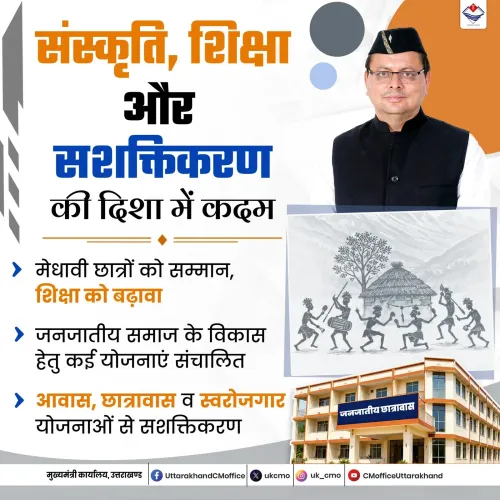
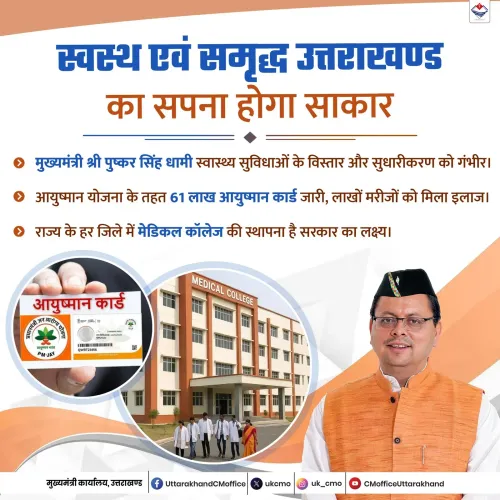
The Chief Minister's Office of Uttarakhand posted on Sunday, 5 July 2026, affirming that the state government under Chief Minister Pushkar Singh Dhami is empowering every citizen of Uttarakhand through expansion in health and education sectors and by promoting locally produced goods.
Context
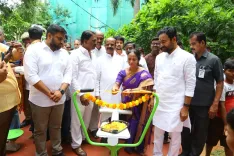
The official post, shared from the Chief Minister's Office handle, states in Hindi: 'Mukhyamantri Shri Pushkar Singh Dhami ke netritva mein swasthya, shiksha ke kshetra mein vistar aur sthaniya utpadon ko badhawa dekar Uttarakhand Sarkar rajya ke har nagarik ko sashakt bana rahi hai' — meaning, 'Under the leadership of Chief Minister Shri Pushkar Singh Dhami, the Uttarakhand government is empowering every citizen of the state by expanding health and education services and promoting local products.' The post was accompanied by a video and tagged with hashtags including #VocalForLocal, #Development, #Education, and #Healthcare.
Uttarakhand, a Himalayan state formed in 2000, has historically faced significant challenges in delivering equitable public services owing to its rugged, remote terrain. Bridging gaps in health and education access has been a long-standing policy priority for successive state governments.
Policy Backdrop
The Vocal for Local campaign was nationally promoted from 2020 as a core pillar of the Atmanirbhar Bharat economic package, designed to strengthen domestic supply chains and boost consumption of indigenous goods. State governments across India, including Uttarakhand, have since adopted the campaign's messaging to encourage local production and purchasing at the grassroots level.
The Bharatiya Janata Party-led government in Uttarakhand, with Chief Minister Dhami at the helm since 2021, has aligned state-level governance communication closely with central self-reliance themes, while simultaneously emphasising investments in social sector infrastructure. Himalayan states have a particular imperative to expand school and medical facility networks, given the difficulties that geography poses for citizens in remote villages.
Stakeholders and Impact
The stated beneficiaries of these initiatives are Uttarakhand's residents at large, with particular relevance for communities in hill districts that have historically had limited access to quality healthcare and schooling. Local producers and artisans stand to benefit from government efforts to promote indigenous goods under the Vocal for Local framework.
For small-scale producers of traditional Uttarakhand products — ranging from agricultural goods to handicrafts — official backing can translate into improved market linkages and visibility. Citizens in remote areas, if health and education expansion is substantively implemented, could see improved access to services that urban populations take for granted.
What's Next
Observers will look to Uttarakhand's state budget allocations and assembly proceedings for concrete metrics on new health and education infrastructure being commissioned. The degree to which local-product incentive schemes translate into measurable economic outcomes for producers will be a key indicator of the policy's real-world impact.
The government's ability to move beyond broad messaging and publish granular implementation data — including the number of new facilities opened, beneficiaries reached, and local enterprises supported — will determine how the initiative is ultimately assessed by citizens and policymakers alike.
Point of View
The emphasis on health and education expansion carries genuine policy weight, even if the post offers no granular data. The absence of specific numbers or scheme names is notable: it positions the message as aspirational branding rather than an accountability statement. How the Dhami government backs this communication with verifiable outcomes — in budget documents, assembly debates, and on-ground infrastructure — will shape its credibility with Uttarakhand's electorate ahead of future electoral cycles.
NationPress
5 Jul 2026
Frequently Asked Questions
What is the Uttarakhand government doing for health and education in 2026?
The Chief Minister's Office of Uttarakhand says the state government under CM Pushkar Singh Dhami is expanding health and education services and promoting local products to empower all citizens, though specific scheme details were not disclosed in the official communication.
What is the Vocal for Local campaign and how does it apply to Uttarakhand?
Vocal for Local is a national campaign launched in 2020 under the Atmanirbhar Bharat economic package to promote indigenous goods. Uttarakhand has adopted the campaign to encourage consumption and production of locally made products, benefiting small producers and artisans in the state.
Who is Pushkar Singh Dhami and what is his role in Uttarakhand?
Pushkar Singh Dhami is the Chief Minister of Uttarakhand, serving since 2021 from the Bharatiya Janata Party. He leads the state government's policy agenda, including the stated focus on social sector expansion and economic self-reliance.
Why is health and education access a challenge in Uttarakhand?
Uttarakhand's rugged Himalayan terrain makes it difficult to deliver equitable public services to remote communities. The state has historically invested in expanding school and medical facility networks to offset these geographic barriers.
What should citizens watch for regarding Uttarakhand's development claims?
Citizens and observers should monitor state budget allocations, assembly discussions, and official data releases for concrete metrics on new health and education infrastructure and the measurable impact of local-product promotion schemes.