Jaishankar Greets CARICOM on 53rd Anniversary
Synopsis
External Affairs Minister Dr. S. Jaishankar extended India's greetings to all 15 CARICOM member states on the bloc's 53rd founding anniversary on 5 July 2026, spotlighting a partnership anchored in shared solidarity, development aspirations and India's wider Global South outreach.
Key Takeaways
CARICOM marks its 53rd anniversary on 4 July 2026 , founded by the Treaty of Chaguaramas in 1973.
Jaishankar tagged the CARICOM Secretariat and individual member-state foreign ministries, reflecting a multi-track diplomatic outreach.
India's engagement with CARICOM is channelled through ITEC scholarships, infrastructure lines of credit and climate-adaptation cooperation.
Guyana and Trinidad and Tobago are anchor partners given their large Indian-origin diaspora populations.
The relationship forms part of India's broader Global South diplomacy , including coordination at the UN General Assembly and the Commonwealth.
Observers are watching for the next India-CARICOM Joint Commission meeting and any fresh development-project announcements.
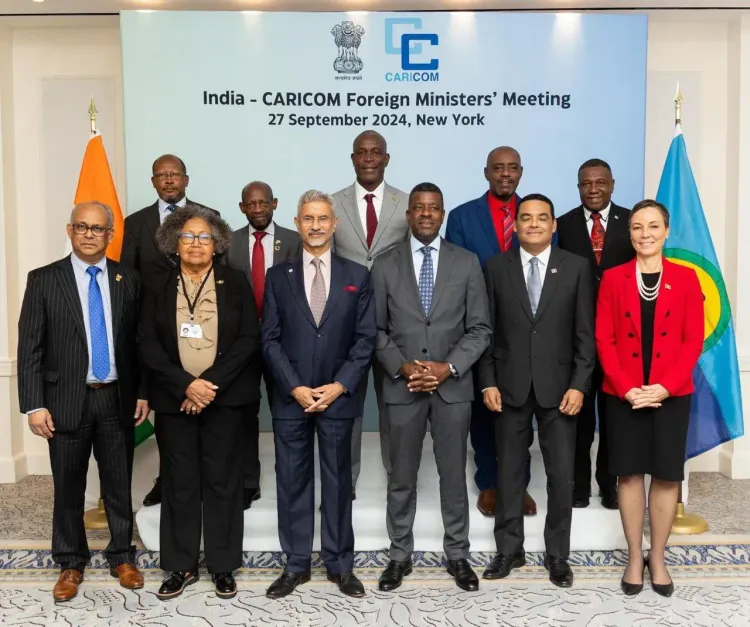
Union External Affairs Minister Dr. S. Jaishankar on Sunday, 5 July 2026, extended India's best wishes to the Caribbean Community (CARICOM) on the occasion of its 53rd founding anniversary, reaffirming New Delhi's commitment to a partnership built on shared solidarity and development aspirations.
Context
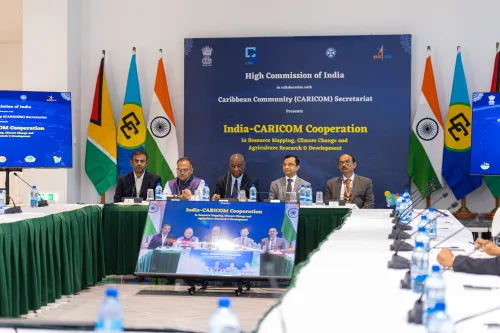
CARICOM was established on 4 July 1973 through the Treaty of Chaguaramas, bringing together 15 member states across the Caribbean basin to advance regional economic integration, coordinated foreign policy and functional cooperation. The grouping spans nations from Antigua and Barbuda and Barbados in the east to Belize in Central America and Guyana and Suriname on the South American mainland. Jaishankar's post tagged official handles of CARICOM's Secretariat, its Secretary-General, and the foreign ministries of individual member states, signalling a deliberate, government-to-government outreach rather than a routine social-media acknowledgement.
Policy Backdrop
India's engagement with CARICOM states sits within its broader Global South diplomacy, which prioritises small-island developing states facing common vulnerabilities in trade, health and climate security. New Delhi has channelled support through the Indian Technical and Economic Cooperation (ITEC) programme — offering scholarships and capacity-building placements — as well as lines of credit directed at infrastructure and climate-adaptation projects across the region. Coordination in multilateral forums, including the United Nations General Assembly and the Commonwealth, has provided a recurring platform for India and CARICOM states to align positions on issues ranging from climate finance to reform of global governance institutions.
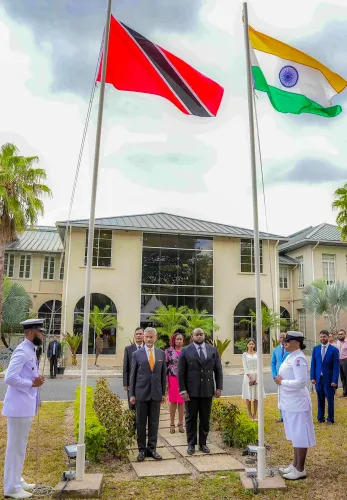
Two CARICOM members carry particular weight in the bilateral relationship. Guyana, which hosts one of the largest Indian-origin populations outside India, has deepened development cooperation and trade ties with New Delhi. Trinidad and Tobago, home to a substantial Indian diaspora, maintains long-standing bilateral links including energy-sector engagement and vibrant cultural exchanges. These diaspora connections have historically served as a bridge for people-to-people contact and economic partnerships.
Stakeholders and Impact
The immediate beneficiaries of a deepening India-CARICOM partnership are the 15 member states of the community and the significant Indian-origin diaspora communities resident across the Caribbean. For CARICOM governments, India represents a major developing-country partner offering technical assistance, concessional financing and diplomatic solidarity in multilateral settings. For India, the relationship reinforces its credentials as a leading voice of the Global South and expands its diplomatic footprint in a region where major powers compete for influence.
Jaishankar's anniversary message, directed simultaneously at @CARICOMorg, @SG_CARICOM and individual member-state foreign ministries, underscores the multi-track nature of India's Caribbean outreach — engaging the regional body as a whole while maintaining bilateral channels with each sovereign state.
What's Next
Attention will now turn to the next scheduled meeting of the India-CARICOM Joint Commission and any follow-up announcements on development projects or high-level visits, particularly as the international community moves toward the UN General Assembly later in the year. Anniversary messaging of this kind from a senior minister often precedes or accompanies substantive diplomatic activity, and observers will watch for concrete deliverables — fresh lines of credit, new ITEC allocations, or joint statements on climate and trade — that give operational content to the partnership's stated momentum.
Point of View
Not merely a ceremonial audience. By tagging individual member-state foreign ministries alongside the regional secretariat, New Delhi demonstrates it is investing in bilateral depth, not just multilateral optics. The outreach also carries a quiet competitive dimension: the Caribbean is a theatre where major powers actively court small-island states, and India's consistent engagement through ITEC and concessional finance positions it as a credible partner with no strings-attached development credentials. Anniversary messaging at this level typically foreshadows substantive diplomatic activity, making the next India-CARICOM Joint Commission meeting a key date to watch.
NationPress
5 Jul 2026
Frequently Asked Questions
When was CARICOM founded?
CARICOM was founded on 4 July 1973 through the Treaty of Chaguaramas, making 2026 its 53rd anniversary .
Why did Jaishankar wish CARICOM on its anniversary?
As India's External Affairs Minister, Dr. S. Jaishankar extended greetings to reaffirm India's partnership with the 15-member Caribbean bloc, which is a key part of New Delhi's Global South diplomacy.
How does India cooperate with CARICOM countries?
India cooperates with CARICOM states through the ITEC programme offering scholarships and training, lines of credit for infrastructure and climate-adaptation projects, and joint coordination at multilateral forums like the UN General Assembly .
Which CARICOM countries have the largest Indian diaspora?
Guyana and Trinidad and Tobago host the largest Indian-origin diaspora populations among CARICOM members and serve as anchor partners in the India-Caribbean relationship.
What is the India-CARICOM Joint Commission?
The India-CARICOM Joint Commission is a bilateral mechanism that provides a structured forum for reviewing and advancing cooperation between India and the Caribbean Community across trade, development and diplomatic areas.