PM Modi pitches India to European CEOs in Gothenburg, seals FTA momentum
Synopsis
Modi's Gothenburg address was more than a diplomatic courtesy call — it was a structured sales pitch backed by a freshly concluded India-EU FTA. With IMEC, a proposed annual CEOs Roundtable, and a dedicated India Desk at the ERT on the table, India is systematically institutionalising its European economic relationship at a moment when global supply chains are being redrawn.
Key Takeaways
PM Modi addressed the European Round Table for Industry (ERT) in Gothenburg on 18 May , pitching India as a global investment hub.
Negotiations for the India-EU Free Trade Agreement have been successfully concluded, described as a transformative economic partnership.
Modi invited European investment in AI, semiconductors, green energy, healthcare , and deep-tech manufacturing .
The India-Middle East-Europe Economic Corridor (IMEC) was highlighted as a key connectivity lever for the bilateral partnership.
Modi proposed an annual India-Europe CEOs Roundtable and an India Desk at the ERT to institutionalise business dialogue.
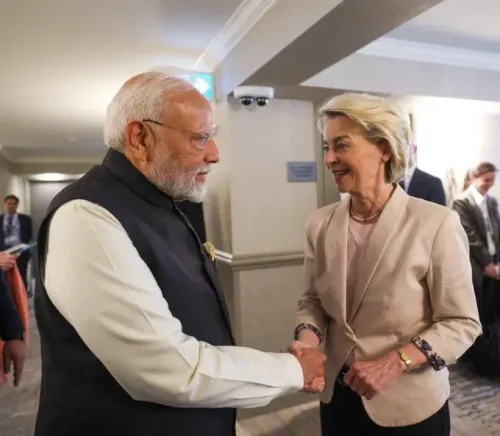
The event was attended by Swedish PM Ulf Kristersson and European Commission President Ursula von der Leyen .
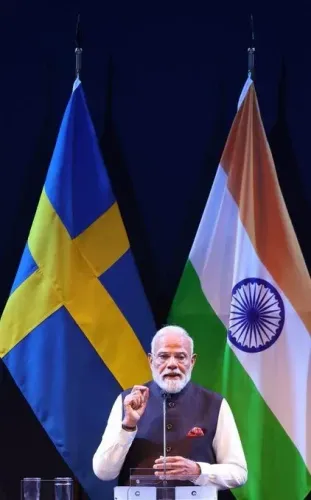
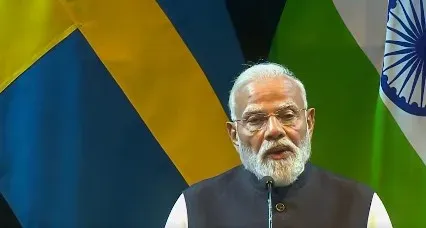
Prime Minister Narendra Modi on 18 May addressed the European Round Table for Industry (ERT) in Gothenburg, Sweden, positioning India as one of the world's most attractive destinations for investment, innovation, and manufacturing, and inviting European companies to deepen engagement with the country as a trusted economic partner. The address came alongside the successful conclusion of negotiations for the landmark India-EU Free Trade Agreement, which Modi described as a transformative partnership set to unlock new opportunities across trade, technology, and resilient supply chains.
Key Pitch to European Industry
Modi highlighted India's rapid economic growth, next-generation reforms, and the government's sustained focus on ease of doing business, digital public infrastructure, and infrastructure modernisation. Reiterating the vision of 'Design for India, Make in India and Export from India', he invited European businesses to expand investments across telecom and digital infrastructure, artificial intelligence, semiconductors, electronics, deep-tech manufacturing, green transition and clean energy, infrastructure and mobility, and healthcare and life sciences.
Connectivity and Supply Chain Resilience
Modi underlined the strategic value of the India-Middle East-Europe Economic Corridor (IMEC), describing it as a vehicle that would add new dimensions to the India-Europe business partnership. He stressed the need for both sides to build resilient and diversified supply chains, and highlighted India's ambitious plans for large-scale investment in transport, logistics, renewable energy, green hydrogen, and nuclear power.
Talent, Skills, and Institutional Proposals
The Prime Minister emphasised talent mobility, education, and skill partnerships between India and Europe, noting that India's young and skilled workforce would be a significant driver of future global economic growth. He proposed holding an India-Europe CEOs Roundtable annually and suggested establishing an India Desk at the ERT — a structural step aimed at institutionalising the bilateral business dialogue.
Who Was in the Room
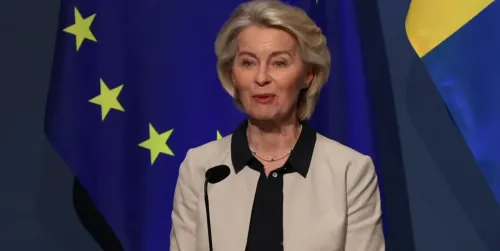
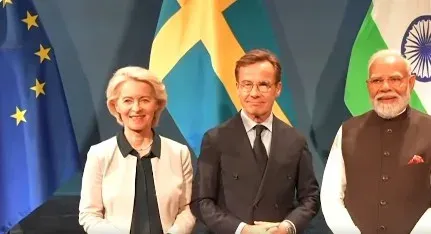
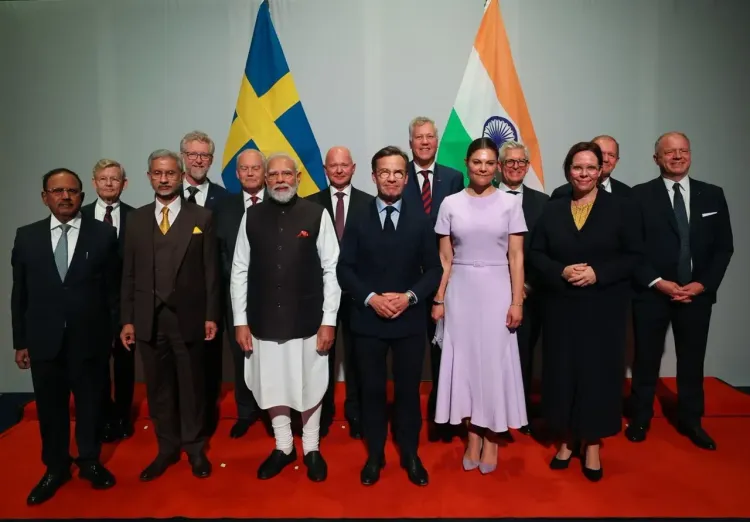
The interaction was hosted by Volvo Group and attended by Swedish Prime Minister Ulf Kristersson, European Commission President Ursula von der Leyen, and senior leaders from leading European and Indian companies. The high-profile gathering underscored the growing strategic convergence between India and Europe at a time of heightened global economic uncertainty. Notably, this is among the most senior multilateral industry engagements Modi has addressed on European soil, reflecting a deliberate diplomatic-economic push as the India-EU FTA moves toward formal signing.
What Comes Next
With FTA negotiations concluded and IMEC gaining institutional backing, the next phase will test whether investment commitments translate into on-ground capital flows. Industry bodies on both sides are expected to operationalise the proposed annual CEOs Roundtable format in the months ahead.
Point of View
But the harder work begins now — translating a framework agreement into tariff schedules, services commitments, and investment protections that both sides can ratify. Modi's proposal for an annual CEOs Roundtable and an India Desk at the ERT signals an intent to lock in institutional momentum before the political window narrows. The IMEC angle is also worth watching: it reframes India not just as a market but as a logistics hub, which is a materially different value proposition for European capital. Whether European companies move beyond expressions of interest into actual capital deployment will be the real scorecard of this engagement.
NationPress
26 Sept 2026
Frequently Asked Questions
What did PM Modi say at the European Round Table for Industry in Gothenburg?
PM Modi addressed the ERT on 18 May in Gothenburg, positioning India as one of the world's most attractive investment and manufacturing destinations. He welcomed the conclusion of India-EU Free Trade Agreement negotiations and invited European companies to invest in sectors including AI, semiconductors, green energy, and healthcare.
What is the India-EU Free Trade Agreement?
The India-EU Free Trade Agreement is a bilateral trade pact whose negotiations were recently concluded, covering trade, technology, manufacturing, services, and supply chains. Modi described it as a transformative economic partnership that would open significant new opportunities for both sides.
What is IMEC and why did Modi mention it?
The India-Middle East-Europe Economic Corridor (IMEC) is a connectivity initiative linking India to Europe via the Middle East. Modi highlighted it as a strategic infrastructure project that would add new value to the India-Europe business partnership and strengthen resilient supply chains.
What institutional proposals did Modi make at the ERT?
Modi proposed holding an India-Europe CEOs Roundtable on an annual basis and suggested setting up a dedicated India Desk at the ERT, both aimed at institutionalising and deepening the bilateral business dialogue.
Who attended the ERT event in Gothenburg?
The event was hosted by Volvo Group and attended by Swedish Prime Minister Ulf Kristersson, European Commission President Ursula von der Leyen, and senior leaders from leading European and Indian companies.