Shivraj Singh Chouhan: President Murmu Opens National Saras Mela
Synopsis
President Draupadi Murmu inaugurated the first National Saras Mela in Vijayawada on October 15, 2026. Union Agriculture Minister Shivraj Singh Chouhan called the fair a powerful platform to give rural self-help group women recognition, market access, and enterprise growth under the Atmanirbhar Bharat vision.
Key Takeaways
President Draupadi Murmu inaugurated the first National Saras Mela in Vijayawada, Andhra Pradesh on October 15, 2026 .
Andhra Pradesh Chief Minister N.
Chandrababu Naidu and Union Cabinet ministers attended the launch event.
The Saras Mela provides rural women's self-help groups a national platform for product marketing and enterprise expansion.
The fair is institutionally backed by Deendayal Antyodaya Yojana – National Rural Livelihoods Mission (DAY-NRLM) , launched in 2011 .
Union Minister Shivraj Singh Chouhan reaffirmed the government's resolve to make SHG women self-reliant and strengthen the rural economy.
Sustained market linkages — including possible e-commerce and retail tie-ups — will determine the long-term impact of the national-level format.
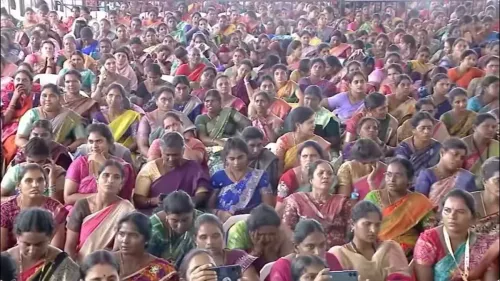
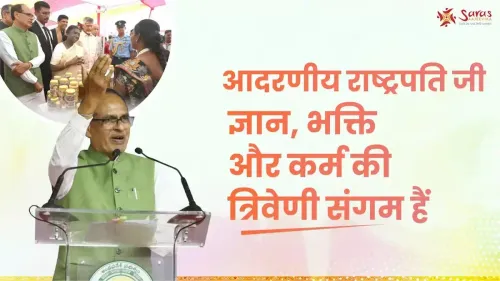
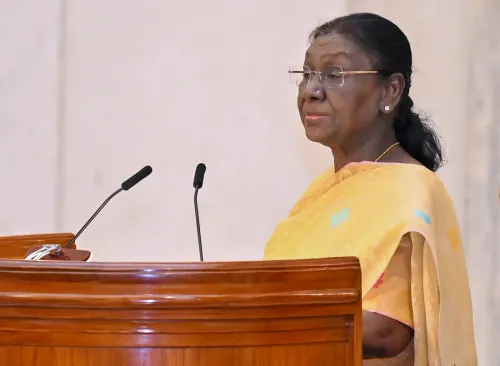
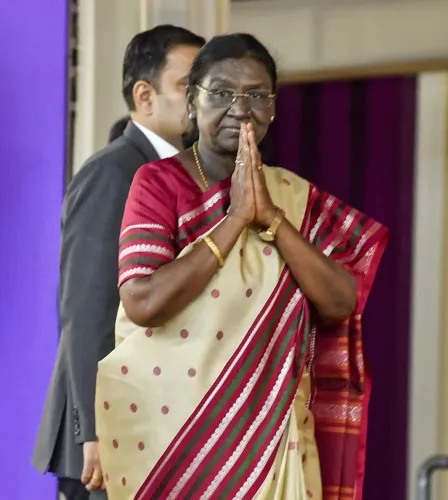
From the banks of the Krishna river in Vijayawada, India's highest constitutional authority on Thursday, October 15, 2026, gave rural women's enterprise its most visible national stage yet — President Draupadi Murmu inaugurated the first National Saras Mela, a landmark moment for the country's vast network of women-led self-help groups. Union Agriculture Minister Shivraj Singh Chouhan hailed the launch in a post on X, describing the fair as a powerful platform that gives rural women's skills recognition, their products a market, and their enterprises room to grow.
Vijayawada hosts a first for India's rural women
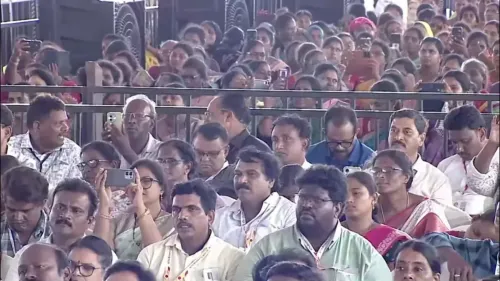
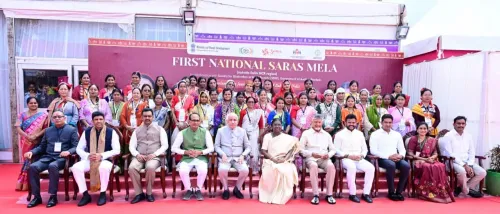
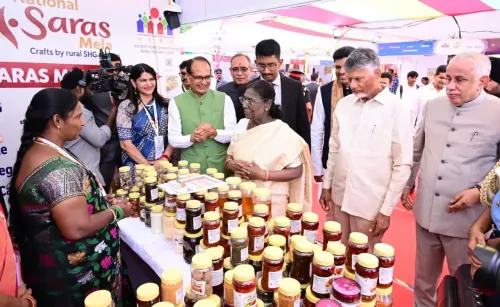
Andhra Pradesh Chief Minister N. Chandrababu Naidu joined the President at the Vijayawada venue, alongside Union Cabinet colleagues and other elected representatives. The gathering underscored the event's national character — this was not a state fair or a regional showcase, but a deliberate, high-profile signal that the Centre views women-led rural enterprise as a priority worth celebrating at the very top of the constitutional ladder.
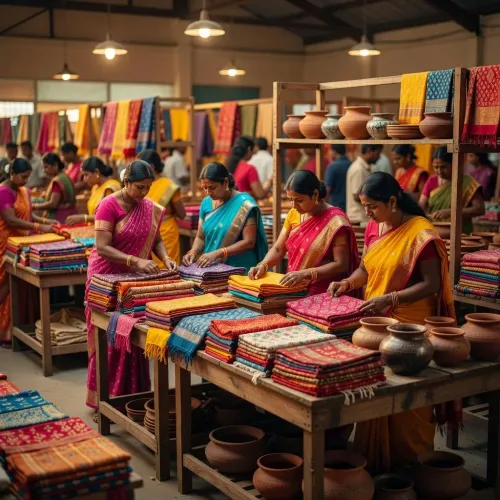
Saras Melas — 'Saras' standing for Samagra Ajeevika aur Rural Arthik Samridhi, broadly meaning holistic livelihoods and rural economic prosperity — have for years served as periodic fairs linking self-help group products with urban buyers. The National edition raises that ambition considerably: one consolidated platform where artisans, weavers, food processors, and handicraft makers from across India can reach institutional buyers, retail chains, and city consumers in a single venue.
SHG backbone: two decades of DAY-NRLM
The institutional engine behind the mela is the Deendayal Antyodaya Yojana – National Rural Livelihoods Mission (DAY-NRLM), a programme that has been building and nurturing women's self-help groups since 2011. Under DAY-NRLM, millions of rural women have been organised into SHGs that pool savings, access micro-credit, and collectively market produce — a bottom-up architecture that the Saras fair now plugs into a national market gateway.
Chouhan framed the resolve in unambiguous terms in his post: 'hamara sankalp hai ki swayam-sahayata samoohon se judi behen aatmanirbhar banen, unke parivar samriddh hon aur gramin arthavyavastha ko nai shakti mile' — ('our resolve is that sisters linked to self-help groups become self-reliant, their families prosper, and the rural economy gains new strength'). That framing — family prosperity, women's autonomy, and macro rural growth bundled together — mirrors the government's broader 'women-led development' and Atmanirbhar Bharat narrative.
What the National Saras Mela could mean for market access
The recurring challenge for SHG products has never been quality — it has been reach. A potter in Odisha or a pickle-maker in Telangana excels within her district but rarely breaks into larger supply chains. National-level fairs directly address that gap by concentrating buyers, media attention, and potential e-commerce or retail tie-ups in one place. Whether the Centre builds on this inauguration with sustained market-linkage agreements — say, with online platforms or government procurement channels — will determine whether the mela becomes a calendar fixture or a one-off spectacle.
The presence of the President signals the kind of institutional weight that can accelerate exactly those downstream conversations. Rural India's 'skill-to-shelf' journey just got a very public push.
Point of View
Inaugurated by the President herself, is a deliberate optics and policy move: it signals that women-led rural enterprise now sits at the apex of the BJP-led government's social-economic messaging. For Shivraj Singh Chouhan — who built his political identity in Madhya Pradesh on rural welfare and SHG outreach — championing the event consolidates his portfolio's public narrative around 'Atmanirbhar Bharat' at the grassroots. The involvement of Andhra Pradesh CM N. Chandrababu Naidu, a key NDA ally, also reinforces the Centre-state coalition optics ahead of any future electoral cycle. The real test, however, lies beyond the inauguration: whether DAY-NRLM infrastructure translates the mela's visibility into durable market channels will determine if this becomes a genuine livelihood milestone or a high-profile ceremonial moment.
NationPress
15 Oct 2026
Frequently Asked Questions
What is the National Saras Mela?
The National Saras Mela is a government-organised fair that brings together products made by rural women's self-help groups from across India, providing them a national marketplace and visibility. The first edition was inaugurated by President Draupadi Murmu in Vijayawada on October 15, 2026.
Where was the first National Saras Mela held?
The first National Saras Mela was held in Vijayawada, Andhra Pradesh .
What is DAY-NRLM and how is it connected to Saras Mela?
The Deendayal Antyodaya Yojana – National Rural Livelihoods Mission (DAY-NRLM) , launched in 2011, is the central government programme that organises and supports women's self-help groups nationwide. The Saras Mela is a market-linkage initiative operating under this mission.
Who attended the National Saras Mela inauguration in Vijayawada?
President Draupadi Murmu performed the inauguration. Andhra Pradesh Chief Minister N. Chandrababu Naidu , Union Agriculture Minister Shivraj Singh Chouhan , and other Union Cabinet ministers and elected representatives were also present.
What is the significance of the Saras Mela for rural women?
The Saras Mela gives rural self-help group members a direct channel to urban and institutional buyers, helping translate craft skills and small-scale production into sustainable income — addressing the persistent 'market access' gap that limits SHG economic growth.