HP Govt Reclaims Full Ownership of Wild Flower Hall
Synopsis
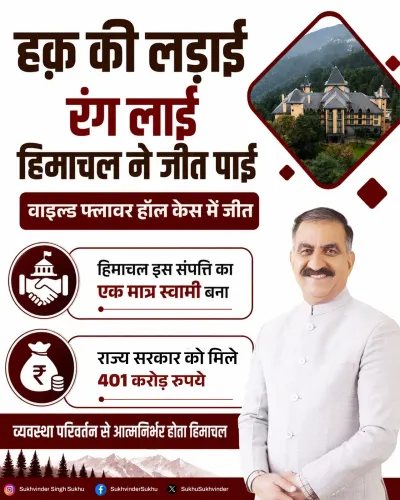
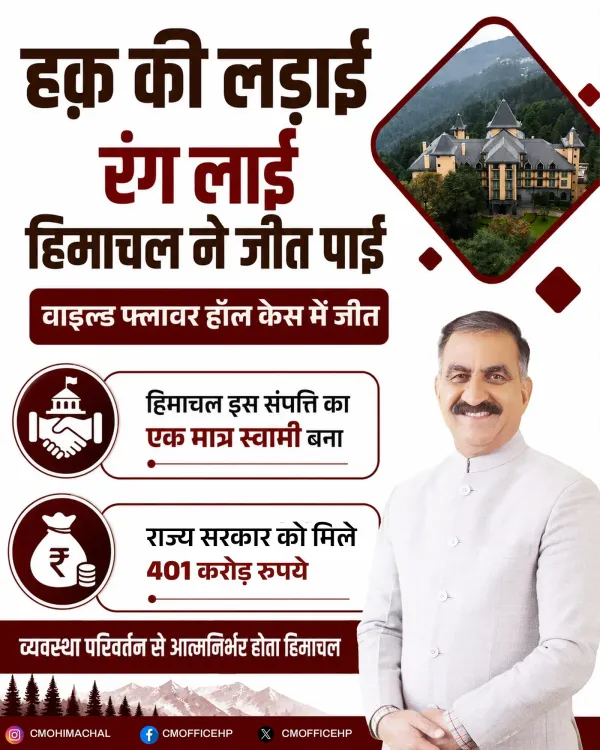
The Himachal Pradesh government has secured full state ownership of the colonial-era Hotel Wild Flower Hall near Shimla, the Chief Minister's Office announced on 17 July 2026, framing it as a landmark win for the state's heritage and public interest.
Key Takeaways
The Chief Minister's Office of Himachal Pradesh announced on 17 July 2026 that the state has secured complete ownership of Hotel Wild Flower Hall .
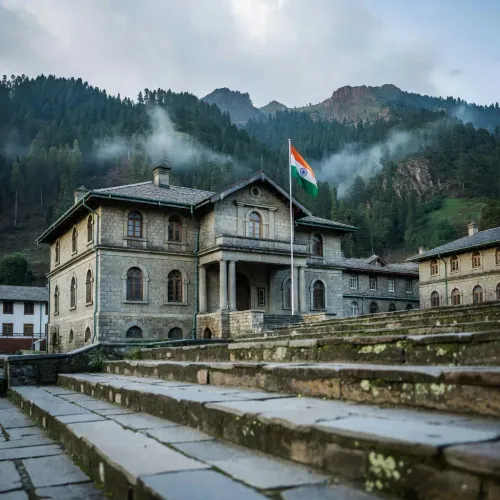
Hotel Wild Flower Hall is a colonial-era heritage luxury property located in Mashobra , near Shimla .
The government described the ownership transfer as an 'historic success' and proof that state interests can be protected with clear intent and firm resolve.
The move follows a broader national pattern of state governments reclaiming or renegotiating leases on heritage and public properties given to private operators.
Possible legal challenges from former operators and parallel announcements on other leased state properties remain key developments to watch.
The Chief Minister's Office of Himachal Pradesh announced on Friday, 17 July 2026, that the state government has secured complete ownership of Hotel Wild Flower Hall, a heritage luxury property near Shimla, describing the achievement as a landmark victory for the state's interests.
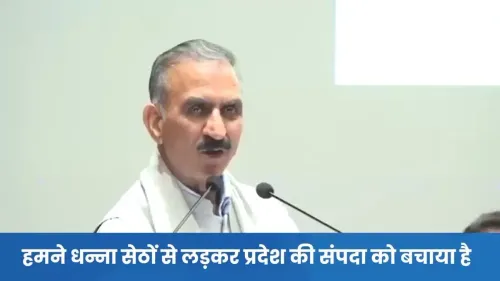
The official post, shared in Hindi, stated: 'यदि नीयत साफ और संकल्प अडिग हो, तो प्रदेश के हितों की रक्षा प्रभावी ढंग से की जा सकती है' ('If the intention is clear and the resolve is firm, the interests of the state can be protected effectively'). The government called Wild Flower Hall a 'powerful proof' of this principle, asserting that it has ensured 'full ownership of this prestigious heritage of Himachal in the name of the state.'
Context
Hotel Wild Flower Hall is a colonial-era heritage property situated in Mashobra, on the outskirts of Shimla. Long regarded as one of the most iconic luxury addresses in the hill state, it has held both tourism value and historical significance for Himachal Pradesh. The property's ownership and operational arrangements had been a subject of dispute between the state and private interests.
The Himachal Pradesh government's announcement frames the ownership transfer as a correction of past arrangements — a narrative that has become familiar across Indian states that have sought to reassert control over prime public land and heritage buildings leased to private hotel operators.
Policy Backdrop
Across India, state governments have periodically moved to reclaim or renegotiate long-term leases on government land and heritage structures handed to private chains, often citing revenue leakage or public-interest provisions. Many such leases originated in the liberalisation era of the 1980s and 1990s, when states sought private investment in hospitality infrastructure.
Himachal Pradesh has seen recurring disputes over prime properties in the Shimla and Kullu districts. Governments of different political persuasions have at various points flagged concerns about the terms under which state-owned or state-developed properties were placed under private management, making the Wild Flower Hall outcome part of a longer pattern of reassertion.
Stakeholders and Impact
The direct beneficiary of the ownership transfer, as framed by the government, is the state of Himachal Pradesh and its public exchequer. Full state ownership would, in principle, give the government control over how the property is operated, leased, or monetised going forward — with implications for tourism revenue.
The state's tourism sector, which depends significantly on high-value heritage and luxury hospitality in the Shimla region, could see changes in how the property is positioned or managed. Former private operators and any associated legal arrangements will be closely watched by industry observers.
What's Next
The government's announcement is likely to prompt scrutiny of the legal instrument used to effect the ownership transfer, as well as possible challenges from former operators or associated parties. Observers will also watch whether the Himachal Pradesh government makes parallel announcements regarding other leased state properties in the Shimla or Kullu districts.
The framing of the Wild Flower Hall outcome as proof of 'clear intent and firm resolve' signals that the current administration may position heritage-asset reclamation as a broader governance priority in the months ahead.
Point of View
Particularly when a change in political leadership creates incentive to reframe past asset-management decisions as errors of intent. By anchoring the announcement in the language of moral clarity — 'clean intention, unwavering resolve' — the Himachal Pradesh administration is doing more than reporting a legal outcome; it is setting a political tone. The move signals that heritage and public assets may become a recurring theme in the government's governance narrative. How the property is ultimately managed or monetised will be the real test of whether the reclamation serves public interest or remains primarily a political statement.
NationPress
17 Jul 2026
Frequently Asked Questions
What is Hotel Wild Flower Hall in Himachal Pradesh?
Hotel Wild Flower Hall is a colonial-era heritage luxury property located in Mashobra, near Shimla, long considered one of Himachal Pradesh's most prestigious hospitality assets with significant tourism and historical value.
Why did the Himachal Pradesh government reclaim Wild Flower Hall?
The Himachal Pradesh government stated it secured full state ownership to protect the state's interests and its heritage, framing the move as an 'historic success' enabled by clear intent and firm resolve.
Who previously operated Wild Flower Hall in Shimla?
The property had been operated under arrangements involving private interests; the specific former operators and the legal instrument used for the ownership transfer are subject to further official disclosure.
What happens to Wild Flower Hall now that HP government owns it?
With full state ownership, the Himachal Pradesh government will control how the property is operated, leased, or monetised, with implications for tourism revenue and heritage management in the Shimla region.
Is the Wild Flower Hall ownership transfer legally final?
The Chief Minister's Office has declared the ownership secured, but observers expect scrutiny of the legal instrument used and possible challenges from former operators or associated parties in the coming weeks.