CM Sukhu Claims HP Reclaimed Key Assets From Private Hands
Synopsis
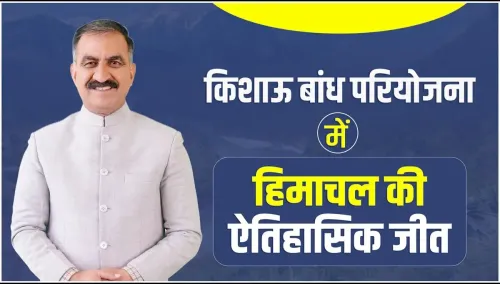
Himachal Pradesh CM Sukhvinder Singh Sukhu declared on 10 July 2026 that his government has reclaimed key state assets — Kishau Dam, Wild Flower Hall, and the Kadchham-Wangtu hydro project — from private hands, calling it an unprecedented act in the state's history.
Key Takeaways
CM Sukhvinder Singh Sukhu posted on 10 July 2026 claiming his government has reclaimed major state assets from private interests.
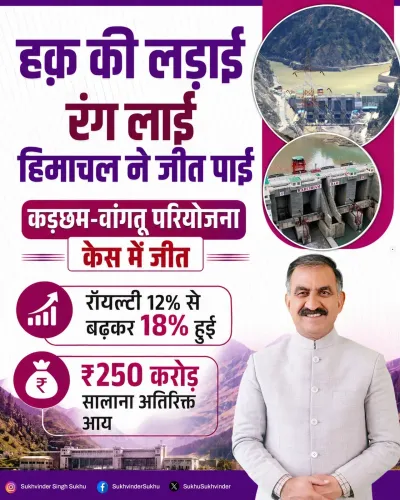
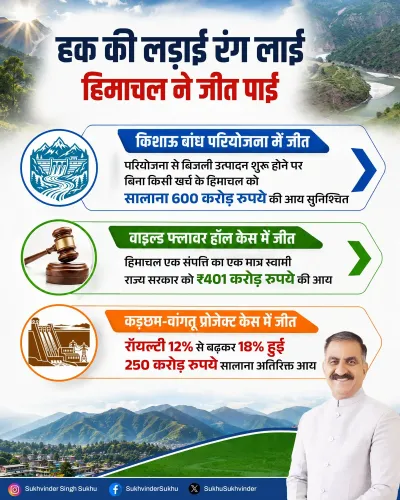
Three assets are cited as proof: the Kishau Dam Project , Wild Flower Hall in Mashobra, Shimla , and the Kadchham-Wangtu Hydroelectric Project in Kinnaur .
Sukhu called the reclamation historically unprecedented, saying no previous government had dared to touch these assets.
Himachal Pradesh 's hydro power policy dating to 2006 had enabled private sector participation that critics argued favoured developers over the state.
The CM explicitly addressed the 'young generation,' framing the asset fight as a long-term political and developmental legacy.
Formal legal or agreement outcomes for the three projects remain the key metric to watch in coming assembly sessions.
Himachal Pradesh Chief Minister Sukhvinder Singh Sukhu on Friday, 10 July 2026, asserted that his government has successfully reclaimed state assets from powerful private interests — a feat he said no previous administration had attempted. Posting on X in Hindi, Sukhu cited three specific projects as proof of what he called a resolute fight for the state's rights.
Context
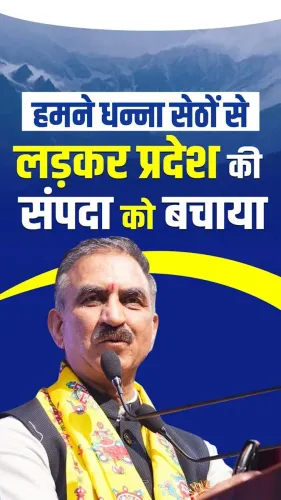
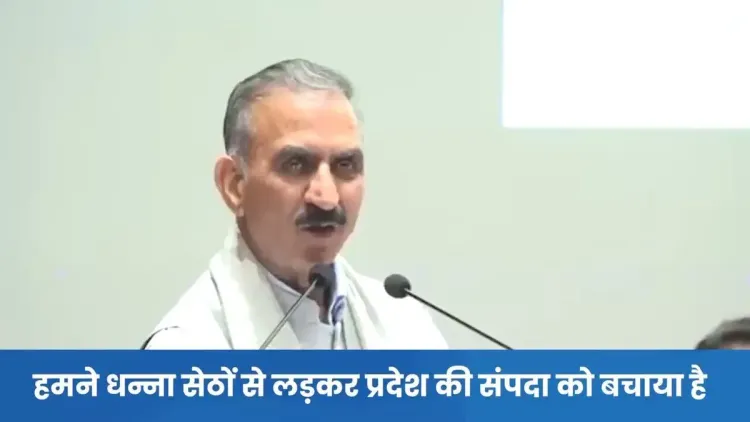
In his post, CM Sukhu wrote: 'हमने धन्ना सेठों से लड़कर हिमाचल प्रदेश के अधिकार वापस लिए हैं' — 'We have fought the wealthy elite and reclaimed the rights of Himachal Pradesh.' He added that there is not a single precedent in the state's history of state assets being taken back, framing the current government's actions as historic. He also expressed confidence that the younger generation understands the significance of this struggle.
The three projects he named as evidence are: the Kishau Dam Project, Wild Flower Hall, and the Kadchham-Wangtu Hydroelectric Project. Each represents a distinct category of state resource — inter-state river infrastructure, heritage hospitality property, and private-sector hydropower generation respectively.
Policy Backdrop
Himachal Pradesh's economy is heavily dependent on hydroelectric power and tourism assets. The state's hydro power policy, framed in 2006 and revised subsequently, opened the sector to private participation with provisions for state royalty and free power allocations. Critics of those arrangements have long argued that the terms favoured private developers over the state exchequer.
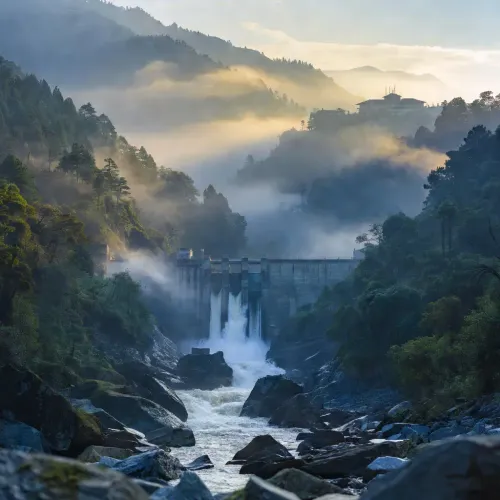
The Kadchham-Wangtu Hydroelectric Project in Kinnaur district and the proposed Kishau Dam on the Yamuna river — a joint project with Uttarakhand — have both been subjects of prolonged negotiations over revenue sharing and operational control. Wild Flower Hall, a heritage property in Mashobra near Shimla, has historically been linked to leasing arrangements with private hospitality operators. Similar reclamation or royalty-revision efforts have been undertaken in other Himalayan states including Uttarakhand and Jammu and Kashmir.
Stakeholders and Impact
The primary beneficiaries of any successful asset reclamation, if confirmed through formal agreements or legal proceedings, would be the Himachal Pradesh state government and, by extension, its residents through improved public revenues. Private hydropower developers and hospitality operators with existing stakes in the cited projects stand to be directly affected.
CM Sukhu's explicit appeal to the 'young generation' signals a political dimension: the Congress government is positioning this narrative ahead of future electoral cycles, framing resource reclamation as a generational legacy. Local communities in project-affected areas such as Kinnaur and Shimla districts also have a direct stake in how revenues from these assets are deployed.
What's Next
The outcomes of revised agreements or ongoing litigation for the three cited projects will be the clearest indicator of whether the government's claims translate into durable legal and financial gains for the state. Any new hydropower or tourism-asset policy announcements in the upcoming Himachal Pradesh assembly session could further define the contours of this reclamation drive.
With the state's fiscal position under sustained pressure, the ability to monetise reclaimed assets — or secure better royalty terms — will be closely watched by both political observers and investors active in the Himachal Pradesh energy and hospitality sectors.
Point of View
And it builds a legacy narrative aimed at younger voters ahead of future elections. By naming three specific, high-profile assets, Sukhu moves beyond rhetoric and invites public scrutiny — a double-edged strategy that strengthens credibility if outcomes are verified but exposes the government to challenge if formal reclamation is incomplete. The framing echoes a broader pattern across Himalayan states where governments periodically renegotiate hydro and tourism asset terms to shore up revenues and political capital simultaneously. The appeal to youth suggests the Congress leadership in Himachal sees resource nationalism as an electoral differentiator in a state where hydropower revenues directly shape public finances.
NationPress
9 Oct 2026
Frequently Asked Questions
What assets has CM Sukhu claimed to have reclaimed for Himachal Pradesh?
CM Sukhu has cited three assets: the Kishau Dam Project, Wild Flower Hall in Mashobra near Shimla, and the Kadchham-Wangtu Hydroelectric Project in Kinnaur district.
What is the Kadchham-Wangtu Hydroelectric Project?
The Kadchham-Wangtu Hydroelectric Project is a hydroelectric facility located in Kinnaur district of Himachal Pradesh that had prior private sector participation under the state's hydro power policy.
What is the Kishau Dam Project?
The Kishau Dam is a proposed multi-purpose dam on the Yamuna river, involving water and power sharing arrangements between Himachal Pradesh and Uttarakhand.
What is Wild Flower Hall and why is it significant?
Wild Flower Hall is a heritage property in Mashobra, near Shimla, that has historically been subject to private hospitality leasing arrangements and is now cited by CM Sukhu as a reclaimed state asset.
Why is Himachal Pradesh's fight over hydropower assets politically important?
Himachal Pradesh's economy depends heavily on hydroelectric revenues; renegotiating or reclaiming hydro assets directly affects the state exchequer, making it a significant political and fiscal issue for any government in power.