CM Sukhu Claims Rs 1,251 Cr Annual Revenue From HP Assets
Synopsis
Chief Minister Sukhvinder Singh Sukhu on 18 June 2026 cited three revenue streams — Kishau Dam, Wild Flower Hall, and Karcham-Wangtoo — expected to collectively yield over Rs 1,251 crore annually for Himachal Pradesh, framing the gains as the state's sovereign right over its own resources.
Key Takeaways
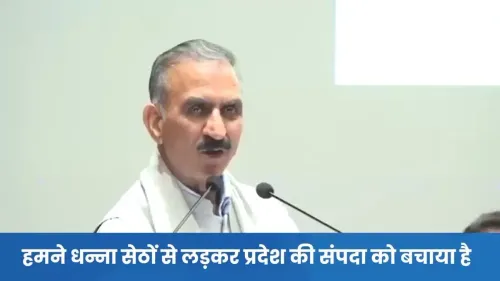
CM Sukhvinder Singh Sukhu asserted on 18 June 2026 that Himachal Pradesh's resources belong exclusively to its people.
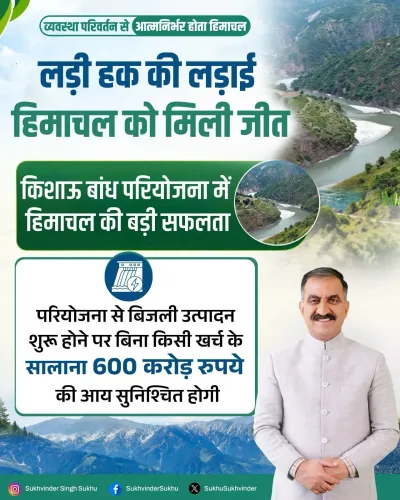
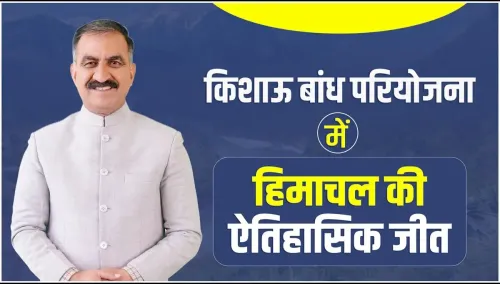
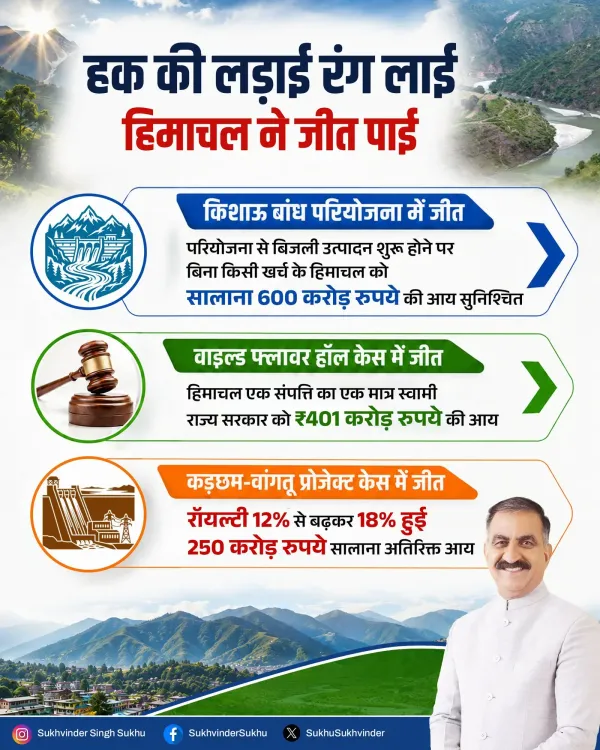
The Kishau Dam Project on the Yamuna river is projected to generate approximately Rs 600 crore per year for Himachal Pradesh once power generation begins.
Wild Flower Hall , the heritage property near Shimla , is expected to contribute approximately Rs 401 crore in revenue.
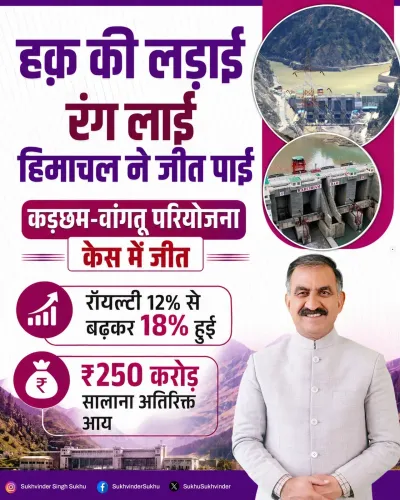
The Karcham-Wangtoo Hydroelectric Project in Kinnaur district — a 1,000 MW private project commissioned in 2011-12 — is projected to yield an additional Rs 250 crore annually .
Combined projected annual revenue from the three sources stands at over Rs 1,251 crore .
Actual realisation depends on the Kishau Dam's commissioning timeline and the operationalisation of other revenue models.
Himachal Pradesh Chief Minister Sukhvinder Singh Sukhu on Thursday, 18 June 2026, asserted that the state's natural resources and assets belong exclusively to its people and outlined three specific revenue streams expected to generate over Rs 1,251 crore annually for Himachal Pradesh.
Context
Posting in Hindi on X, CM Sukhu declared, 'प्रदेश की संपदा और संसाधनों पर हिमाचल प्रदेश के लोगों का अधिकार है और इसे कोई छीन नहीं सकता' ['The people of Himachal Pradesh have a right over the state's wealth and resources, and no one can take that away']. The statement frames resource ownership as a political commitment, not merely an administrative one.
The chief minister cited what he called 'several historic achievements' secured by his government, anchoring the claim in three concrete financial projections tied to specific projects and properties.
Policy Backdrop
The first and largest projected stream is the Kishau Dam Project, a long-pending multipurpose dam on the Yamuna river involving both Himachal Pradesh and Uttarakhand. Once power generation begins, CM Sukhu stated the state will receive approximately Rs 600 crore per year at no cost to the exchequer — a reference to the free-power royalty share that Himachal Pradesh negotiates with hydropower developers under its established policy framework.
The second stream involves Wild Flower Hall, the heritage property near Shimla, from which the state is projected to earn approximately Rs 401 crore. The third is the Karcham-Wangtoo Hydroelectric Project, a 1,000 MW run-of-river project in Kinnaur district commissioned in 2011-12 by a private developer, from which the state expects an additional Rs 250 crore annually.
Himachal Pradesh has relied on hydropower royalties as a primary revenue source for over two decades. Successive state governments have negotiated free-power shares and royalty arrangements from both state-run and private projects, and disputes over resource allocation with neighbouring states and the central government have been a recurring feature of the state's fiscal politics.
Stakeholders and Impact
The projected revenues have direct implications for Himachal Pradesh's state finances, which have faced pressure in recent years. Hydropower developers operating in the state — particularly those running projects under long-term power purchase agreements — are key stakeholders in the royalty and free-power framework that underpins these figures.
State residents stand to benefit if the projected inflows are realised and directed toward public services. The Kishau Dam Project, in particular, has been in planning for decades, making any confirmed commissioning timeline a significant milestone for both Himachal Pradesh and Uttarakhand.
What's Next
The critical variables are the actual commissioning date for the Kishau Dam and the operationalisation of the Wild Flower Hall revenue model. Subsequent state budget documents will be the primary measure of whether the projected Rs 1,251 crore in annual receipts materialises. CM Sukhu's government has staked a political position on resource sovereignty, and the delivery of these revenue streams will determine how that position is judged ahead of the next electoral cycle.
Point of View
Invoking the language of sovereign ownership to build political capital around revenue gains that are still partly prospective. By tying three distinct assets — a long-delayed inter-state dam, a heritage property, and a private hydropower project — into a single narrative of 'historic achievements,' his government is constructing a fiscal credibility argument ahead of the electoral cycle. The framing also implicitly pushes back against any federal or inter-state claims on Himachal Pradesh's resource base, a recurring tension in Himalayan river-basin politics. Whether the projected Rs 1,251 crore materialises will be the ultimate test of this political positioning.
NationPress
17 Sept 2026
Frequently Asked Questions
What is the Kishau Dam project and why is it significant for Himachal Pradesh?
The Kishau Dam is a long-pending multipurpose dam on the Yamuna river involving both Himachal Pradesh and Uttarakhand. CM Sukhu has projected it will generate approximately Rs 600 crore per year for Himachal Pradesh at no cost to the state exchequer once power generation begins, making it one of the largest single projected revenue sources for the state.
How much revenue is Himachal Pradesh expected to earn from Wild Flower Hall?
CM Sukhu stated that Wild Flower Hall, the heritage property near Shimla, is expected to generate approximately Rs 401 crore in revenue for Himachal Pradesh.
What is the Karcham-Wangtoo Hydroelectric Project?
The Karcham-Wangtoo Hydroelectric Project is a 1,000 MW run-of-river project located in Kinnaur district of Himachal Pradesh. Commissioned in 2011-12 by a private developer, it is projected to yield an additional Rs 250 crore annually for the state.
What is Himachal Pradesh's total projected annual revenue from these three assets?
Based on CM Sukhu's figures, the three sources — Kishau Dam (Rs 600 crore), Wild Flower Hall (Rs 401 crore), and Karcham-Wangtoo (Rs 250 crore) — together project over Rs 1,251 crore in annual revenue for Himachal Pradesh.
Why does Himachal Pradesh rely heavily on hydropower for state revenue?
Himachal Pradesh has positioned hydropower as its primary revenue source for over two decades, negotiating royalty and free-power shares from hydroelectric projects under a policy framework established in the early 2000s. The state's mountainous terrain and river systems make it one of India's largest hydropower-producing states.