CM Sukhu Secures Rs 600 Cr Annual Revenue in Kishau Dam Win
Synopsis
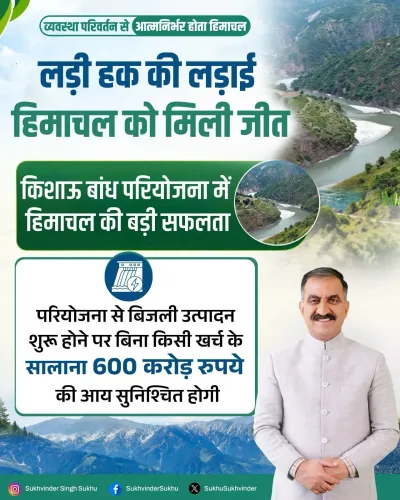
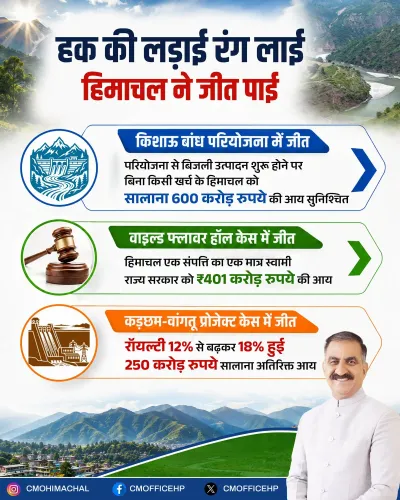
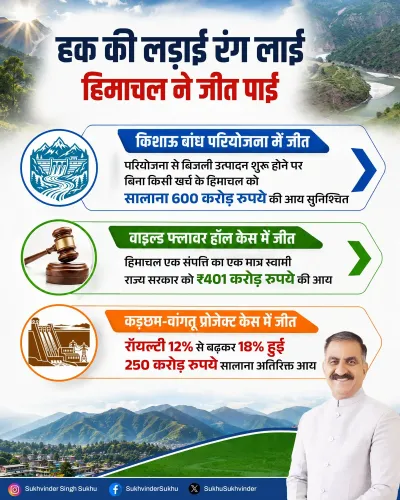
The Chief Minister's Office of Himachal Pradesh declared a landmark victory in the Kishau Dam Project on 4 July 2026, stating the settlement will secure Rs 600 crore in annual revenue for the state and restore the resource rights of its 75 lakh residents.
Key Takeaways
The Chief Minister's Office of Himachal Pradesh announced a landmark victory in the Kishau Dam Project on 4 July 2026 .
The settlement is projected to generate Rs 600 crore in annual revenue for Himachal Pradesh.
The announcement frames the outcome as a restoration of rights for 75 lakh (7.5 million) residents of the state.
Chief Minister Sukhvinder Singh Sukhu has led the state's push to secure equitable resource rights in interstate dam projects.
The Kishau Dam is a multipurpose project on the Yamuna river , long contested between Himachal Pradesh and Uttarakhand.
Formal project sanction and revenue-sharing notifications from the Union Ministry of Jal Shakti remain the key next steps before revenues can be realised.
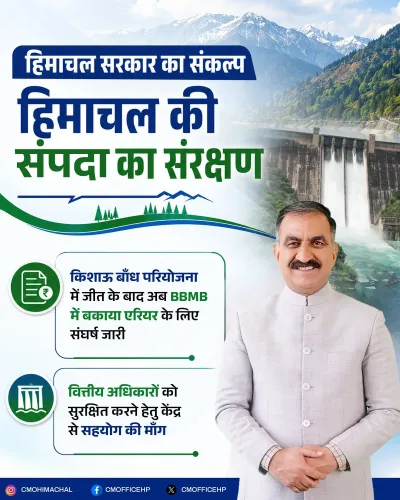
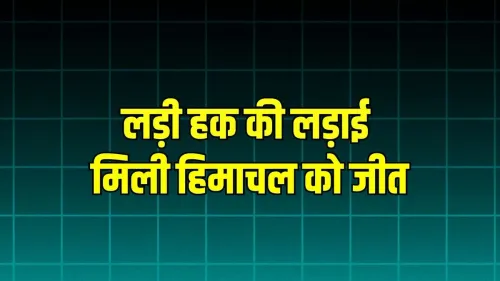
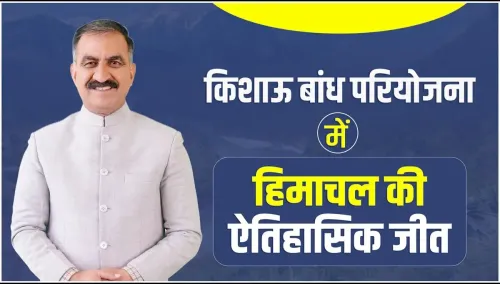
The Chief Minister's Office of Himachal Pradesh announced on Saturday, 4 July 2026, that the state has secured a landmark victory in the long-contested Kishau Dam Project, which is projected to generate Rs 600 crore in annual revenue for Himachal Pradesh. The announcement frames the outcome as a restoration of rights for the state's 75 lakh (7.5 million) residents.
The post, shared by the official handle of the Chief Minister's Office, states: '75 lakh bhaion-bahnon ke adhikaron ki punarsthapna ke sankalp ke saath' ('With the resolve to restore the rights of 75 lakh brothers and sisters'), the state fought to secure Himachal's rightful claim over its resources. The office credited Chief Minister Sukhvinder Singh Sukhu with leading this effort, describing the Kishau Dam outcome as an 'historic victory.'
Context
The Kishau Dam Project is a multipurpose infrastructure scheme proposed on the Yamuna river, straddling the boundary between Himachal Pradesh and Uttarakhand. The project has been a subject of prolonged interstate negotiation, with Himachal asserting rights over the upstream catchment area that falls within its territory. The state has historically argued that its geographic contribution to the project's hydrology entitles it to a proportionate share of both power and revenue. The announcement comes as the Sukhu government has made resource federalism a central plank of its governance agenda since taking office in December 2022. The framing of the post — invoking the 'rights' of 75 lakh citizens — signals that the administration intends to present this as a people-centric political achievement.Policy Backdrop
Disputes over Yamuna basin projects, including Kishau, have persisted for decades, rooted in the 1994 Upper Yamuna River Board agreement and subsequent memoranda of understanding that allocated benefits among basin states. The Inter-State River Water Disputes Act framework governs such contests, but resolution has often required sustained political and legal pressure from smaller upstream states. Himachal Pradesh has a well-documented history of asserting equitable shares in joint hydroelectric ventures. The state's power sector depends significantly on royalty and revenue streams from such projects, making favourable settlements a fiscal as well as political priority. An annual inflow of Rs 600 crore would represent a meaningful addition to the state's revenue base.Stakeholders and Impact
The primary beneficiaries of this settlement, as framed by the Chief Minister's Office, are the 75 lakh residents of Himachal Pradesh. State power utilities stand to gain from improved revenue allocation, which could in turn support electricity subsidies, infrastructure investment, and debt servicing. Farmers and communities in the downstream and catchment zones of the Yamuna basin also have a stake in how the dam's operational and irrigation benefits are distributed. For the broader federal architecture, the outcome — if formalised — could set a precedent for how smaller Himalayan states negotiate resource-sharing with larger neighbours and the Union government under the Ministry of Jal Shakti.What's Next
The critical next steps will be formal project sanction, finalisation of construction timelines, and gazette notification of the revenue-sharing mechanism by the Union Ministry of Jal Shakti. Until these administrative steps are completed, the Rs 600 crore annual revenue figure remains a projected outcome contingent on project execution. The Sukhu government will likely use this announcement as a political benchmark, with accountability tied to whether the projected revenues materialise once the dam becomes operational. How swiftly the Centre moves on formal approvals will determine whether this 'historic victory' translates into tangible fiscal gains for the hill state.Point of View
Rather than beneficiaries, reflects a broader pattern among Himalayan state governments of asserting federal equity arguments in interstate water disputes. Whether this victory holds in the form of gazette-notified revenue-sharing agreements will determine its lasting political value.
NationPress
3 Oct 2026
Frequently Asked Questions
What is the Kishau Dam Project and why is it significant for Himachal Pradesh?
The Kishau Dam is a proposed multipurpose project on the Yamuna river involving Himachal Pradesh and Uttarakhand. It is significant for Himachal because its upstream catchment lies within the state, giving it a claim to hydropower and revenue shares — now reported at Rs 600 crore annually.
How much annual revenue will Himachal Pradesh get from the Kishau Dam victory?
According to the Chief Minister's Office of Himachal Pradesh, the state will receive Rs 600 crore in annual revenue as a result of the settlement in the Kishau Dam Project.
Who is Sukhvinder Singh Sukhu and what is his role in the Kishau Dam deal?
Sukhvinder Singh Sukhu is the Chief Minister of Himachal Pradesh since December 2022. His government has led the state's legal and political push to secure equitable resource rights in the Kishau Dam Project, which the CMO has now described as an historic victory.
What is the dispute between Himachal Pradesh and Uttarakhand over the Kishau Dam?
The dispute centres on how hydropower generation, irrigation benefits, and revenue from the Kishau Dam should be shared between the two states, given that Himachal Pradesh's territory covers a significant portion of the project's upstream catchment area.
What happens next after Himachal Pradesh's Kishau Dam victory?
The key next steps include formal project sanction, finalisation of construction timelines, and official notification of the revenue-sharing mechanism by the Union Ministry of Jal Shakti. The Rs 600 crore annual revenue will only materialise once the dam is built and operational.