CM Sukhu Claims Historic Win in Kishau Dam Battle for HP
Synopsis
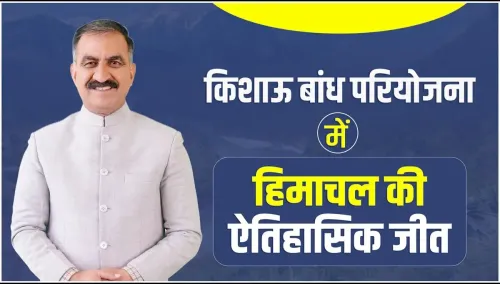
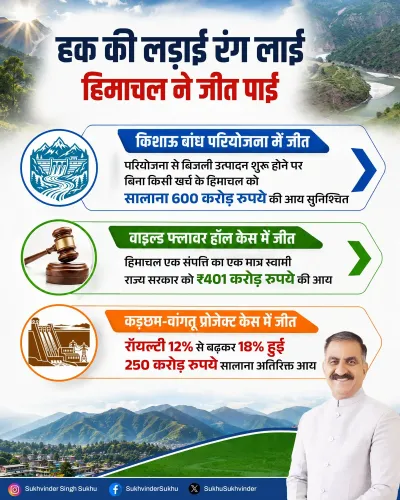
Himachal Pradesh CM Sukhvinder Singh Sukhu has claimed a historic win in the Kishau Dam dispute, saying the state will earn ₹600 crore yearly. He also cited gains in the Wild Flower Hall and Karcham-Wangtoo cases, and vowed to pursue BBMB representation and Chandigarh asset rights for the state's 75 lakh residents.
Key Takeaways
CM Sukhu announced a 'historic victory' in the Kishau Dam Project dispute on the Tons river , shared with Uttarakhand .
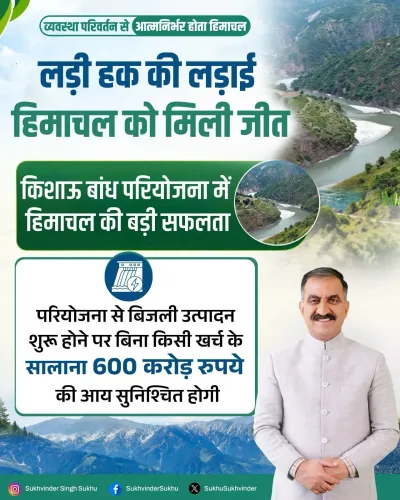
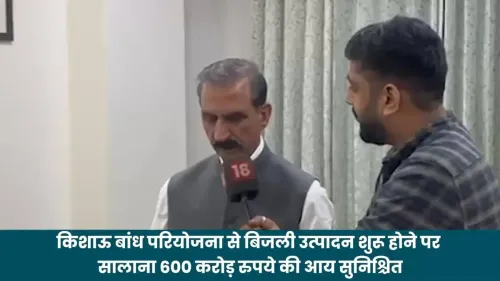
The settlement is expected to generate ₹600 crore per year in revenue for Himachal Pradesh .
Earlier wins were claimed in the Wild Flower Hall and Karcham-Wangtoo Hydroelectric Project cases.
The state is pursuing fair representation in the Bhakra Beas Management Board (BBMB) and a share in Chandigarh assets.
Sukhu framed the campaign as a restoration of rights for 75 lakh Himachal residents under the legacy of the Punjab Reorganisation Act, 1966 .
Outstanding financial claims and pending tribunal proceedings remain the next milestones in the state's resource-rights push.
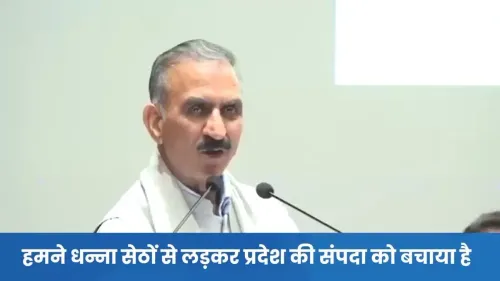
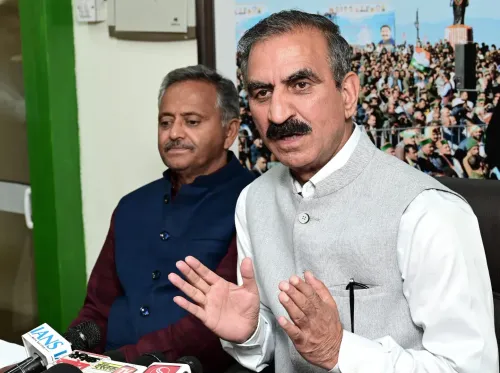
Himachal Pradesh Chief Minister Sukhvinder Singh Sukhu on Saturday, 4 July 2026, declared a landmark victory in the Kishau Dam Project dispute, asserting that the state will now earn ₹600 crore annually from the project and pledging continued pursuit of all pending resource rights on behalf of the state's 75 lakh citizens.
Context
In a post on X, Chief Minister Sukhu wrote — 'किशाऊ बांध परियोजना में मिली ऐतिहासिक जीत से हिमाचल को प्रतिवर्ष 600 करोड़ रुपये की आय होगी' ['The historic victory in the Kishau Dam Project will earn Himachal ₹600 crore per year'] — framing the outcome as a restoration of the state's 'just rights' over its natural resources. He also cited earlier successes in the Wild Flower Hall and Karcham-Wangtoo Hydroelectric Project cases as part of the same campaign.
The Kishau Dam is a multipurpose project on the Tons river, involving power generation and water sharing between Himachal Pradesh and Uttarakhand. Disputes over revenue sharing and project rights have persisted for years, making any settlement a significant administrative milestone for the hill state.
Policy Backdrop
Himachal Pradesh's claims over inter-state river projects, shared capital assets, and hydropower royalties trace their legal and political roots to the Punjab Reorganisation Act, 1966, which created successor-state entitlements over joint infrastructure. Himachal attained full statehood only in 1971, and has since pursued incremental recognition of its share in projects and assets carved out of the pre-reorganisation Punjab framework.
The Bhakra Beas Management Board (BBMB), which oversees the Bhakra-Nangal and Beas projects, has been a persistent flashpoint. Himachal, Punjab, Haryana, and Rajasthan all hold stakes in BBMB-managed assets, and debates over representation and revenue distribution recur regularly. Similarly, Chandigarh — the shared former capital of Punjab and Haryana — carries unresolved asset-sharing claims that Himachal has formally maintained.
The Karcham-Wangtoo Hydroelectric Project in Kinnaur district has previously been at the centre of ownership and royalty disputes, and the government's claim of having secured state interests there adds to the pattern of incremental legal and administrative gains.
Stakeholders and Impact
CM Sukhu framed the entire push as a fight on behalf of '75 lakh brothers and sisters' — invoking the state's full population as the moral basis for the resource rights campaign. For Himachal Pradesh, which is heavily dependent on hydropower royalties and central transfers, a confirmed annual inflow of ₹600 crore from the Kishau project alone would represent a material boost to state finances.
The power sector and riparian communities along the Tons river basin stand to benefit most directly from a settled project framework. Broader resolution of BBMB representation and Chandigarh asset-sharing would have implications for inter-state relations across the northern river-basin states.
What's Next
Chief Minister Sukhu indicated that the state is pressing ahead — 'पूरी दृढ़ता के साथ आगे बढ़ रहे हैं' ['moving forward with full resolve'] — on Chandigarh asset-sharing, fair participation in the BBMB, and outstanding financial claims. The next critical markers will be any tribunal rulings or negotiated settlements on these remaining disputes, as well as potential amendments to BBMB governance rules that could formalise Himachal's representation. How quickly these translate into actual revenue flows will determine the political and fiscal weight of the victories claimed so far.
Point of View
His government is constructing a narrative of cumulative, Congress-led restitution against perceived historical neglect. The invocation of '75 lakh brothers and sisters' personalises what are essentially administrative and legal disputes, amplifying their popular appeal. The unresolved fronts — BBMB representation and Chandigarh assets — ensure this campaign has political legs well beyond the current announcement.
NationPress
3 Oct 2026
Frequently Asked Questions
What is the Kishau Dam Project and why does it matter for Himachal Pradesh?
The Kishau Dam is a multipurpose project on the Tons river, shared between Himachal Pradesh and Uttarakhand, involving power generation and water sharing. CM Sukhu has claimed a settlement that will bring Himachal Pradesh ₹600 crore in annual revenue.
What is the BBMB and what does Himachal Pradesh want from it?
The Bhakra Beas Management Board (BBMB) manages the Bhakra-Nangal and Beas projects for Punjab, Haryana, Rajasthan and Himachal Pradesh. Himachal Pradesh is seeking fairer representation and a larger share of revenues from the board.
What are Himachal Pradesh's claims over Chandigarh assets?
Following the Punjab Reorganisation Act of 1966, Himachal Pradesh has maintained claims over certain assets in Chandigarh, the former joint capital of Punjab and Haryana, as part of broader successor-state entitlements.
What is the Karcham-Wangtoo Hydroelectric Project dispute?
The Karcham-Wangtoo project in Kinnaur district has been the subject of ownership and royalty disputes. CM Sukhu has stated that the state government successfully defended Himachal Pradesh's interests in this case.
Why does Himachal Pradesh have so many inter-state resource disputes?
Most disputes originate from the Punjab Reorganisation Act of 1966, which divided assets, river rights and infrastructure among successor states. Himachal Pradesh, which attained full statehood only in 1971, has since pursued its share through tribunals and negotiations.