CM Sukhu Secures Zero-Cost Deal for HP in Kishau Dam Meet
Synopsis
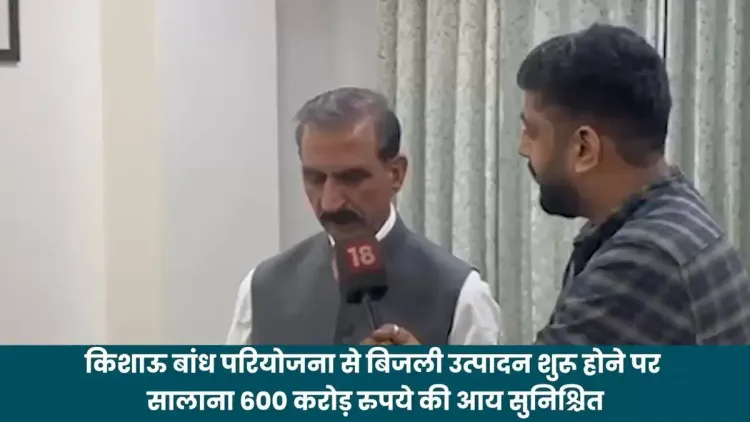
Himachal Pradesh CM Sukhvinder Singh Sukhu says a meeting chaired by Home Minister Amit Shah resolved the Kishau Dam deadlock: HP exits all financial liability and gains an estimated ₹600 crore per year, with Delhi, Uttarakhand and Rajasthan taking the project forward.
Key Takeaways
The Kishau Dam project on the Tons river has been pending since its declaration as nationally important in 2018 due to cost-sharing disputes.
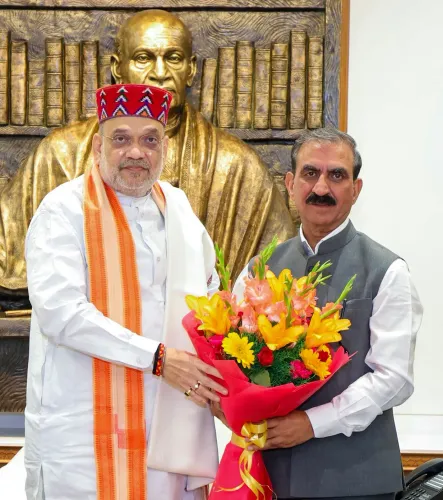
Union Home Minister Amit Shah chaired the high-level meeting on 16 June 2026 where the deadlock was broken.
Under the previous arrangement, Himachal Pradesh and Uttarakhand were to bear power-generation costs of about ₹2.30 per unit ; the Sukhu government formally dissented.
Himachal Pradesh will now bear zero financial contribution to the project under the revised framework.
Delhi , Uttarakhand , and Rajasthan will jointly take the project forward as a tripartite group.
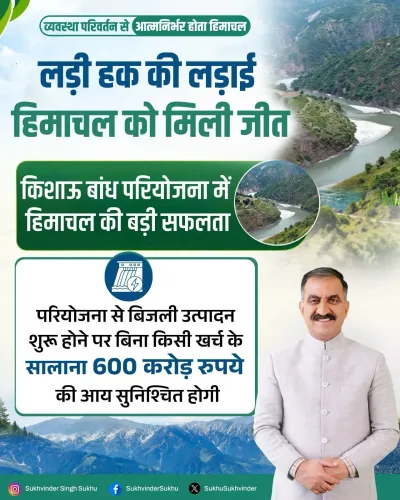
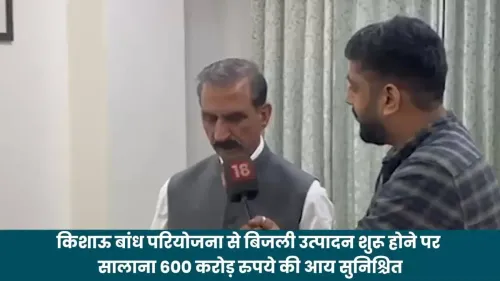
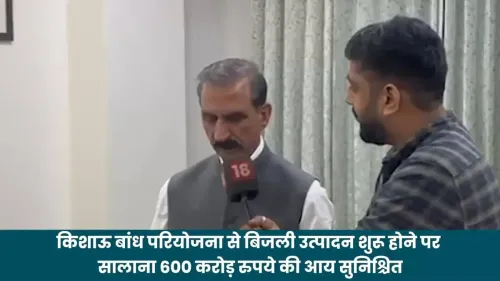
Himachal Pradesh is projected to earn approximately ₹600 crore per year over the next five years from the arrangement.
Himachal Pradesh Chief Minister Sukhvinder Singh Sukhu announced on Tuesday, 16 June 2026 that a high-level meeting chaired by Union Home Minister Amit Shah resolved the long-pending cost-sharing dispute over the Kishau Dam project, securing a deal under which Himachal Pradesh will bear no project expenditure and stand to gain approximately ₹600 crore annually over the next five years.
Context
The Kishau Dam, a multipurpose project on the Tons river, was declared of national importance in 2018 but has remained stalled for nearly eight years due to unresolved inter-state cost-sharing disputes. The project involves upstream states Himachal Pradesh and Uttarakhand bearing power-generation costs, while downstream states receive subsidised water supply from the central government.
CM Sukhu posted in Hindi, stating: 'वर्ष 2018 से राष्ट्रीय महत्व की किशाऊ बांध परियोजना लंबित थी' ['The Kishau Dam project of national importance has been pending since 2018']. He said the meeting addressed various issues related to the project in detail.
Policy Backdrop
Under an agreement struck during the previous BJP government's tenure, both Uttarakhand and Himachal Pradesh were required to bear power-generation costs of approximately ₹2.30 per unit. The Sukhu government objected to this arrangement, arguing that states receiving water from the project were being subsidised by the Centre, while states producing electricity from the same water were expected to absorb the full cost.
'States that will receive water from this project are being given grants by the central government, but it is not right that state governments should bear the entire cost of electricity produced from that water,' CM Sukhu stated, outlining Himachal Pradesh's formal dissent to the existing framework.
Inter-state Himalayan river projects have repeatedly required central mediation to reconcile upstream power-cost burdens with downstream irrigation and water-supply gains. The pattern across successive administrations shows downstream states increasingly assuming capital responsibility in exchange for assured water allocations.
Stakeholders and Impact
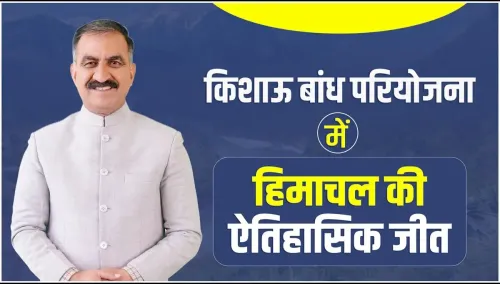
Following detailed deliberations, a consensus emerged that Delhi, Uttarakhand, and Rajasthan will jointly take the project forward. Himachal Pradesh exits the financial liability entirely under the revised arrangement. CM Sukhu described the outcome as a 'milestone' for the state's economic strength and self-reliance, calling it a 'major victory for the 75 lakh brothers and sisters of Himachal Pradesh.'
Power consumers and state finances in Himachal Pradesh stand to benefit directly, with the state government projecting annual gains of around ₹600 crore without contributing capital to the project. Rajasthan, a downstream beneficiary, joins Delhi and Uttarakhand in the new tripartite implementation group, broadening the financial responsibility base.
What's Next
The immediate next step will be a formal tripartite agreement among Delhi, Uttarakhand, and Rajasthan on funding structures and execution timelines. Subsequent clearance from the Cabinet or relevant central bodies for the revised cost-sharing model will be required before construction activity can resume in earnest.
If the revised arrangement holds and the project moves to execution, it could serve as a template for resolving similar inter-state deadlocks on Himalayan river infrastructure, where upstream states have long argued against bearing costs that primarily benefit downstream populations.
Point of View
Who inherited a cost-sharing framework negotiated by the previous BJP administration and successfully renegotiated it at the Centre's table. By framing the old arrangement as structurally inequitable — upstream states paying for power while downstream states receive subsidised water — the Congress government in Shimla has forced a restructuring that shifts capital burden to Delhi, Uttarakhand and Rajasthan. The outcome also reflects a broader trend in Himalayan river politics, where central mediation increasingly favours upstream states to unlock stalled infrastructure. For Sukhu, the ₹600 crore annual benefit figure, if realised, provides a tangible fiscal argument ahead of future electoral cycles in a state with a fragile revenue base.
NationPress
16 Sept 2026
Frequently Asked Questions
What is the Kishau Dam project?
The Kishau Dam is a multipurpose dam project on the Tons river, declared of national importance in 2018. It has been stalled since then due to unresolved inter-state disputes over who bears the cost of power generation versus water supply.
What was decided in the Amit Shah meeting on Kishau Dam?
In the meeting chaired by Union Home Minister Amit Shah on 16 June 2026, it was agreed that Delhi, Uttarakhand and Rajasthan will jointly take the Kishau Dam project forward. Himachal Pradesh will bear no financial contribution to the project.
How much will Himachal Pradesh benefit from the Kishau Dam deal?
CM Sukhu stated that Himachal Pradesh is expected to receive approximately ₹600 crore per year over the next five years as a result of the revised arrangement, without spending any state funds on the project.
Why did Himachal Pradesh object to the earlier Kishau Dam cost-sharing agreement?
The earlier agreement required Himachal Pradesh and Uttarakhand to bear power-generation costs of about ₹2.30 per unit. The Sukhu government argued it was unfair for states producing electricity to bear full costs while states receiving water got central grants.
Which states will now implement the Kishau Dam project?
Following the 16 June 2026 meeting, Delhi, Uttarakhand and Rajasthan will form a tripartite group to take the Kishau Dam project forward. Himachal Pradesh steps back from financial participation.