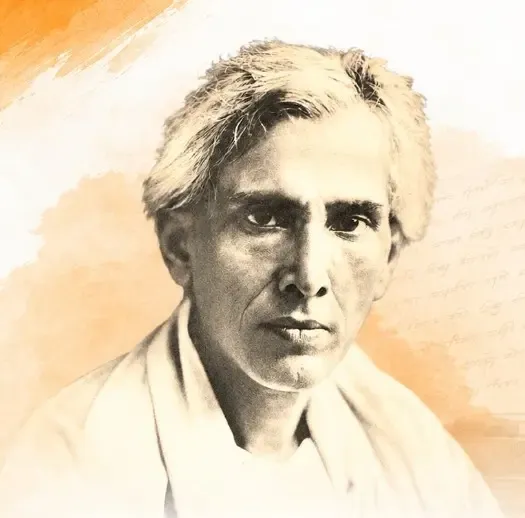
Sarat Chandra Chattopadhyay at 150: Why his stories still resonate
Synopsis
One hundred and fifty years after his birth, Sarat Chandra Chattopadhyay's novels are still being filmed, debated, and taught. From a banned colonial-era book to Shah Rukh Khan's Devdas, his stories refuse to become history — because the tensions he wrote about, patriarchy, power, and moral courage, have never fully resolved.
Key Takeaways
Sarat Chandra Chattopadhyay was born on 15 September 1876 in Debanandapur , Hooghly district , West Bengal.
His novels have been adapted by directors including Bimal Roy , Sanjay Leela Bhansali , Gulzar , and Anurag Kashyap .
Pather Dabi ( 1926 ) was banned by the British colonial government for its revolutionary content.
Heroines such as Lalita , Paro , and Kiranmayi are cited by scholars as early literary models of female emotional autonomy.
Despite not being a radical in personal life, his fiction consistently challenged patriarchy, caste prejudice, and colonial exploitation.
On 15 September 2026, admirers of Bengali literature mark 150 years since the birth of Sarat Chandra Chattopadhyay, one of India's most widely adapted novelists. Despite a century and a half of social transformation — accelerated by technology, urbanisation, and shifting gender norms — his narratives of ordinary lives, female resilience, and colonial injustice remain strikingly current.
From Page to Screen: A Legacy of Adaptation
Few Indian writers have been translated to cinema as prolifically as Sarat Chandra. The journey spans from the black-and-white era of K. L. Saigal's Devdas to Sanjay Leela Bhansali's opulent 2002 version starring Shah Rukh Khan. Parineeta was first rendered by Bimal Roy and later reimagined by Pradeep Sarkar. Directors as varied as Gulzar, Hrishikesh Mukherjee, and Basu Chatterjee found in his works an inexhaustible repository of human drama. More recently, filmmaker Anurag Kashyap recast the Devdas story as Dev D, transplanting its emotional core into contemporary urban angst. That so many filmmakers across generations have returned to the same source material speaks to the adaptability — and universality — of his themes.
The Women at the Heart of His Fiction
Sarat Chandra was born on 15 September 1876 in Debanandapur village in Hooghly district, West Bengal, at a time when Bengal stood at the crossroads of feudal tradition and nascent modernity. His heroines — Lalita in Parineeta, Paro in Devdas, Kiranmayi in Charitraheen — are not passive figures. Scholars argue that these women claim autonomy not through overt rebellion but through inner resilience, emotional intelligence, and moral clarity.
His prose, simple yet evocative, carried the weight of lived experience and granted dignity to lives that society often overlooked. His feminist themes emerge through empathetic portrayals of women who, bound by patriarchal structures, nonetheless assert emotional agency — a framing that maps onto contemporary debates about gender empowerment in ways his contemporaries could scarcely have anticipated.
Pather Dabi and the Political Voice
Pather Dabi, published in 1926, demonstrated that Sarat Chandra's reach extended well beyond domestic drama. The novel's revolutionary undertones — its call for resistance against colonial oppression and its portrayal of youthful idealism — so alarmed the British colonial government that the book was banned. It became a rallying cry for an emerging generation of nationalists. This dimension of his writing reflects a nationalist consciousness and a critique of imperialism that positioned him as a subtle political voice during a period when Bengal was at the heart of India's independence movement.
Universal Themes, Local Roots
Srikanta, composed across several years, traces its protagonist's wanderings and offers a philosophical meditation on freedom, morality, and the search for meaning — themes as resonant today as in colonial Bengal. While specific issues he addressed — child marriage, dowry abuse, the marginalisation of widows — have diminished in visibility, gender inequality persists in new forms. His insistence on recognising women's inner strength intersects directly with contemporary conversations about empowerment.
Notably, scholars observe that Sarat Chandra was not a radical reformist in his personal life; he reportedly upheld certain traditional Hindu practices and caste norms, which sometimes constrained the scope of his political radicalism. Yet his novels consistently illuminated the injustices of patriarchy, caste prejudice, and colonial exploitation — a contradiction that makes him a complex, fully human figure rather than a simple icon.
Why 150 Years Still Matter
His Bengali short stories and novels are deeply rooted in the social fabric of the region, yet they speak to universal human emotions that transcend geography and era. As adaptations continue — and as new readers discover him through streaming-era retellings — Sarat Chandra's sesquicentennial is less a commemoration than a reminder that great literature does not age; it simply finds new readers ready to be moved by it.
Point of View
And more interesting, than a straightforward progressive icon.
NationPress
16 Sept 2026
Frequently Asked Questions
When was Sarat Chandra Chattopadhyay born and where?
Sarat Chandra Chattopadhyay was born on 15 September 1876 in Debanandapur village in Hooghly district, West Bengal. This year marks his 150th birth anniversary.
Why was Pather Dabi banned by the British?
Pather Dabi, published in 1926, was banned by the British colonial government for its revolutionary content — its portrayal of anti-colonial resistance, youthful idealism, and calls for freedom from oppression made it a rallying text for Indian nationalists.
Which films are based on Sarat Chandra's novels?
Several major Hindi films draw from his work, including multiple versions of Devdas — notably the K. L. Saigal era classic and Sanjay Leela Bhansali's 2002 film starring Shah Rukh Khan — as well as Parineeta (directed by Bimal Roy and later by Pradeep Sarkar) and Anurag Kashyap's contemporary reimagining Dev D.
How did Sarat Chandra portray women in his fiction?
Sarat Chandra's heroines — including Lalita in Parineeta, Paro in Devdas, and Kiranmayi in Charitraheen — are depicted as resilient figures who assert emotional autonomy and moral strength despite being constrained by patriarchal social structures. Scholars describe his approach as empathetic rather than overtly polemical.
Why do Sarat Chandra's themes remain relevant 150 years later?
While specific social ills he addressed, such as child marriage and widow marginalisation, have diminished, gender inequality persists in new forms. His exploration of female inner strength, colonial injustice, and everyday human dignity aligns closely with contemporary debates on empowerment, making his work a continuing reference point in Indian culture and cinema.