Shekhawat pays tribute to Bankim Chandra on birth anniversary
Synopsis
Union Culture and Tourism Minister Gajendra Singh Shekhawat paid tribute to Bankim Chandra Chattopadhyay on his birth anniversary, honouring the Bengali novelist whose 1882 work Anandamath gave India Vande Mataram, the national song that became a symbol of anti-colonial resistance.
Key Takeaways
Union Culture and Tourism Minister Gajendra Singh Shekhawat paid tribute to Bankim Chandra Chattopadhyay on his birth anniversary on 27 June 2026 .
Chattopadhyay ( 1838–1894 ) authored the novel Anandamath in 1882 , which introduced Vande Mataram as a symbol of resistance against colonial rule.
Vande Mataram was adopted as India's national song by the Constituent Assembly in 1950 , alongside Jana Gana Mana as the national anthem.
Shekhawat's tribute aligns with the Ministry of Culture's consistent practice of commemorating 19th-century nationalist literary figures.
The observance is expected to be accompanied by cultural programmes and events in West Bengal and across India.
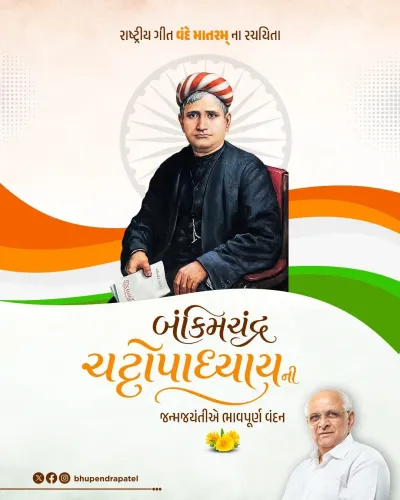
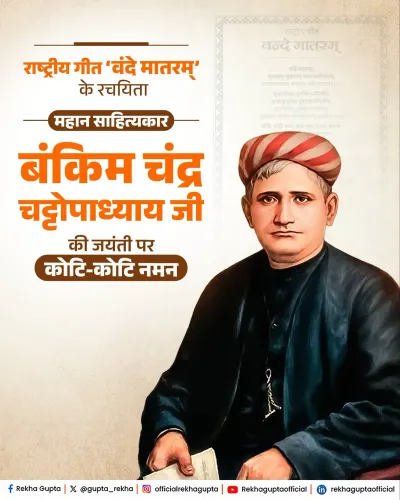
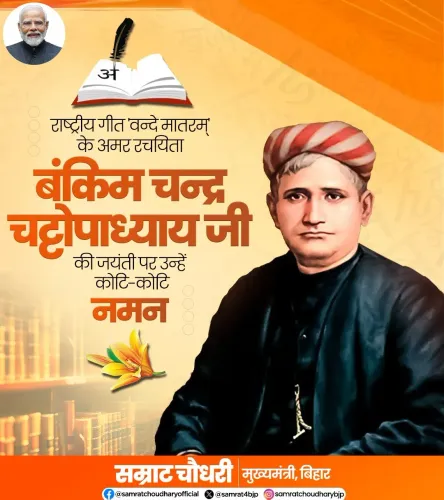
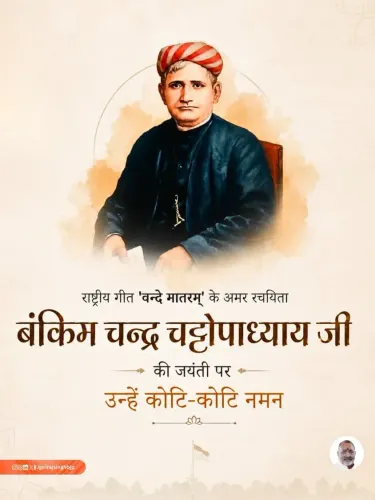
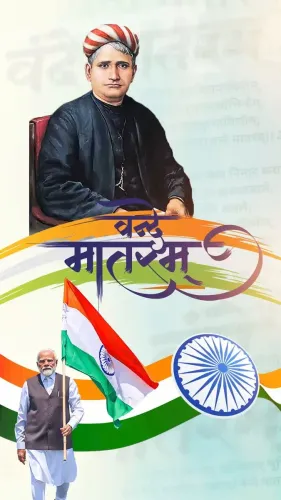
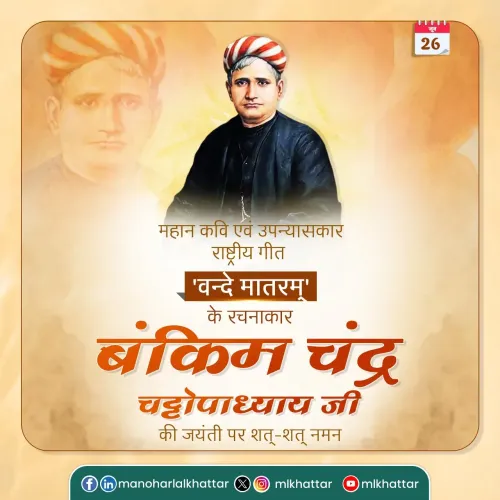
Union Culture and Tourism Minister Gajendra Singh Shekhawat on Friday, 27 June 2026, paid tribute to Bankim Chandra Chattopadhyay, the 19th-century Bengali novelist and poet who authored the national song Vande Mataram, on the occasion of his birth anniversary.
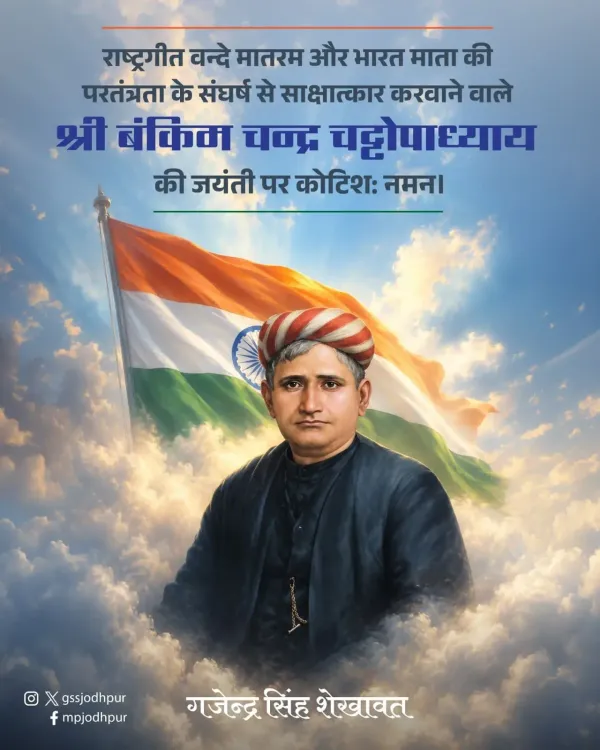
In a post on X, Shekhawat wrote: 'Rashtra geet Vande Mataram aur Bharat Mata ki paratantrata ke sangharsh se sakshatkar karwane wale Shri Bankim Chandra Chattopadhyay ki jayanti par kotish: naman' — offering 'crores of salutations on the birth anniversary of Shri Bankim Chandra Chattopadhyay, who introduced India to the national song Vande Mataram and the struggle against the subjugation of the motherland.'
Context
Bankim Chandra Chattopadhyay (1838–1894) is celebrated as one of the foremost figures of 19th-century Bengali literature and Indian nationalism. His novel Anandamath, published in 1882, contained the song Vande Mataram, which became a powerful rallying cry during the Indian independence movement, evoking devotion to the motherland and resistance against colonial rule.
The song transcended its literary origins to become a symbol of anti-colonial sentiment across India. In 1950, the Constituent Assembly adopted Vande Mataram as India's national song, placing it alongside Jana Gana Mana as the national anthem.
Policy Backdrop
Ministerial tributes on birth anniversaries of 19th-century literary and nationalist figures have become a consistent feature of the Ministry of Culture's public communications. The Ministry has maintained a focus on commemorating icons who shaped anti-colonial sentiment through regional languages and cultural symbols, particularly from Bengal and other regions with deep roots in the independence movement.
Shekhawat, a senior BJP leader and Lok Sabha MP from Jodhpur, Rajasthan, has used his official platform to highlight such cultural milestones, reinforcing the government's emphasis on pre-independence cultural contributions as part of a broader national identity narrative.
Stakeholders and Impact
The tribute resonates with cultural organisations, literary bodies, and the wider Indian public, particularly in West Bengal, where Chattopadhyay is revered as a foundational figure of Bengali literature and national consciousness. His legacy continues to be observed through academic curricula, cultural programmes, and official commemorations across the country.
For the Ministry of Culture, such observances reinforce its mandate to preserve and promote India's literary and cultural heritage, connecting citizens to the intellectual foundations of the independence struggle.
What's Next
The birth anniversary tribute may precede or accompany Ministry of Culture events, seminars, or curriculum-linked programmes focused on Chattopadhyay's literary legacy and the significance of Vande Mataram in India's national consciousness. State-level programmes in West Bengal and other states are also expected to mark the occasion with cultural events honouring his contribution to Indian literature and nationalism.
Point of View
The post draws a direct line between 19th-century Bengali literary nationalism and contemporary cultural politics. The Ministry of Culture's pattern of such commemorations signals a deliberate strategy to claim ownership of India's diverse anti-colonial heritage across regional and linguistic lines. This approach also serves to reinforce the symbolic weight of Vande Mataram at a time when the song's cultural and constitutional significance remains a subject of public discourse.
NationPress
24 Sept 2026
Frequently Asked Questions
Who was Bankim Chandra Chattopadhyay?
Bankim Chandra Chattopadhyay (1838–1894) was a pioneering Bengali novelist and poet best known for authoring Anandamath (1882), the novel that introduced Vande Mataram, later adopted as India's national song.
What is Vande Mataram and why is it significant?
Vande Mataram is India's national song, drawn from Bankim Chandra Chattopadhyay's 1882 novel Anandamath. It became a powerful symbol of resistance during the independence movement and was formally adopted by the Constituent Assembly in 1950.
Why did Gajendra Singh Shekhawat pay tribute to Bankim Chandra Chattopadhyay?
Union Culture and Tourism Minister Gajendra Singh Shekhawat paid tribute on Chattopadhyay's birth anniversary, honouring his contribution to Indian nationalism through Vande Mataram and the anti-colonial literary tradition.
What is the difference between India's national song and national anthem?
India's national anthem is Jana Gana Mana, composed by Rabindranath Tagore, while Vande Mataram, written by Bankim Chandra Chattopadhyay, is the national song. Both were accorded equal honour by the Constituent Assembly in 1950.
What events mark Bankim Chandra Chattopadhyay's birth anniversary in India?
Bankim Chandra Chattopadhyay's birth anniversary is marked by official tributes from government ministers, cultural programmes, literary events — particularly in West Bengal — and observances tied to Vande Mataram's legacy in India's independence movement.