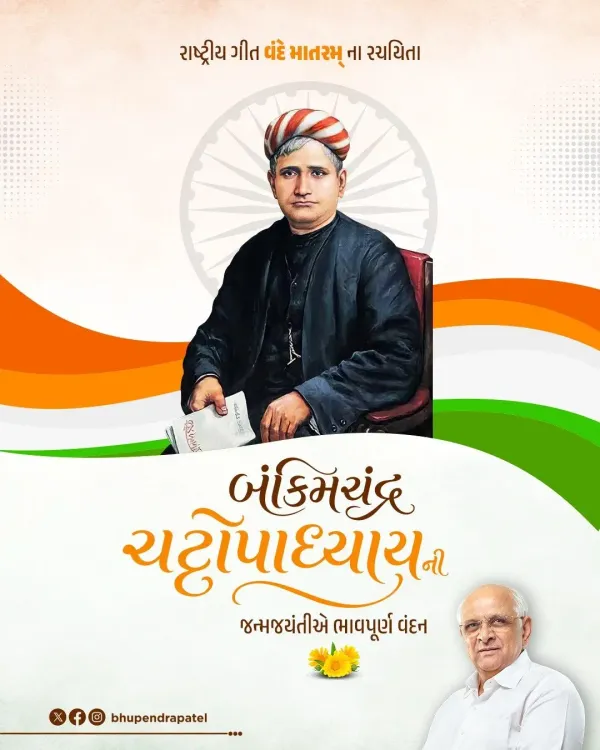
CM Bhupendra Patel pays tribute to Bankim Chandra on birth anniversary
Synopsis
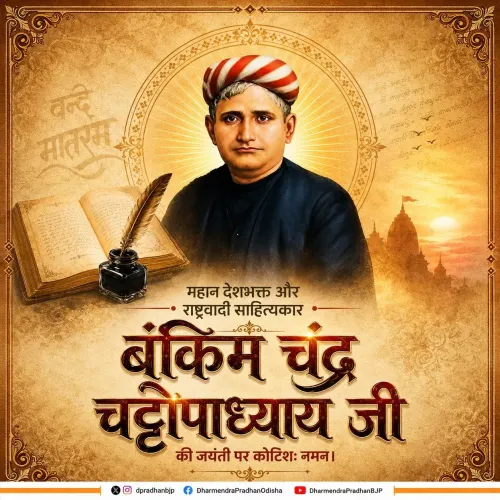
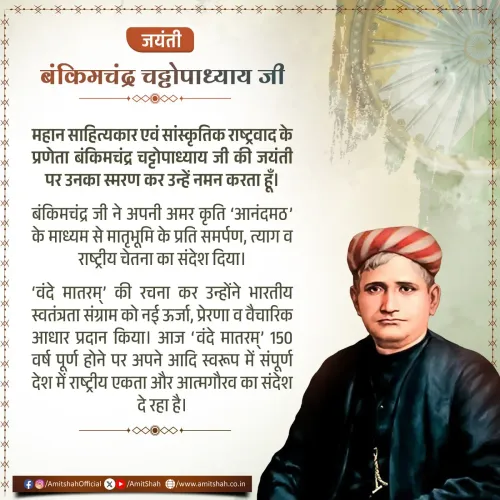
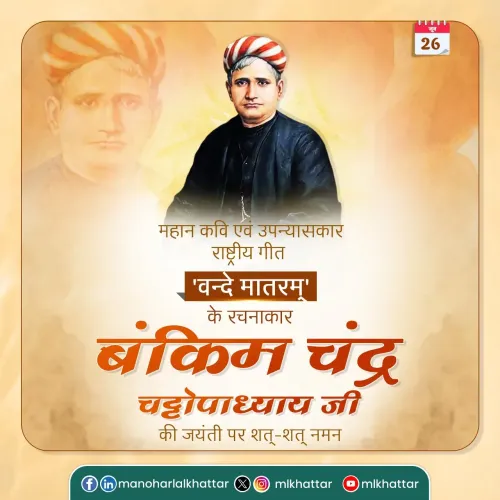
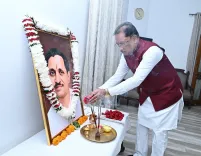
Gujarat Chief Minister Bhupendra Patel on 26 June 2026 paid tribute to Bankim Chandra Chattopadhyay, composer of India's national song Vande Mataram, on his birth anniversary, calling his literature an eternal source of patriotism.
Key Takeaways
Gujarat CM Bhupendra Patel posted a tribute to Bankim Chandra Chattopadhyay on his birth anniversary on 26 June 2026 .
Bankim Chandra Chattopadhyay composed Vande Mataram in his 1882 novel Anandamath .
Vande Mataram was first sung publicly at the Indian National Congress session of 1896 .
The Constituent Assembly accorded Vande Mataram the status of India's national song in 1950 , alongside Jana Gana Mana as the national anthem.
BJP state leaders routinely mark birth anniversaries of 19th-century nationalist literary figures through official statements.
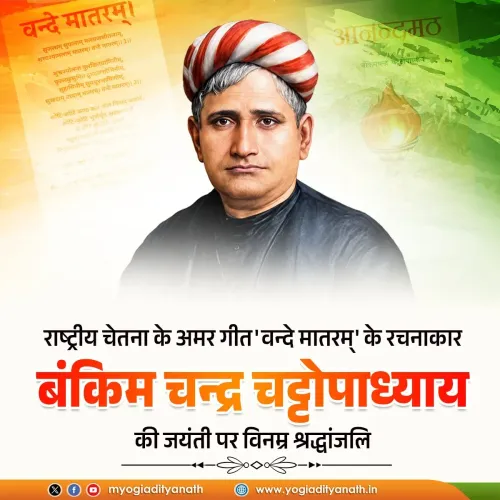
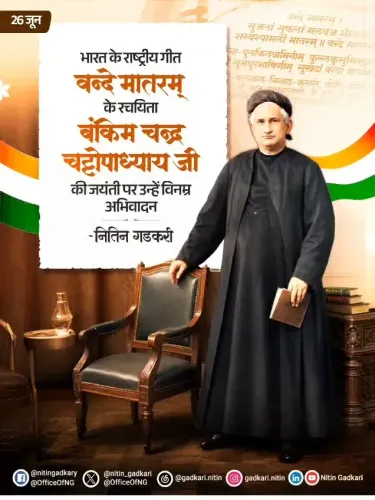
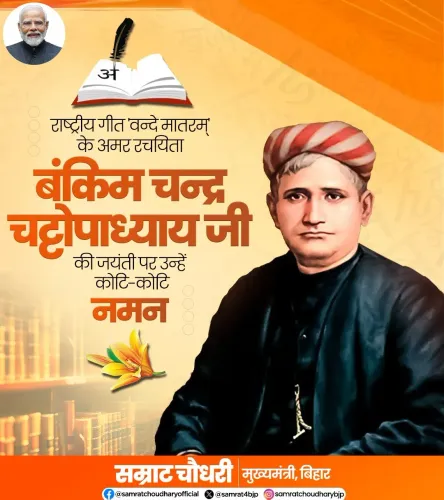
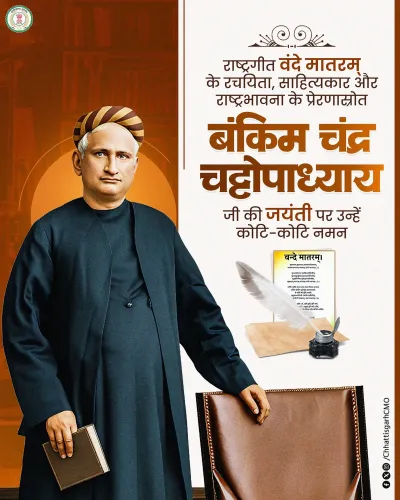
Gujarat Chief Minister Bhupendra Patel on Friday, 26 June 2026 paid tribute to Bankim Chandra Chattopadhyay, the 19th-century Bengali writer and composer of India's national song Vande Mataram, on the occasion of the literary giant's birth anniversary.
Posting in Gujarati on X, CM Patel wrote: 'Rashtriya geet Vande Mataram na rachayita, mahan sahityakar ane rashtravadi vicharak Bankim Chandra Chattopadhyayji ni jayantie sadar naman.' ('Respectful salutations on the birth anniversary of Bankim Chandra Chattopadhyay — the composer of the national song Vande Mataram, a great literary figure and nationalist thinker.')
He added that Bankim Chandra's literature, 'filled with the spirit of nationhood, will forever kindle patriotism in our hearts.'
Context
Bankim Chandra Chattopadhyay (1838–1894) was one of the most influential Bengali writers of the 19th century. He composed the poem Vande Mataram — meaning 'I bow to thee, Mother' — and embedded it in his landmark 1882 novel Anandamath, which depicted armed resistance against colonial rule.
The poem became a rallying cry across India during the freedom movement. The Indian National Congress session of 1896 featured its first public singing, cementing its place in the nationalist imagination.
Policy Backdrop
When the Constituent Assembly adopted Jana Gana Mana as the national anthem in 1950, it simultaneously accorded Vande Mataram the status of India's national song, recognising its equal honour in the constitutional framework.
BJP-governed states have consistently marked the birth anniversaries of 19th-century nationalist writers and cultural figures through official statements and programmes. These observances form part of a broader pattern of highlighting literary personalities linked to India's independence struggle and cultural identity.
Stakeholders and Impact
The tribute resonates with cultural organisations, educational institutions, and citizens who regard Vande Mataram as a symbol of national pride. In Gujarat, state-run schools and cultural bodies often mark such anniversaries with recitation programmes and seminars on nationalist literature.
Bankim Chandra's work, particularly Anandamath, continues to feature in school curricula across several Indian states, keeping his legacy relevant to successive generations of students.
What's Next
Observers will watch for state-level cultural programmes or school curriculum updates in Gujarat referencing Anandamath and Vande Mataram in the coming academic year. Such commemorations by senior BJP leaders frequently precede or accompany formal state-organised cultural events tied to the nationalist literary canon.
Point of View
Reinforcing the party's cultural-nationalist identity. By invoking the composer of Vande Mataram — a figure whose legacy straddles both literary and political history — the Chief Minister signals alignment with a broader ideological project of reclaiming India's pre-independence cultural heroes. Such commemorations also serve a soft-power function, embedding state governance within a narrative of civilisational continuity. The regularity of these tributes across BJP-ruled states suggests coordinated calendar-driven messaging rather than ad hoc remembrance.
NationPress
25 Sept 2026
Frequently Asked Questions
Who is Bankim Chandra Chattopadhyay?
Bankim Chandra Chattopadhyay (1838–1894) was a pioneering Bengali novelist and poet who composed Vande Mataram , later adopted as India's national song. His 1882 novel Anandamath contained the poem and depicted armed resistance against colonial rule.
What is Vande Mataram and why is it significant?
Vande Mataram , meaning 'I bow to thee, Mother', is India's national song. Originally a poem by Bankim Chandra Chattopadhyay, it became a rallying cry during the freedom movement and was formally accorded national song status by the Constituent Assembly in 1950.
Why did Gujarat CM Bhupendra Patel post about Bankim Chandra?
CM Bhupendra Patel posted a tribute on X on 26 June 2026 to mark Bankim Chandra Chattopadhyay's birth anniversary, honouring him as the composer of Vande Mataram and a great nationalist literary figure.
What is the difference between India's national anthem and national song?
India's national anthem is Jana Gana Mana , composed by Rabindranath Tagore. The national song is Vande Mataram , composed by Bankim Chandra Chattopadhyay. Both were accorded their respective statuses by the Constituent Assembly in 1950.
When was Vande Mataram first sung publicly?
Vande Mataram was first sung publicly at the Indian National Congress session of 1896, marking the beginning of its role as a nationalist anthem during the independence movement.