FCRA Amendment Bill 2026: Security, transparency, and NGO funding explained
Synopsis
India's FCRA Amendment Bill 2026 is the fifth overhaul of a law first written in 1976 — and the most structurally significant. A new Designated Authority can now manage or sell NGO assets built from foreign funds, while a judicial appeal route offers a partial safeguard. With ₹55,741 crore flowing in through 13,520 organisations between 2019 and 2022, the stakes for India's civil society sector are substantial.
Key Takeaways
The FCRA Amendment Bill, 2026 introduces a Designated Authority to manage NGO assets created from foreign funds when registration lapses or is cancelled.
Organisations can seek judicial revision within 90 days and appeal to the district judge — new legal recourse under this amendment.
Over ₹55,741 crore in foreign contributions entered India through 13,520 organisations between 2019 and 2022 , according to government data.
Assets linked to places of worship will transfer to another FCRA-registered body of the same faith, not to the state.
If an NGO restores its FCRA registration, all assets and unused funds are returned in full , per official clarifications.
The Home Ministry frames the Bill as a transparency measure; critics argue it could be used to restrict legitimate civil society activity.
The Foreign Contribution (Regulation) Amendment Bill, 2026 — introduced in New Delhi — seeks to tighten India's regulatory framework for foreign donations flowing into civil society organisations, with the government framing it as a transparency and sovereignty measure. The Bill comes amid growing global scrutiny of cross-border financial flows and builds on a legislative lineage stretching back to 1976.
What the Bill Proposes
The amendment introduces a Designated Authority empowered to take over, manage, and potentially sell assets of non-governmental organisations (NGOs) created from foreign funds when their FCRA registration is cancelled, surrendered, or not renewed. Crucially, if an organisation restores its registration, all assets and unused funds are returned in full, according to official explanations of the Bill.
The Bill also provides for judicial revision within 90 days of any adverse order, with a further right of appeal to the district judge — a new layer of legal recourse not present in earlier iterations of the law.
Government's Position
The Home Ministry has maintained that the Bill is not a ban on foreign donations but a disclosure and accountability regime. Officials point out that between 2019 and 2022, over ₹55,741 crore in foreign contributions flowed into India through 13,520 organisations, demonstrating that the framework continues to enable legitimate international philanthropy.
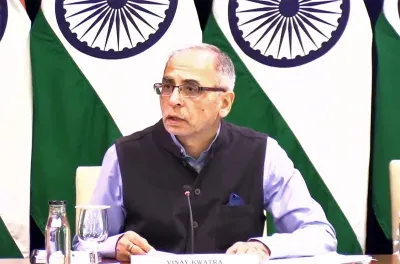
India's Ambassador to the United States, Vinay Mohan Kwatra, addressed concerns directly in a social media post on Monday. 'The fact is that the law does not forbid Indians from receiving foreign donations or shut down law-abiding civil society. Tens of thousands of associations are registered under FCRA and routinely receive foreign funds for health, education, disaster relief, research and humanitarian work,' Kwatra wrote.
He further clarified that places of worship carry specific protections under the Bill — property connected to a place of worship would transfer to another FCRA-registered association of the same faith, ensuring continuity of worship.
Concerns from Civil Society
Many NGOs, however, fear that stricter compliance requirements will discourage international philanthropy, particularly in sectors such as education, healthcare, and disaster relief. Critics argue the Bill gives authorities sweeping powers over civil society assets and could function as a tool for control rather than mere transparency.
The government has countered by reminding stakeholders that past foreign donations were allegedly diverted to political or anti-national activities — a justification it has used in previous FCRA amendments as well.
Historical Context
The Foreign Contribution (Regulation) Act was first enacted in 1976, replaced by a new law in 2010, and subsequently amended in 2016, 2018, and 2020. The 2026 amendment is the fifth significant revision in a decade. Notably, the provision that foreign contributions and assets vest in a state government authority upon cancellation of registration has been in force since 2010 — the 2026 Bill adds a designated authority to administer those assets more systematically.
Government documents draw comparisons with similar regulatory regimes in the United States, United Kingdom, Australia, and Canada, all of which regulate foreign funding to protect democratic institutions.
What Happens Next
The Bill is expected to face scrutiny in Parliament, with opposition parties and civil society groups likely to push for greater safeguards. Industry observers note that the real test will be in implementation — specifically, whether the Designated Authority operates with transparency and whether the judicial appeal mechanism proves accessible in practice.
Point of View
But its utility depends entirely on whether district courts can handle the volume and complexity of such cases. What mainstream coverage misses is that the ₹55,741 crore figure the government cites as proof of openness also underscores how much is at stake for the thousands of organisations that could now face asset intervention without a court order.
NationPress
10 Aug 2026
Frequently Asked Questions
What does the FCRA Amendment Bill 2026 propose?
The FCRA Amendment Bill 2026 introduces a Designated Authority empowered to take over, manage, and potentially sell assets of NGOs created from foreign funds when their FCRA registration is cancelled or not renewed. It also adds a judicial revision mechanism within 90 days and a right of appeal to the district judge.
Will the FCRA Bill 2026 ban foreign donations to Indian NGOs?
No, the government has explicitly stated the Bill does not ban foreign donations. The Home Ministry and India's Ambassador to the US, Vinay Mohan Kwatra, have both clarified that tens of thousands of organisations remain registered under FCRA and continue to receive foreign funds legally.
What happens to NGO assets if their FCRA registration is cancelled?
Under the 2026 Bill, assets created from foreign funds vest with a Designated Authority if registration is cancelled, surrendered, or not renewed. However, if the organisation restores its registration, all assets and unused funds are returned in full, according to official explanations.
Are religious organisations and places of worship protected under the Bill?
Yes. Property connected to a place of worship would transfer to another FCRA-registered association of the same faith, ensuring continuity of worship rather than state acquisition, according to Ambassador Vinay Mohan Kwatra's clarification.
How much foreign funding flows into India under FCRA, and how many NGOs are registered?
Between 2019 and 2022, over ₹55,741 crore in foreign contributions entered India through 13,520 registered organisations, according to government data. Officials cite these figures to argue that FCRA functions as a disclosure framework rather than a restrictive regime.