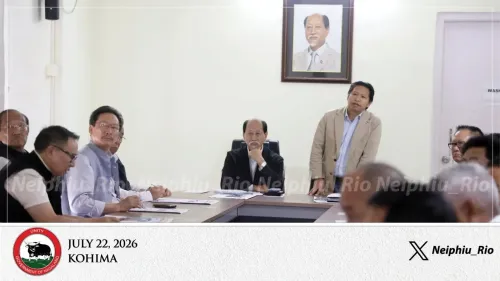
CM Rio writes to Amit Shah on FCRA amendments, seeks JPC

Synopsis
Nagaland Chief Minister Neiphiu Rio has written to Union Home Minister Amit Shah calling for broader parliamentary scrutiny and a Joint Parliamentary Committee to examine proposed amendments to the Foreign Contribution (Regulation) Act, citing concerns for the state's civil society sector.
Key Takeaways
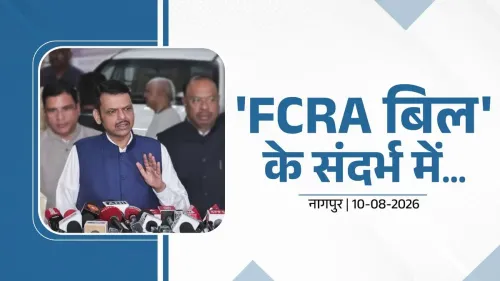
CM Neiphiu Rio wrote to Home Minister Amit Shah on 10 August 2026 flagging concerns over proposed FCRA amendments.
Rio urged 'greater parliamentary scrutiny and wider stakeholder consultation' before the legislation advances.
He specifically recommended referring the bill to a Joint Parliamentary Committee for comprehensive examination.
The FCRA , last amended in 2020 , governs foreign contributions to Indian NGOs and is administered by the Ministry of Home Affairs .
Nagaland has a significant NGO and civil society ecosystem reliant on regulated foreign funding, making FCRA changes particularly consequential for the state.
The demand mirrors earlier JPC requests for major legislation such as data protection and farm laws.
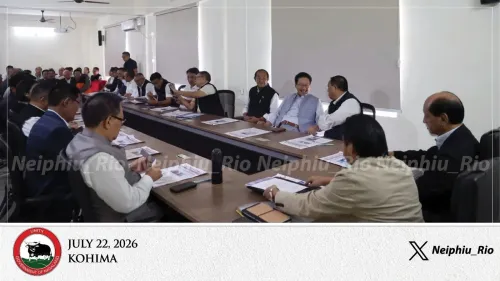
A letter from Nagaland Chief Minister Neiphiu Rio to Union Home Minister Amit Shah has put the spotlight on proposed amendments to the Foreign Contribution (Regulation) Act — and on whether Parliament will get a real chance to examine them. Rio is urging the Centre to slow down, consult widely, and consider routing the legislation through a Joint Parliamentary Committee.
In his letter dated 10 August 2026, Rio called for 'greater parliamentary scrutiny and wider stakeholder consultation' on the proposed FCRA amendments, explicitly naming a JPC as the vehicle for 'comprehensive examination of the proposed legislation.' The request lands squarely with the Ministry of Home Affairs, which administers the FCRA and would steer any amendment through Parliament.
Why FCRA changes hit Nagaland harder
Nagaland is home to a dense network of NGOs and civil society organisations that depend on regulated foreign funding for welfare, rights, and development work — activities the state government has limited fiscal bandwidth to fully support. When the FCRA was last amended in 2020, it introduced Aadhaar-linked registration, capped administrative expenses at 20 percent, and tightened reporting requirements, changes that squeezed smaller organisations in the northeast disproportionately.
Another round of amendments, without adequate consultation, risks compounding those pressures. Rio's intervention signals that Nagaland's civil society sector is watching the legislative calendar closely — and that the Chief Minister intends to be their voice at the Centre.
The JPC demand and its political weight
The call for a Joint Parliamentary Committee is not unusual — JPCs have been sought for legislation as varied as data protection and farm laws — but it carries clear political meaning. A JPC would slow the bill's passage, open it to testimony from affected organisations, and give opposition and regional parties a formal seat at the table.
Northeast states have periodically flagged central regulatory changes as undermining local civil society, and Rio's letter fits a pattern of chief ministers using formal correspondence to register dissent before a bill reaches the floor. Whether the Home Ministry responds with a JPC referral or presses ahead will be the test of how seriously the Centre takes federal consultation on legislation with direct ground-level impact.
The next move belongs to Amit Shah — and to Parliament's calendar.
Point of View
Substantive enough to signal that Nagaland's civil society concerns cannot be bypassed in a legislative sprint. It reflects a broader northeast anxiety about central regulatory tightening on foreign funding, where the 2020 FCRA amendments already left a bruise. The JPC demand is the standard lever regional leaders pull when they want to slow legislation without outright opposing it. If the Home Ministry ignores the letter, it hands Rio a ready-made grievance for the next election cycle; if it concedes even partial consultation, it sets a precedent for how federal pushback on FCRA changes can work.
NationPress
24 Sept 2026
Frequently Asked Questions
Why has Nagaland CM Neiphiu Rio written to Amit Shah about FCRA?
Rio wrote to Home Minister Amit Shah urging greater parliamentary scrutiny and wider stakeholder consultation on proposed amendments to the Foreign Contribution (Regulation) Act, which governs foreign funding to Indian NGOs. He recommended a Joint Parliamentary Committee to examine the legislation comprehensively.
What is the FCRA and why does it matter for Nagaland?
The Foreign Contribution (Regulation) Act, 2010 — amended in 2020 — regulates foreign contributions to Indian associations and NGOs. Nagaland has a large civil society sector dependent on regulated foreign funding for development and welfare work, making FCRA amendments particularly consequential for the state.
What is a Joint Parliamentary Committee and why is one being sought for FCRA?
A Joint Parliamentary Committee is a special parliamentary body with members from both Houses, set up to examine a specific bill in detail. Rio is seeking one for the FCRA amendments to allow wider consultation and more thorough legislative scrutiny before the bill is passed.
What did the 2020 FCRA amendments change?
The 2020 amendments mandated Aadhaar-linked registration for FCRA recipients, capped administrative expenses at 20 percent of received funds, and tightened registration and reporting requirements — changes that placed additional compliance burdens on smaller NGOs, especially in the northeast.
What happens next with the proposed FCRA amendments?
The key development to watch is whether the government tables an FCRA amendment bill in Parliament and whether the Home Ministry agrees to a Joint Parliamentary Committee or stakeholder consultations in response to Rio's letter and similar regional concerns.