CM Rio Reaffirms NDPP-NPF Coordination, Public Welfare Resolve
Synopsis
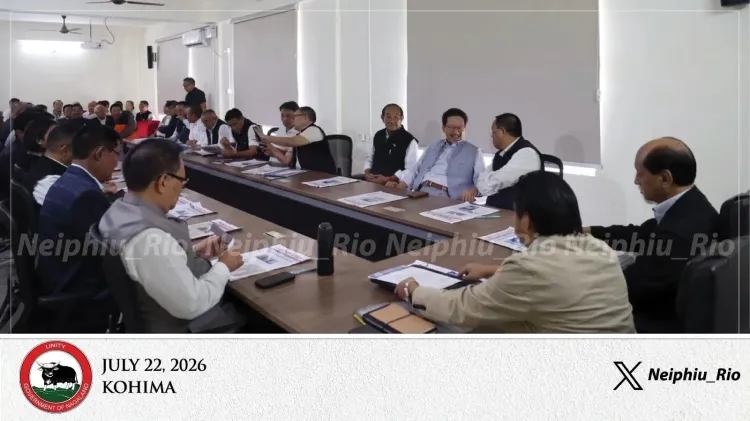
Nagaland Chief Minister Neiphiu Rio publicly responded to the Naga People's Front on 22 July 2026, stating that the two parties deliberated on organisational priorities and coordination, reaffirming a shared commitment to public service and the welfare of the people of Nagaland.
Key Takeaways
Chief Minister Neiphiu Rio replied to the Naga People's Front (NPF) on X on 22 July 2026 , signalling inter-party engagement.
Rio stated that deliberations covered 'organisational priorities' and 'strengthening coordination' between the parties.
Both parties reaffirmed commitment to 'public service, unity, and the welfare of the people.' Rio founded the NDPP in 2017 after departing the NPF, making this dialogue historically significant.
The NDPP-BJP coalition has governed Nagaland since the 2023 assembly elections , with welfare delivery as a stated priority.
Next coordination meetings and state assembly sessions will indicate whether this dialogue produces concrete policy outcomes.
Nagaland Chief Minister Neiphiu Rio on Wednesday, 22 July 2026, reaffirmed his party's commitment to organisational coordination and public welfare, responding publicly to the Naga People's Front (NPF) on the social media platform X. The post signals continued inter-party engagement between the ruling Nationalist Democratic Progressive Party (NDPP) and the NPF in Nagaland.
Context
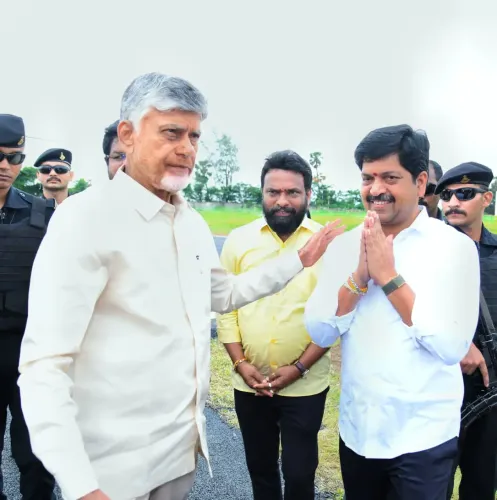
Chief Minister Rio's post was a reply to @npf_fna, the official handle of the Naga People's Front. In it, he stated that participants 'deliberated on our organisational priorities, strengthening coordination, and chart the way forward,' adding that they 'remain steadfast in our commitment to public service, unity, and the welfare of the people.' The exchange suggests a structured interaction — likely a meeting or formal dialogue — between the two parties, though the specific occasion has not been officially detailed.
The NDPP and NPF have historically occupied competing and at times overlapping political space in Nagaland. Rio's direct reply to the NPF's handle is notable given that his own party, the NDPP, was founded in 2017 after his departure from the NPF.
Policy Backdrop
Nagaland operates under the special provisions of Article 371A of the Indian Constitution, which protects Naga customary law and practices. Governance in the state has long required careful coalition management across tribal lines and regional parties. The 2023 Nagaland assembly elections returned an NDPP-BJP-led coalition to power, with an agenda centred on administrative coordination and welfare delivery.
Rio's NDPP has consistently positioned itself as a unifying force in a state where political fragmentation along tribal and factional lines has historically complicated governance. Statements emphasising 'unity' and 'public service' are a recurring feature of inter-party communication in this context, particularly ahead of policy implementation cycles or electoral preparation.
Stakeholders and Impact
The primary stakeholders in this exchange are the voters and civil society of Nagaland, whose welfare concerns — ranging from infrastructure and employment to the ongoing Naga peace process — sit at the intersection of NDPP and NPF political mandates. Both parties draw support from significant sections of the Naga population, making coordination between them consequential for legislative effectiveness and administrative delivery.
For the NPF, which has operated in opposition and in coalition roles at different points, a public acknowledgement from the Chief Minister of shared deliberations carries political weight. It signals at minimum a functional working relationship at the organisational level, which could influence how welfare schemes are implemented at the grassroots.
What's Next
Observers will watch for follow-up coordination meetings between the NDPP and NPF, as well as upcoming Nagaland state assembly sessions where welfare legislation and administrative priorities are likely to be debated. Rio's emphasis on 'charting the way forward' suggests that the current engagement is part of a structured process rather than a one-off interaction. Whether this inter-party dialogue translates into formal policy alignment or legislative cooperation will be a key indicator of Nagaland's political stability in the months ahead.
Point of View
' he positions the NDPP as a consensual, stability-seeking force — a message aimed as much at Nagaland's electorate as at party cadres. This fits a broader pattern in northeastern Indian politics where ruling parties periodically reaffirm ties with regional formations to shore up legislative and administrative bandwidth. The emphasis on 'unity' also carries a subtext relevant to Nagaland's ongoing peace process, where political cohesion among elected actors is seen as complementary to negotiations with armed groups.
NationPress
21 Oct 2026
Frequently Asked Questions
What did Nagaland CM Neiphiu Rio say about NDPP and NPF coordination?
CM Rio stated on 22 July 2026 that the two parties deliberated on organisational priorities and strengthening coordination, and reaffirmed their commitment to public service, unity, and the welfare of the people of Nagaland.
What is the relationship between NDPP and NPF in Nagaland?
The NDPP was founded by Neiphiu Rio in 2017 after he left the NPF. The two parties have since occupied distinct but sometimes overlapping political space in Nagaland, with coordination between them significant for governance in the state.
What is the Naga People's Front (NPF)?
The Naga People's Front is a regional political party in Nagaland that has historically led coalitions and advocated Naga-specific interests in state and national politics.
Why is inter-party coordination important in Nagaland?
Nagaland's politics involves managing tribal diversity and maintaining stability under the special provisions of Article 371A. Coalition and inter-party coordination is essential for effective welfare delivery and legislative functioning in the state.